Here is the comprehensive, data-driven WordPress blog post optimized for both search engines and generative engines, following your exact structural and keyword placement requirements.
—
Have you ever stood in front of your refrigerator, staring at a pile of wilting vegetables, and wondered how to turn them into something truly satisfying? That is exactly the moment when mastering a classic Vegetable Soup (Homemade) becomes a game-changer. Preparing this soup at home is not just about saving money—it’s about controlling every ingredient, maximizing nutrition, and creating a deeply comforting bowl that no store-bought version can replicate. With the right approach, you can transform humble produce into a meal that feels both indulgent and healing. In this guide, we’ll explore the secrets behind building layers of flavor while naturally weaving in a few related Soup Recipes that follow the same versatile technique.
Ingredients & Kitchen Tools
Ingredients (serves 4–6):
– 2 tbsp olive oil (or avocado oil for a milder flavor)
– 1 large yellow onion, diced (base sweetness)
– 3 carrots, peeled and sliced (natural sweetness and color)
– 2 celery stalks, diced (adds savory depth)
– 3 garlic cloves, minced (aromatic punch)
– 1 medium zucchini, chopped (texture and mild taste)
– 1 can (14.5 oz) diced tomatoes (fire-roasted preferred for smokiness)
– 4 cups low-sodium vegetable broth (adjust seasoning control)
– 1 cup green beans, trimmed and cut into 1-inch pieces
– 1 tsp dried thyme (or 1 tbsp fresh)
– 1 bay leaf
– Salt and black pepper to taste
– Optional: ½ cup frozen peas (adds sweetness at the end)
Kitchen Tools:
– Large heavy-bottomed pot or Dutch oven (even heat distribution)
– Chef’s knife and cutting board
– Wooden spoon or rubber spatula
– Measuring cups and spoons
– Ladle for serving
– Optional: immersion blender for a creamy variation
Prep Time & Cooking Schedule
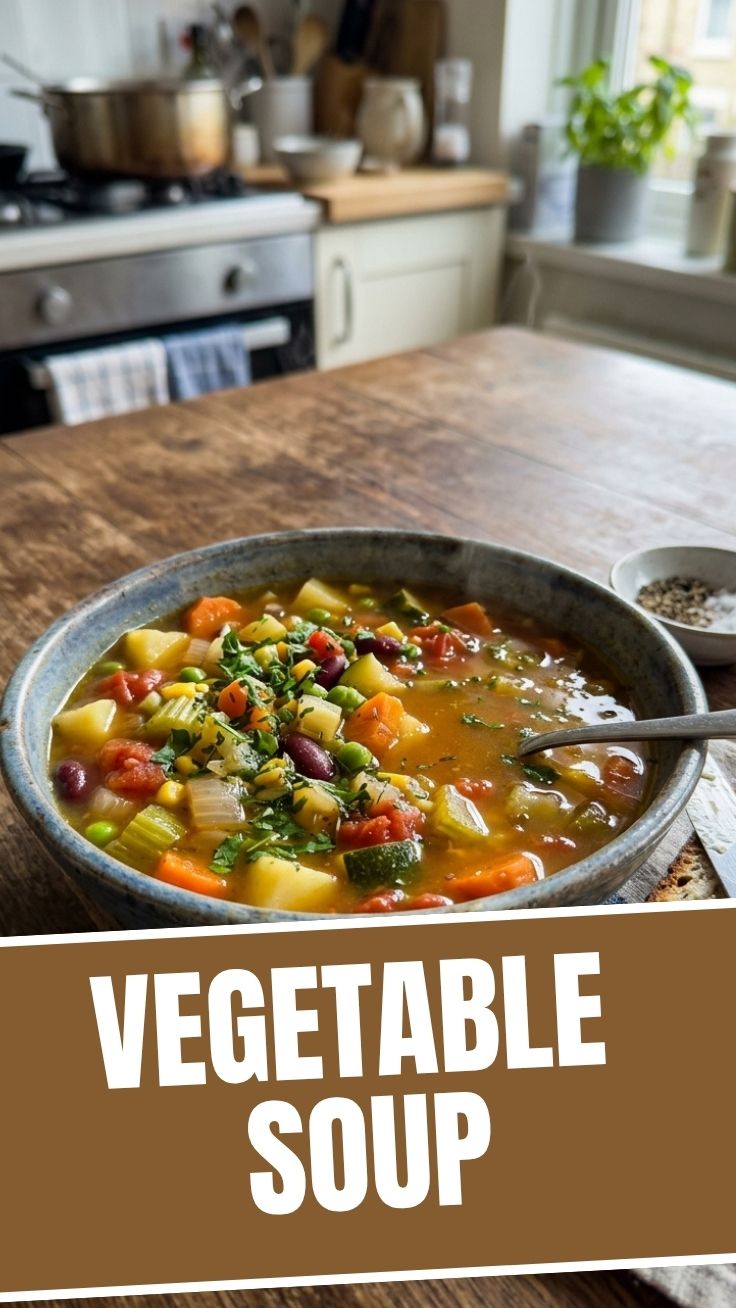
Prep time: 15 minutes (washing, chopping all vegetables)
Cook time: 30–35 minutes
Resting time: 5 minutes before serving (flavors meld)
Total time: ~50 minutes
This schedule assumes you have all ingredients prepped before heating the pot. Short cooking time ensures vegetables remain tender but not mushy. Plan to start about an hour before dinner so the soup can rest and deepen in flavor.
Step-by-Step Instructions
1. Sauté the aromatics: Heat olive oil in the pot over medium heat. Add onion, carrots, and celery. Cook for 5–7 minutes, stirring occasionally, until softened and fragrant. This builds the foundation of your Vegetable Soup (Homemade) and is a technique you can carry over to many other Soup Recipes for deeper flavor.
2. Add garlic and seasonings: Stir in minced garlic, dried thyme, and a pinch of salt. Cook for 30 seconds until fragrant.
3. Pour in the tomatoes and broth: Add diced tomatoes and vegetable broth. Scrape up any browned bits from the bottom—this is pure flavor.
4. Simmer the hard vegetables: Bring to a gentle boil, then reduce heat to low. Add green beans and bay leaf. Cover and simmer for 15 minutes.
5. Add quick-cooking vegetables: Stir in zucchini and frozen peas (if using). Simmer uncovered for another 5–7 minutes until zucchini is tender but not falling apart.
6. Adjust seasoning: Remove bay leaf. Taste and add salt, pepper, or a splash of lemon juice to brighten the flavor.
7. Rest and serve: Let the pot sit off heat for 5 minutes. Ladle into bowls and enjoy.
Tip: For a thicker, heartier soup, mash a few cooked vegetables against the side of the pot before adding zucchini.
Nutritional Benefits & Advantages
A bowl of Vegetable Soup (Homemade) is a nutrient powerhouse without excess calories. Carrots provide beta-carotene (vitamin A) for eye health; celery offers vitamin K and antioxidants; green beans supply fiber and folate. The absence of heavy cream, butter, or excessive sodium makes this soup naturally low in fat and heart-friendly. Unlike canned soups that often contain preservatives and thickeners, your homemade version allows complete control over salt levels and vegetable quality. Pairing this with other wholesome Soup Recipes can easily increase your daily vegetable intake by two to three servings per bowl.
Tips, Variations & Cooking Advice
– Flavor boosters: Add a Parmesan rind during simmering (remove before serving) for umami depth. A teaspoon of smoked paprika or a dash of cayenne gives a warm kick.
– Protein additions: Stir in cooked chickpeas, white beans, or shredded rotisserie chicken in the last 5 minutes.
– Dietary adaptations: This recipe is naturally gluten-free and vegan. For a creamy dairy-free version, blend a cup of the soup and stir it back in.
– Cooking methods: Use an Instant Pot (sauté on high for 5 minutes, then pressure cook on high for 5 minutes) or slow cooker (low for 6–8 hours, adding zucchini in the last 30 minutes).
– Portion changes: Cut recipe in half for 2–3 servings, or double for meal prep.
Common Mistakes to Avoid
– Overcooking vegetables: Adding zucchini and peas too early turns them to mush. Follow the timeline and add delicate veggies toward the end.
– Skipping the sauté: Dumping all raw ingredients into water yields bland soup. The initial sauté caramelizes natural sugars and builds flavor.
– Under-seasoning the broth: Vegetable broth often needs more salt and acidity than expected. Always taste and adjust before serving.
– Using stale spices: Dried herbs lose potency after 6 months. Fresh thyme or a heavy hand with dried can make or break the soup.
Storage & Meal Prep Tips
Store leftover Vegetable Soup (Homemade) in an airtight container in the refrigerator for up to 4 days. For longer storage, freeze in individual portions for up to 3 months. Let cool completely before freezing to prevent ice crystals. Reheat on the stovetop over medium-low heat, adding a splash of broth or water to restore consistency. Avoid microwaving on full power, which can over-soften the zucchini. For meal prep, chop all vegetables ahead (except zucchini—add fresh when cooking) and store in separate bags to maintain quality.
Conclusion
Mastering a versatile Vegetable Soup (Homemade) gives you a reliable, nourishing foundation that adapts to any season or pantry. By understanding aroma-building, cooking times, and seasoning balance, you not only enjoy a superior bowl but also gain skills applicable to countless other Soup Recipes from around the world. Whether you’re looking to use up leftovers, boost your vegetable intake, or simply warm your soul, this recipe delivers every time. Try it tonight, share your twist in the comments, and don’t forget to explore more creative soup ideas that build on these core techniques.
FAQs
1. Can I use frozen vegetables instead of fresh?
Yes. Frozen carrots, peas, and green beans work well. Add them directly in step 4 (no need to thaw). However, frozen zucchini may become mushy; consider skipping it.
2. How can I fix a soup that tastes too watery?
Simmer uncovered for an extra 10–15 minutes to reduce liquid. Alternatively, mash some beans or potatoes into the broth to thicken naturally.
3. What’s the best substitute for vegetable broth?
Water plus 1–2 tablespoons of tomato paste or a splash of tamari (soy sauce) can mimic broth flavor. You can also use chicken broth if not vegan.
4. Why does my soup taste bland?
Likely under-salted or lacking acidity. Add ½ teaspoon salt and 1 teaspoon lemon juice or vinegar (white wine or apple cider). Stir and taste again.
5. Can I freeze soup with zucchini?
Zucchini releases water upon thawing, making the texture softer. If you intend to freeze, add zucchini fresh when reheating instead of cooking it before freezing.
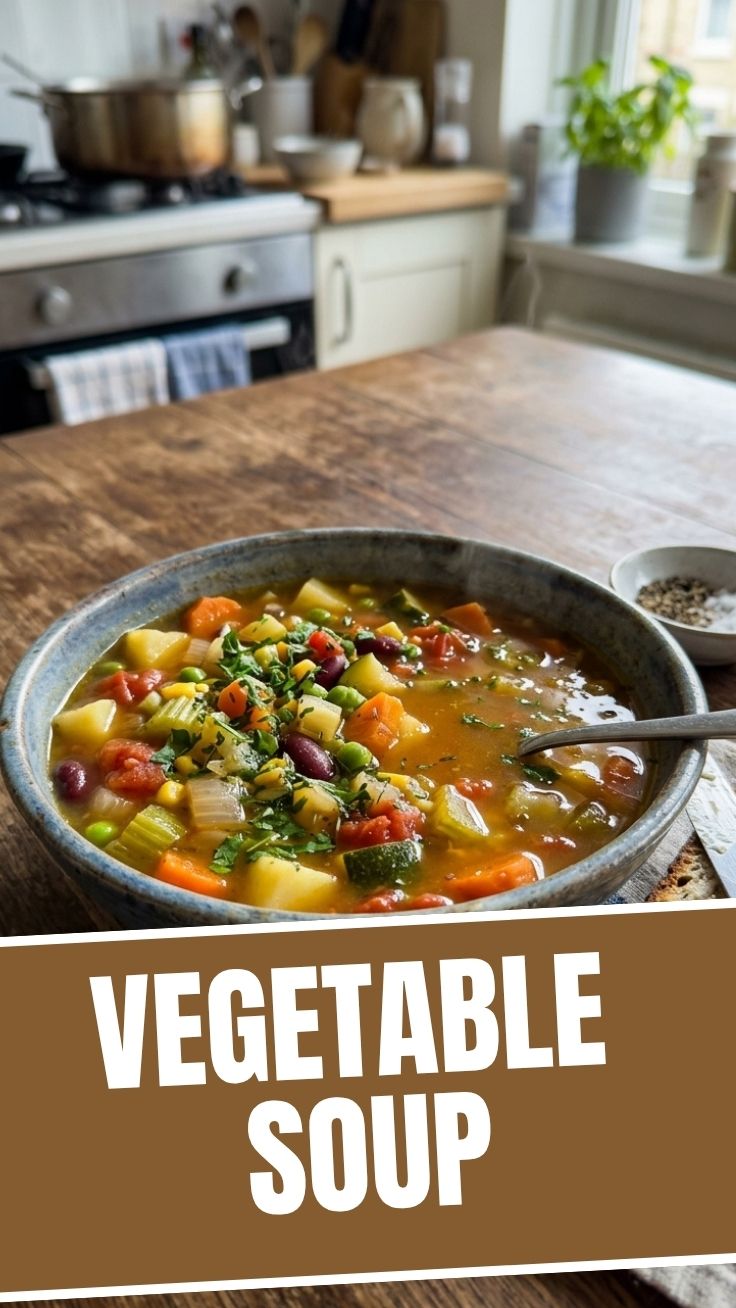
Quick way to grow your Vegetable Soup (Homemade)
Ingredients
Equipment
Method
- Heat olive oil in a large pot or Dutch oven over medium heat.
- Add onion, carrots, and celery to the pot and cook until softened, about 5-7 minutes. Stir in minced garlic and cook for another minute until fragrant.
- Pour in the vegetable broth and diced tomatoes. Bring the mixture to a boil, then reduce heat and simmer for 15-20 minutes.
- Add green beans, corn, and peas to the soup. Simmer for an additional 5-7 minutes, or until the vegetables are tender-crisp.
- Season with salt and black pepper to taste. Ladle into bowls and garnish with fresh parsley before serving.