Beat the Heat with Authentic Spanish Flavors: The Perfect Classic Gazpacho
Have you ever wondered why store-bought gazpacho never captures that vibrant, garden-fresh taste you dream of on a sweltering summer day? The secret lies in the simplicity. Making a truly memorable classic gazpacho at home unlocks layers of flavor that no carton can replicate—and this traditional Spanish recipe turns humble raw vegetables into a culinary masterpiece. With just 15 minutes of active prep and a blender, you can bottle the essence of Andalusian summers.
Ingredients & Kitchen Tools
Produce (all at peak ripeness for best results):
– 2 lbs ripe Roma tomatoes (or vine-ripened)—the foundation of flavor
– 1 English cucumber (or 2 Persian cucumbers), peeled and roughly chopped
– 1 green bell pepper, stemmed and seeded—for that grassy freshness
– 1 small red bell pepper (optional, for sweetness and color)
– 1 small red onion (or ½ large), peeled and quartered
– 2 cloves garlic—adjust according to your heat preference
– ¼ cup extra-virgin Spanish olive oil (don’t skimp here; it emulsifies the soup)
– 3 tablespoons sherry vinegar (red wine vinegar works, but sherry is traditional)
– 1 teaspoon fine sea salt, plus more to taste
– ½ teaspoon ground cumin (optional, adds warmth without heat)
– Fresh basil or chives for garnish (optional)
Tools:
– High-speed blender or food processor (a powerful blender yields creamier texture)
– Fine-mesh strainer or chinois (optional, for ultra-smooth soup)
– Sharp chef’s knife and cutting board
– Large bowl or airtight container for chilling
– Serving bowls or glasses—traditional tapas glasses work beautifully
Substitutions:
– Use heirloom tomatoes or add ½ cup canned San Marzano for deeper color
– Substitute 1 tablespoon capers or 1 teaspoon Dijon mustard for added acidity
– Replace sherry vinegar with white balsamic if needed
Prep Time & Cooking Schedule
– Prep time: 15 minutes (all active work)
– Minimum chill time: 2 hours (flavors meld and deepen over 4–6 hours)
– Total time from start to serving: about 2–4 hours
Plan ahead: Gazpacho rewards patience. The soup needs at least 2 hours in the refrigerator for the garlic and sherry vinegar to marry with the olive oil and vegetables. For the best texture, prepare it in the morning for dinner, or even the day before serving. The soup actually improves after 24 hours.
Step-by-Step Instructions
1. Prepare your vegetables: Core the tomatoes and roughly chop them (peeling is optional—a high-speed blender handles skins, but straining removes them). Peel and chop cucumber. Cut bell peppers into 2-inch pieces. Quarter the onion.
2. Blend the base: In a blender, combine tomatoes, cucumber, both bell peppers, onion, and garlic cloves. Pulse to break down, then blend on high for 30 seconds until smooth.
3. Emulsify and season: With the blender running on low, drizzle in the olive oil and sherry vinegar. Add salt and cumin (if using). Taste the raw mixture—it should be zesty and bright. Remember: flavors intensify as it chills.
4. Adjust texture: For silky classic gazpacho, strain through a fine-mesh sieve, pressing with a spatula to extract every drop. For rustic-style (with more fiber), skip this step.
5. Chill thoroughly: Pour into a bowl or container, cover, and refrigerate for at least 2 hours. Taste again before serving—you may need a pinch more salt or a dash of sherry vinegar. This authentic Spanish recipe relies on the cold temperature to sharpen the flavors.
Temperature tip: Serve gazpacho very cold but not icy—aim for 40–45°F (4–7°C). If it’s too thick after chilling, blend in ½ cup of ice water or chilled vegetable broth.
Nutritional Benefits & Advantages
This chilled soup is a powerhouse of hydration and vitamins. Each serving (about 1½ cups) contains roughly:
– Calories: 140–170 (mostly from heart-healthy olive oil)
– Fiber: 4–5 g (from cucumber and bell peppers)
– Vitamin C: 80% of daily value (bell peppers)
– Lycopene: 11–15 mg (cooked or raw, tomatoes release lycopene upon blending)
Because no ingredient is cooked, all enzymes and water-soluble vitamins remain intact. The combination of garlic (allicin) and olive oil (polyphenols) offers anti-inflammatory benefits, while cucumber provides electrolyte-balancing silica and potassium.
Tips Variations & Cooking Advice
Flavor twists:
– Smoky variation: Swap ½ cup of tomatoes for 2 roasted red bell peppers (from a jar or homemade) and add ½ teaspoon smoked paprika.
– Spicy kick: Include ½ jalapeño (seeded for less heat) or a pinch of cayenne.
– Herb infusion: Swap ¼ cup of cucumber for fresh basil or mint leaves.
Dietary adaptations: This recipe is naturally gluten-free and dairy-free (add a dollop of Greek yogurt for a creamy version). For a whole30 or low-FODMAP version, omit garlic and replace onion with ½ cup chopped fennel or scallion greens.
Portion changes: This recipe yields about 4–6 servings. Halve easily by using one large tomato and half a cucumber. For a crowd, double everything—gazpacho scales up perfectly.
Common Mistakes to Avoid
– Using unripe tomatoes: Underripe tomatoes lack sweetness and create an acidic, watery soup. Squeeze your tomatoes—ripe ones yield slightly and smell floral.
– Skipping the chill: Warm gazpacho lacks the refreshing contrast that defines this soup. Minimum 2 hours, but 4+ hours is ideal.
– Over-blending the oil: Adding olive oil all at once can cause separation. Always drizzle in slowly with blender running to create a stable emulsion.
– Forgetting to re-season: Cold dulls salt perception. Always taste and adjust after chilling—add another ¼ teaspoon salt or a splash of vinegar.
– Using a low-power blender: If your blender struggles, soak chopped vegetables in a bowl for 10 minutes (the vinegar softens cell walls) before blending.
Storage & Meal Prep Tips
Refrigeration: Store gazpacho in an airtight container for up to 4 days. Stir before serving as ingredients may settle. The flavor actually peaks on day 2.
Freezing: Avoid freezing—gazpacho loses its vibrant texture and flavor upon thawing due to water separation. If you must freeze, omit the olive oil, freeze the base, and blend in fresh oil after thawing.
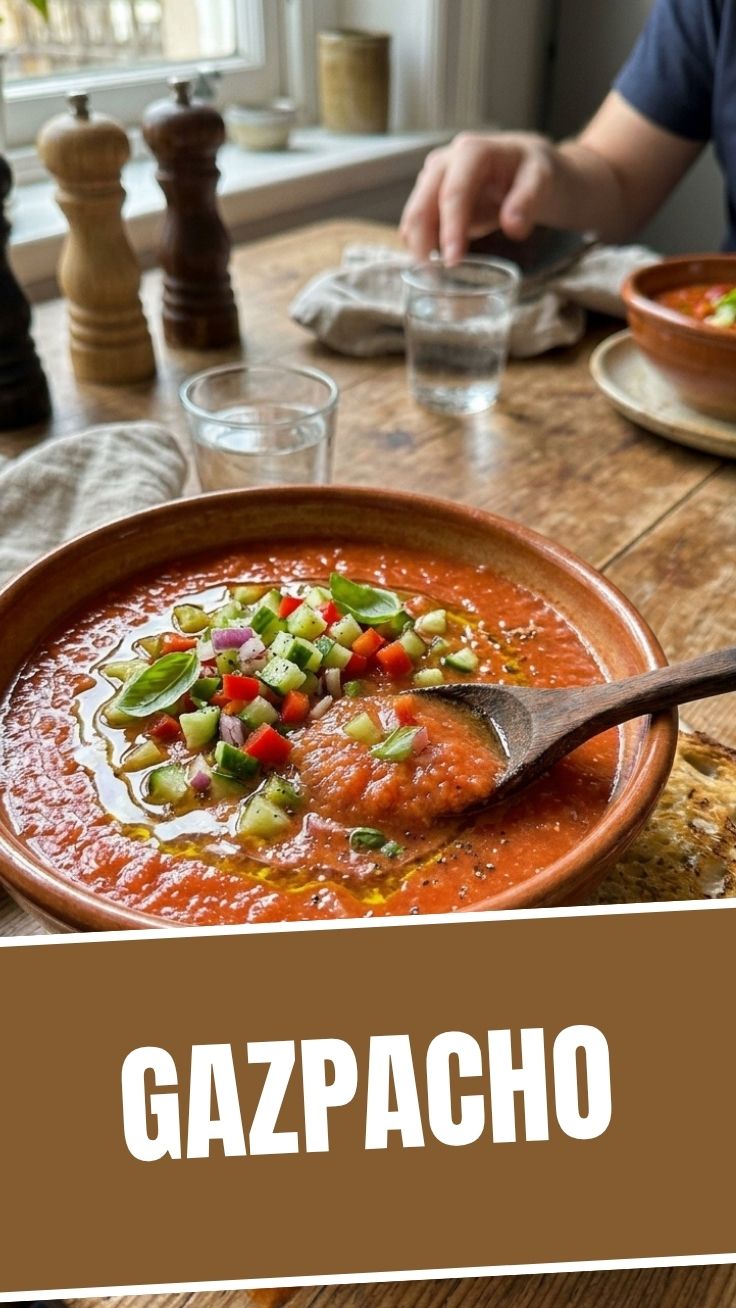
Garnishing ahead: Keep garnishes (diced cucumber, croutons, basil) separate until serving. They become soggy if stored in the soup.
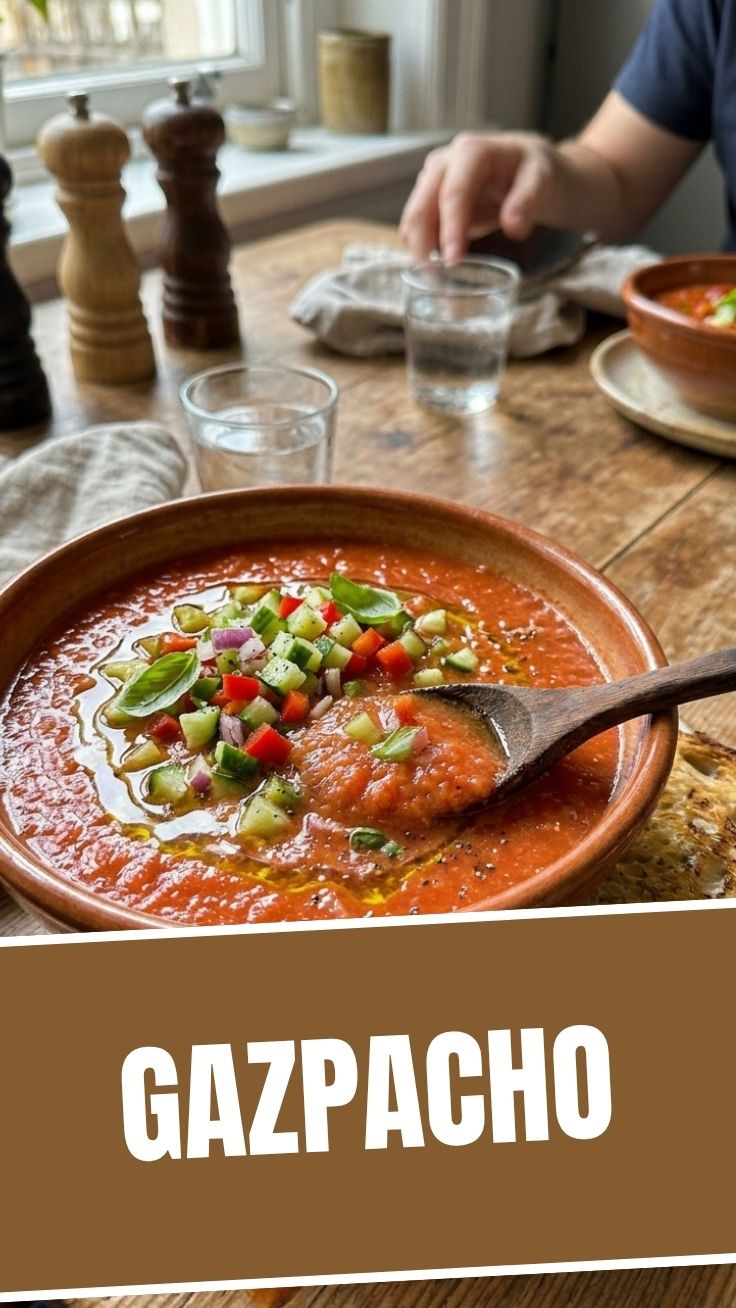
Serving suggestion: Pour into chilled bowls or small glasses and top with a drizzle of olive oil, a few crunchy croutons (optional), and a pinch of flaky sea salt.
Conclusion
Mastering classic gazpacho at home transforms summer dining—you get a vibrant, hydrating meal that’s both simple and sophisticated. This traditional Spanish recipe proves that raw ingredients, handled with care, need no cooking to deliver extraordinary flavor. The key is patience: let the soup rest, taste, and adjust until the balance of tomato sweetness, sherry acidity, and velvety olive oil feels perfect. Whether you serve it as a light starter or a refreshing lunch, homemade gazpacho will become your go-to for hot days. Try it this week and experience how a blender and a few minutes of prep can create something so beautifully satisfying. Have you made gazpacho before? Share your favorite twist in the comments!
FAQs
1. Can I use canned tomatoes for gazpacho?
Yes, but quality matters. Use fire-roasted or San Marzano canned tomatoes (whole, not diced). Drain them partially and reduce the added salt. Fresh tomatoes still yield the brightest flavor.
2. How long does gazpacho need to chill?
At least 2 hours, but 4–6 hours is ideal for flavor development. Overnight chilling (8–12 hours) is excellent—the garlic mellows and all ingredients marry seamlessly.
3. Can I make gazpacho without a high-speed blender?
A food processor works, but you’ll get a chunkier texture. For smoother results, strain the soup after processing. A stick (immersion) blender is less effective on raw vegetables unless they’re well-chopped.
4. Why is my gazpacho bitter?
Bitterness usually comes from too much olive oil or green bell pepper seeds (always remove all seeds and white pith). Over-blending garlic can also release sulfurous notes—use fresh garlic and don’t over-process.
5. Is gazpacho supposed to be thick or thin?
It’s personal preference. Traditional Andalusian gazpacho is slightly thicker than tomato juice. If it’s too thick, stir in 2–3 tablespoons of cold water or ice cubes. If too thin, blend in ½ cup of crushed tomato or a slice of stale bread (a classic Spanish trick!).
Gazpacho (Classic)
Ingredients
Equipment
Method
- Roughly chop tomatoes, cucumber, bell pepper, and onion. Mince the garlic clove.
- Combine all chopped vegetables and garlic in a large bowl with olive oil, red wine vinegar, and cold water. Season with salt and pepper.
- Transfer the mixture to a blender and blend until completely smooth. You may need to do this in batches.
- Pour the blended gazpacho back into the bowl, cover, and chill in the refrigerator for at least 2 hours, or until thoroughly cold.
- Taste and adjust seasonings if necessary, then serve the gazpacho chilled, garnished with a drizzle of olive oil and fresh herbs if desired.