Why This Tangy Lemon Caper Chicken Deserves a Spot in Your Weekly Rotation
Have you ever craved a restaurant-quality meal that feels elegant yet comes together in under 30 minutes? That’s the magic of a perfectly executed Chicken Piccata—a dish that transforms simple pantry staples into a bright, buttery, and briny masterpiece. Preparing this classic at home not only saves you money but gives you complete control over quality ingredients, ensuring a fresher, more vibrant finish than most takeout versions. This beloved Italian recipes staple relies on a delicate balance of lemon, capers, and white wine to create a sauce that clings beautifully to tender chicken cutlets. Today, we’ll walk through every detail to help you master this dish with confidence.
—
Ingredients & Kitchen Tools
For the Chicken
– 2 boneless, skinless chicken breasts – Look for even thickness; if not, butterfly them.
– ½ cup all-purpose flour – For dredging; creates that golden crust.
– Salt and black pepper – Season generously; don’t be shy.
– ½ teaspoon garlic powder – Optional but adds depth.
– 3 tablespoons olive oil – Use extra-virgin for flavor, or avocado oil for higher smoke point.
– 2 tablespoons unsalted butter – Adds richness; can substitute with ghee for dairy-free.
For the Piccata Sauce
– ½ cup dry white wine – Sauvignon Blanc or Pinot Grigio works well; substitute with chicken broth if needed.
– 1 cup low-sodium chicken broth – Keeps salt levels manageable.
– ¼ cup fresh lemon juice – From about 1½ lemons; avoid bottled juice for best flavor.
– 3 tablespoons capers, drained – The briny heart of this dish.
– 2 tablespoons cold unsalted butter – Swirled in at the end for silkiness.
– 2 tablespoons fresh parsley, chopped – For garnish and freshness.
Essential Tools
– Large skillet (12-inch) – Stainless steel or non-stick; cast iron also works.
– Meat mallet or rolling pin – For pounding chicken to even thickness.
– Tongs – For flipping chicken without breaking the crust.
– Microplane or zester – Optional but nice for lemon zest before juicing.
– Instant-read thermometer – Ensures chicken reaches 165°F.
—
Prep Time & Cooking Schedule
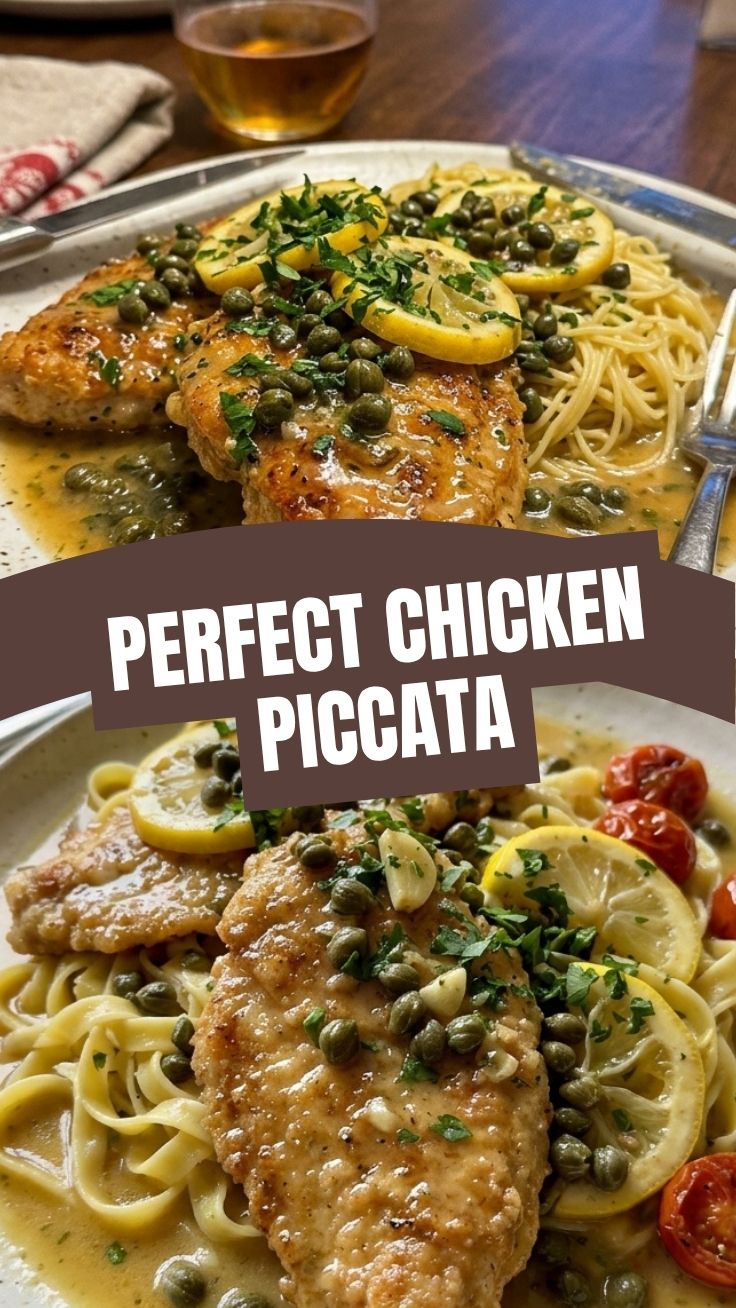
– Prep time: 15 minutes (pounding, seasoning, dredging, juicing lemons)
– Cook time: 15–18 minutes total (5–6 minutes per side for chicken, 5 minutes for sauce)
– Total time: 30–33 minutes
– Resting time: 3–5 minutes before slicing (keeps juices intact)
This dish moves fast once you start. Have all ingredients prepped and measured before you turn on the heat. If you’re cooking for a dinner party, you can pound and season the chicken up to 4 hours ahead and refrigerate — just bring to room temperature 20 minutes before cooking.
—
Step-by-Step Instructions
1. Prepare the chicken: Place each breast between two sheets of plastic wrap and pound to an even ½-inch thickness using a meat mallet or rolling pin. Season both sides with salt, pepper, and garlic powder.
2. Dredge properly: Spread flour on a shallow plate. Working one piece at a time, coat chicken lightly, shaking off excess. This thin layer is what creates that golden crust without becoming pasty.
3. Sear the chicken: Heat olive oil in a large skillet over medium-high heat until shimmering but not smoking. Add chicken and cook 4–5 minutes per side until golden brown and internal temperature reaches 160°F (it will carry over to 165°F while resting). Transfer to a plate and tent loosely with foil.
4. Build the sauce: Reduce heat to medium. Add wine to deglaze, scraping up browned bits with a wooden spoon. Let simmer 1 minute until slightly reduced. Add chicken broth, lemon juice, and capers. Bring to a gentle boil and cook 3 minutes.
5. Finish with butter: Reduce heat to low. Whisk in cold butter one tablespoon at a time until melted and sauce looks glossy. Taste and adjust salt or lemon as needed. This sauce should taste bright and tangy with pops of briny salt from the capers.
6. Combine and serve: Return chicken to pan, spooning sauce over the top. Simmer 1 minute. Garnish with parsley. Serve immediately over angel hair pasta, mashed potatoes, or alongside crusty bread.
Pro tip: If your sauce tastes flat, add another squeeze of lemon. The acid is what makes this Chicken Piccata sing, and it’s also why these Italian recipes are so beloved for their bright, balanced flavors.
—
Nutritional Benefits & Advantages
This dish is surprisingly well-balanced for a butter-enriched sauce:
– Protein-packed: A single serving provides about 35–40g of lean protein from chicken breast.
– Low-carb friendly: Skip the flour dredge (use almond flour or simply pan-sear without coating) for a keto version.
– Vitamin C from lemon: Supports immune health and enhances iron absorption.
– Capers: Low in calories but rich in antioxidants like quercetin, plus a good source of vitamin K.
– Moderate fat: The butter and olive oil provide satiety and help absorb fat-soluble vitamins.
One serving (chicken plus sauce) contains roughly 380–420 calories, making it a satisfying yet guilt-free dinner when paired with vegetables.
—
Tips Variations & Cooking Advice
– Lemon lover’s version: Add 1 teaspoon of lemon zest to the flour dredge for extra citrus aroma.
– Gluten-free adaptation: Use 1:1 gluten-free all-purpose flour or fine cornstarch for dredging. Sauce thickens normally with broth only.
– Dairy-free option: Replace butter with vegan butter or extra olive oil, and skip the final butter swirl — the sauce will still be delicious but less creamy.
– Spicy kick: Add ½ teaspoon red pepper flakes to the sauce while it simmers.
– Herb swap: Substitute parsley with fresh basil or thyme for a different aromatic profile.
– Chicken thighs: Use boneless skinless thighs pounded slightly — cook 6–7 minutes per side for juicier results.
– Make it a one-pan meal: After deglazing, add 2 cups spinach and 1 cup cherry tomatoes; cook until spinach wilts before adding final butter.
—
Common Mistakes to Avoid
| Mistake | Solution |
|—|—|
| Chicken too thick | Always pound to even ½-inch thickness or they’ll burn outside before cooking through. |
| Overcrowding the pan | Cook in batches if needed. Crowding lowers pan temperature and prevents browning. |
| Sauce becomes greasy (separates) | Use cold butter at the very end and whisk constantly. Simmering butter too long breaks the emulsion. |
| Not deglazing properly | Those browned bits (fond) hold serious flavor. Use a wooden spoon and enough liquid to lift them completely. |
| Overcooking chicken | Remove at 160°F internal temp; carry-over cooking will take it to a safe 165°F without drying out. |
—
Storage & Meal Prep Tips
– Refrigeration: Store leftover chicken and sauce together in an airtight container up to 3 days. The chicken will soften slightly from the sauce, which is why it’s best consumed within 48 hours.
– Freezing: Not ideal — the butter sauce may separate upon thawing and the chicken texture can become rubbery. If you must, freeze without the final butter swirl for up to 1 month. Thaw overnight in the fridge and reheat gently.
– Reheating: Warm in a skillet over low heat, adding 1–2 tablespoons chicken broth or water to thin the sauce. Microwave on low power in 30-second intervals; cover loosely to avoid splatter.
– Meal prep shortcut: Pound and season chicken up to 2 days ahead. Pre-squeeze lemon juice and store separately. Dredge right before cooking for best texture.
—
Conclusion
This bright and elegant dish proves that restaurant-quality cooking is within anyone’s reach with a little technique and fresh ingredients. Whether you’re preparing a quick weeknight dinner or impressing guests, the Chicken Piccata delivers consistent results when you follow the steps above — especially the timing for searing and the finishing butter swirl. It’s no surprise this ranks among the most cherished Italian recipes, combining simplicity with incredible depth of flavor. Give it a try this week, and don’t forget to share your results — tag a photo of your golden-lemon creation on social media, and explore our related pasta and chicken dishes for more inspiration!
—
FAQs
Q: Can I use chicken thighs instead of breasts?
A: Absolutely. Boneless skinless thighs work beautifully — they stay juicier and are more forgiving if slightly overcooked. Adjust cooking time to 6–7 minutes per side.
Q: What can I substitute for white wine?
A: Use an equal amount of low-sodium chicken broth plus 1 tablespoon lemon juice and a splash of apple cider vinegar. The flavor won’t be identical, but still deliciously tangy.
Q: Why did my sauce turn cloudy or greasy?
A: This usually happens if the butter is added to a vigorously boiling sauce or melted too slowly. Always use cold butter, cut into cubes, and whisk in over low heat until just incorporated.
Q: Can I make this dairy-free?
A: Yes. Replace butter with a high-quality vegan butter (like Miyoko’s) or use extra olive oil. Skip the final butter swirl and instead thicken the sauce with 1 teaspoon cornstarch mixed with 2 tablespoons cold water.
Q: How do I keep the chicken crispy after adding it back to the sauce?
A: Don’t simmer the chicken in the sauce for more than 1 minute, and serve immediately. For extra crunch, keep the chicken on the platter and spoon sauce around it rather than over the top.
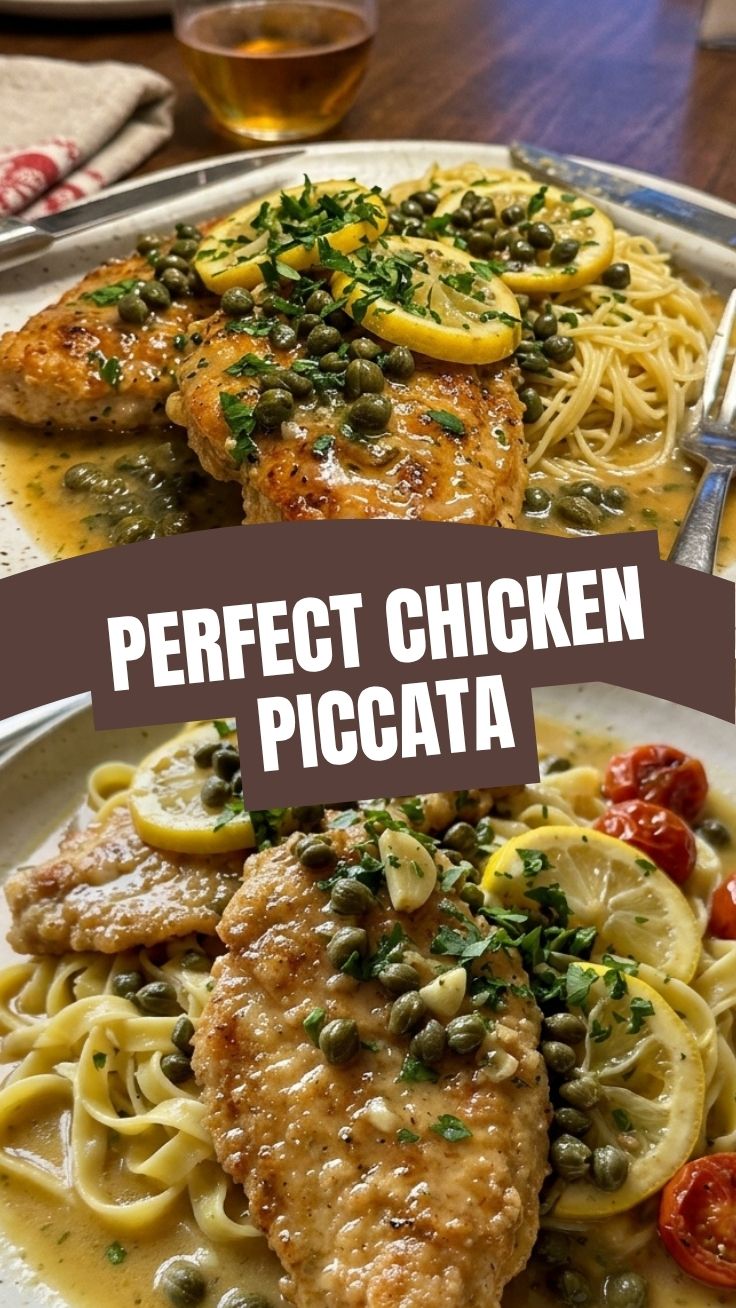
Proven way to grow: Chicken Piccata in 5 steps
Ingredients
Equipment
Method
- Pound chicken breasts to an even 1/2-inch thickness and season with salt and pepper. Dredge the chicken in flour, shaking off any excess.
- Heat butter and olive oil in a large skillet over medium-high heat. Cook the chicken for 3-5 minutes per side until golden brown and cooked through; set aside.
- Deglaze the pan with lemon juice, then add chicken broth and capers; bring to a simmer. Cook for 2-3 minutes, scraping up any browned bits from the bottom of the pan.
- Return the cooked chicken to the skillet, coating it in the sauce. Garnish with fresh parsley and serve immediately.