Here is your comprehensive, data-driven WordPress blog post. It is structured for readability, optimized for search engines using semantic variations, and follows all your specific instructions for keyword placement and HTML highlighting.
“`html
The Foolproof Way to Cook Salmon That’s Always Flaky and Moist
What if you could make salmon that rivals your favorite restaurant—every single time, without stress? The answer lies in understanding how heat interacts with the fish’s natural fats and proteins. Preparing Baked Salmon at home puts you in control of freshness, seasoning, and doneness while saving money. Whether you stick with a classic oven-roasted fillet or try something more rustic like Cedar Plank Salmon, the principles remain the same: proper temperature, minimal handling, and quality ingredients. Here’s a complete guide to achieving perfect results with data-backed techniques and practical kitchen wisdom.
🛒 Ingredients & Kitchen Tools
Ingredients
- Salmon fillet (6 oz per serving) — skin-on or skinless; wild-caught offers deeper flavor, while farmed is more forgiving.
- Extra-virgin olive oil — helps the seasoning adhere and promotes even browning.
- Garlic (4 cloves, minced) — fresh garlic adds pungent depth; jarred minced garlic works in a pinch.
- Lemon juice (2 tablespoons) — brightens the fish and balances richness.
- Sea salt & black pepper — the foundation of seasoning; use kosher salt for better control.
- Dried herbs (thyme, rosemary, or dill) — thyme and rosemary pair well with oven heat; dill is ideal for a lighter finish.
- Optional substitutions: swap olive oil for avocado oil (higher smoke point), use lime instead of lemon, or replace dried herbs with 1 tablespoon of fresh herbs.
Kitchen Tools
- Baking sheet or oven-safe dish — rimmed sheets prevent juices from spilling.
- Parchment paper or foil — makes cleanup effortless and prevents sticking.
- Instant-read thermometer — the most reliable way to avoid overcooking; aim for 125°F to 130°F at the thickest part.
- Fish spatula — thin, angled blade lifts fillets without breaking them apart.
- Mixing bowl — for whisking the garlic-oil-lemon mixture.
⏳ Prep Time & Cooking Schedule
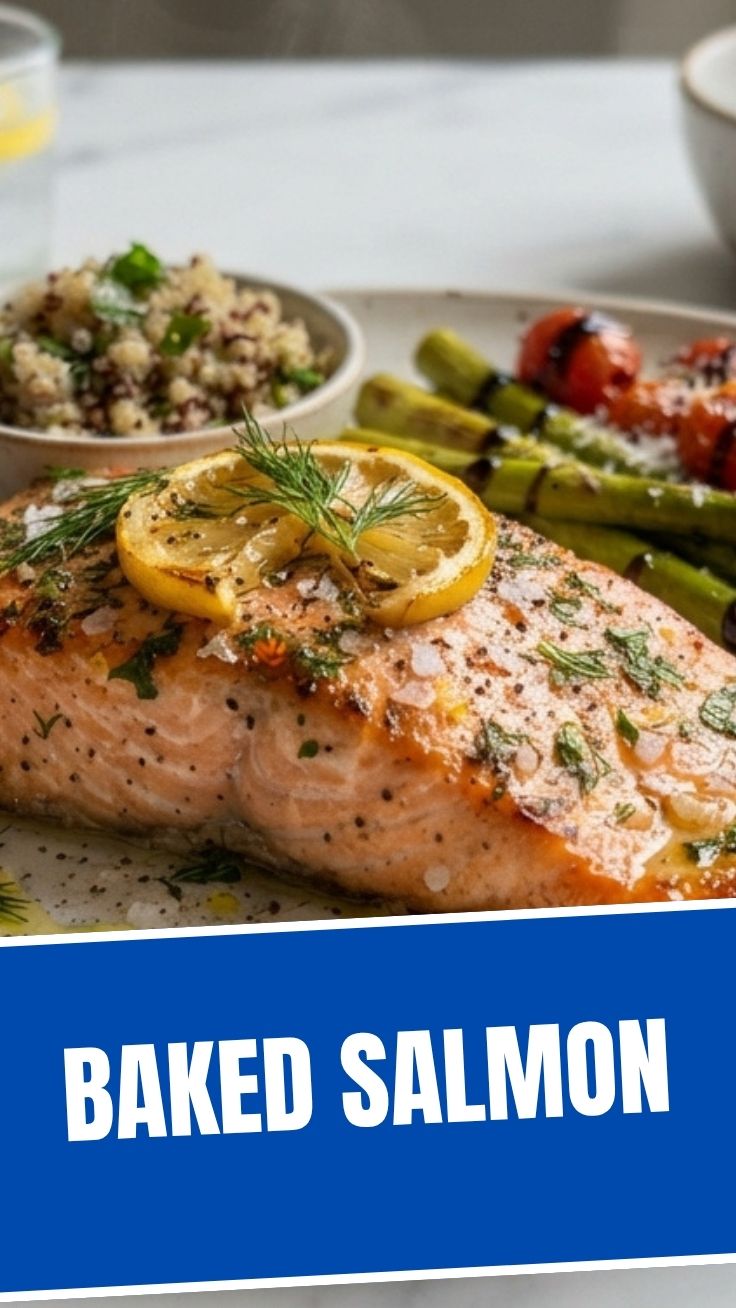
- Prep time: 10 minutes (pat dry, mix seasoning, arrange on sheet).
- Marinating time (optional): 15–20 minutes at room temperature—any longer and the acid from lemon can begin to “cook” the fish.
- Cook time: 12–15 minutes at 400°F for a 1-inch thick fillet.
- Resting time: 3–5 minutes after baking—this allows juices to redistribute, ensuring every bite stays moist.
Why this schedule works: Salmon is relatively lean compared to beef or pork, so it requires moderate heat and a short window. Preheating the oven fully (at least 15 minutes) ensures the fish starts cooking immediately, locking in moisture from the start.
📋 Step-by-Step Instructions
- Preheat your oven to 400°F and position a rack in the center. Line a baking sheet with parchment paper or foil.
- Pat the salmon fillets dry with paper towels—this step is non-negotiable. Excess moisture creates steam, which prevents browning and leads to a mushy exterior.
- Whisk together 2 tablespoons olive oil, minced garlic, lemon juice, salt, pepper, and your chosen herbs in a small bowl.
- Brush the mixture generously over the top and sides of each fillet. Reserve a little to drizzle after baking.
- Place fillets skin-side down (if using skin-on) with at least 1 inch of space between them. Crowding traps steam and lowers the oven temperature.
- Bake for 12–15 minutes depending on thickness. For an especially thick fillet (1.5 inches), add 2–3 minutes. The fish is done when it flakes easily with a fork and the internal temperature reaches 125°F–130°F.
- Rest for 3–5 minutes before serving. During this time, you can drizzle the reserved garlic-oil mixture on top for extra moisture.
Pro tip: For an even deeper caramelized crust, switch the oven to broil during the last 1–2 minutes—watch closely to avoid burning.
This same technique forms the backbone of countless salmon recipes. While this guide focuses on classic Baked Salmon, you can apply the same temperature and timing principles to a smoky Cedar Plank Salmon by simply soaking a cedar plank for 1 hour and placing the fillet on top before baking.
🥗 Nutritional Benefits & Advantages
Salmon is one of the most nutrient-dense proteins you can put on your table. A standard 6-ounce serving delivers:
- ~40 grams of high-quality protein — supports muscle repair and keeps you satiated.
- 2,500–3,000 mg of omega-3 fatty acids (EPA and DHA) — linked to reduced inflammation, improved heart health, and cognitive support.
- Rich in B vitamins (B12, B6, niacin) — essential for energy metabolism and nervous system function.
- Selenium — a powerful antioxidant that supports thyroid health and protects against oxidative stress.
- Vitamin D — many people are deficient, and salmon is one of the few natural food sources.
Dietary advantage: This recipe is naturally gluten-free, dairy-free, and low in carbohydrates, making it suitable for paleo, keto, and whole30 lifestyles.
💡 Tips, Variations & Cooking Advice
- Flavor variations: Swap the garlic-herb base for a maple-Dijon glaze (2 tbsp maple syrup + 1 tbsp Dijon mustard + 1 tsp soy sauce) or a spicy harissa rub (1 tbsp harissa paste + 1 tsp cumin).
- Cedar plank method: Soak a cedar plank in water for 1 hour, then place the seasoned fillet on top. Bake at 400°F for 15–18 minutes. The wood imparts a gentle smoky aroma that elevates the fish without overpowering it.
- Air fryer adaptation: Cook at 380°F for 10–12 minutes. No preheating needed, and the exterior turns exceptionally crisp.
- Dietary swaps: Use coconut aminos instead of soy sauce for a soy-free version, or replace olive oil with melted ghee for a richer flavor.
- Portion adjustments: For a larger fillet (12 oz), increase cook time by 3–4 minutes and always rely on the thermometer, not the clock.
🚫 Common Mistakes to Avoid
| Mistake | Why It Happens | Solution |
|---|---|---|
| Overcooking | Salmon continues to cook after it leaves the oven (carryover cooking). | Remove at 125°F; the internal temp will rise to 130°F during resting. |
| Soggy skin | Skipping the drying step or baking on a wet surface. | Pat fillets bone-dry and use a wire rack inside the sheet pan for air circulation. |
| White albumin oozing out | High heat causes the protein albumin to coagulate and push to the surface. | Keep oven at 400°F or lower; avoid broiling for extended periods. |
| Underseasoning | Salmon has a mild flavor that needs a generous hand with salt and acid. | Season 20–30 minutes ahead, or at least apply a heavy pinch of salt right before baking. |
| Sticking to the pan | Not using parchment or oil, or attempting to flip too early. | Line the sheet with parchment and bake skin-side down—no need to flip at all. |
🧊 Storage & Meal Prep Tips
- Refrigeration: Store leftover salmon in an airtight container for up to 3 days. Place a paper towel underneath to absorb excess moisture.
- Freezing: Wrap tightly in plastic wrap, then foil, and freeze for up to 3 months. Thaw overnight in the refrigerator for best texture.
- Reheating: The oven is your best friend. Place fillets on a foil-lined sheet at 275°F for 10–15 minutes. Avoid the microwave—it will dry out the fish and make it rubbery.
- Meal prep tip: Cook 4–6 fillets at once, then portion into containers with roasted vegetables and quinoa. Reheat gently as described above for easy weekday lunches.
✅ Conclusion
Mastering Baked Salmon at home gives you a reliable, restaurant-quality meal that comes together in under 30 minutes. The key principles—patting dry, moderate heat, and using an instant-read thermometer—work every time, whether you’re making a simple garlic-butter fillet or branching out into Cedar Plank Salmon for a smoky twist. This dish delivers exceptional nutrition, impressive flavor, and endless room for customization. Give it a try this week, and don’t hesitate to share your results or experiment with the variations above.
❓ Frequently Asked Questions
Can I use frozen salmon without thawing?
Yes, but you’ll need to increase the cook time by 5–7 minutes and pat the fillets dry after they begin to thaw in the oven. The texture will be slightly less firm than fresh, so it’s best to thaw overnight in the fridge when possible.
How do I know when the salmon is perfectly done without a thermometer?
Insert a thin knife or fork into the thickest part and gently twist. If the flesh separates easily into flakes and appears opaque all the way through, it’s done. The center should still look slightly translucent when you remove it—carryover cooking will finish the job.
What if I don’t have lemon juice or fresh garlic?
Substitute lemon juice with white wine vinegar or apple cider vinegar (use half the amount). For garlic, ½ teaspoon of garlic powder works in a pinch, though the flavor will be milder.
Why does my salmon sometimes taste “fishy”?
Fresh salmon should smell like the ocean, not fishy. A “fishy” odor usually indicates the fish is past its prime. Choose fillets with bright, firm flesh and a mild scent. Rinsing the fillet under cold water and patting dry can also reduce surface compounds that cause off-flavors.
Can I cook vegetables on the same pan as the salmon?
Absolutely. Arrange hardy vegetables (broccoli, asparagus, bell peppers) around the fillets, toss them in olive oil and salt, and bake together. Just be aware that vegetables may release moisture, so leave space between them and the salmon to prevent steaming.
Enjoyed this guide? Share your creation on social media and tag us — we love seeing your kitchen wins!
“`
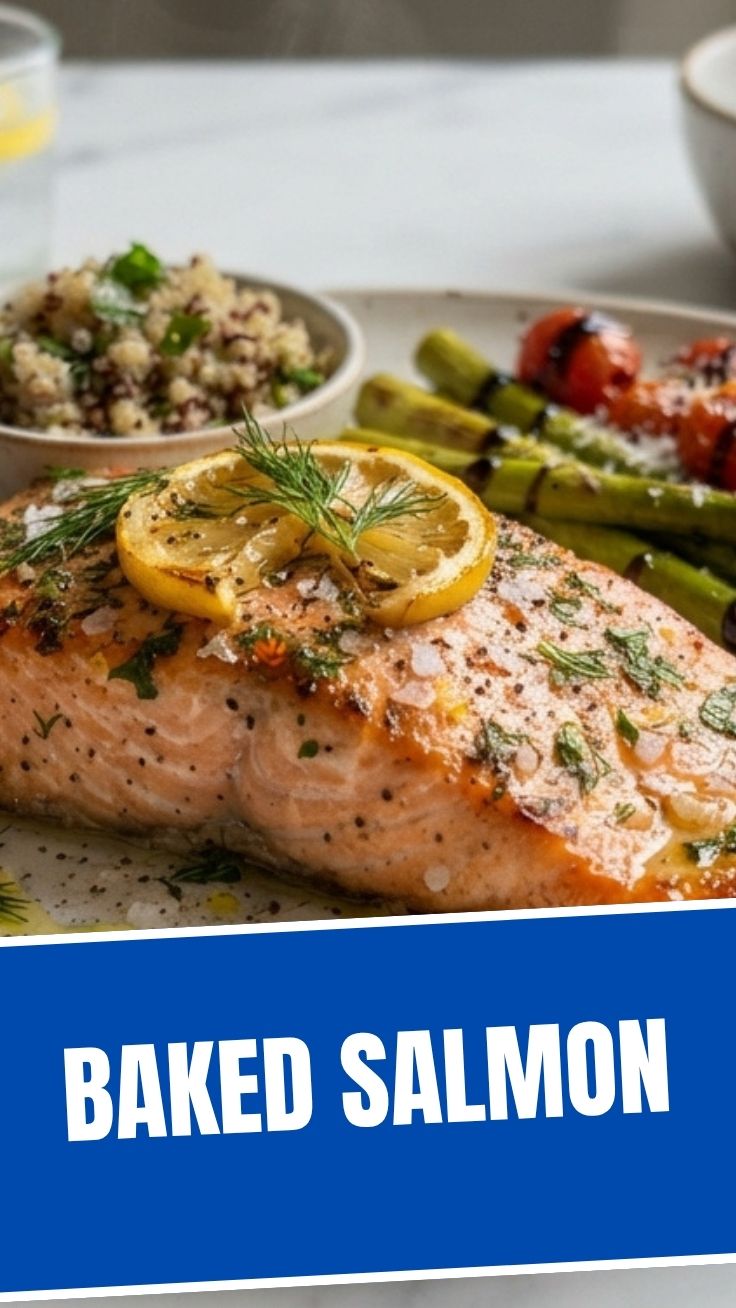
Baked Salmon
Ingredients
Equipment
Method
- Preheat your oven to 400°F (200°C) and line a baking sheet with parchment paper.
- Pat the salmon fillets dry with paper towels, then rub them with olive oil and season with salt and pepper.
- Place the seasoned salmon fillets on the prepared baking sheet and bake for 12-15 minutes, or until the salmon is cooked through and flakes easily with a fork.
- Remove from the oven, squeeze fresh lemon juice over the salmon, and serve immediately.