Why This Chimichurri Steak Will Become Your Go-To Weeknight Dinner
Have you ever wondered why restaurant-quality steak seems impossible to replicate at home? The secret isn’t a fancy grill or years of culinary training—it’s all about technique and the right flavor companions. This Chimichurri Steak delivers that bold, herbaceous punch directly from your own kitchen in under 30 minutes. By mastering this recipe, you’ll save money on dining out while impressing family and friends with a meal that looks and tastes like it came from a top-tier steakhouse. The vibrant green sauce, made fresh from parsley, oregano, garlic, and olive oil, transforms a simple cut of beef into something extraordinary. Whether you’re a seasoned home cook or just starting your culinary journey, preparing Chimichurri Steak at home gives you complete control over quality, doneness, and cost—all while using accessible ingredients that won’t intimidate.
Ingredients & Kitchen Tools
For the Steak
– 1½ lbs ribeye or sirloin steak (1-inch thick) – Ribeye offers superior marbling and tenderness; sirloin is a leaner budget-friendly alternative
– 2 tablespoons olive oil – Use extra-virgin for best flavor; avocado oil works as a neutral substitute
– 1 teaspoon kosher salt – Coarse salt seasons better than fine table salt; sea salt is a fine alternative
– ½ teaspoon black pepper – Freshly ground offers more aromatic complexity than pre-ground
For the Chimichurri Sauce
– 1 cup fresh parsley – Flat-leaf Italian parsley has better flavor density than curly; cilantro can substitute 50%
– ¼ cup fresh oregano – Mexican oregano or marjoram can substitute; dried oregano works too (use 1 tablespoon)
– 4 garlic cloves – Roasted garlic adds sweetness; garlic powder (1 teaspoon) works in a pinch
– ½ cup extra-virgin olive oil – The backbone of this Chimichurri sauce recipe
– 2 tablespoons red wine vinegar – White wine or apple cider vinegar can substitute
– ¼ teaspoon red pepper flakes – Optional for heat; cayenne or paprika can replace
– Salt to taste
Kitchen Tools
– Cast iron skillet or heavy-bottomed stainless steel pan – Retains heat best for perfect searing
– Sharp chef’s knife – For clean cuts and fine herb chopping
– Cutting board
– Mixing bowl
– Tongs – Essential for flipping steak without piercing
– Meat thermometer – Ensures perfect doneness every time
– Small food processor or mortar and pestle – For authentic sauce texture
Prep Time & Cooking Schedule
Total active time: 25 minutes
Optional overnight marinating: 8+ hours
| Stage | Time | Notes |
|——-|——|——-|
| Steak tempering | 20 minutes | Remove from fridge 20 min before cooking |
| Chimichurri preparation | 10 minutes | Can be made up to 3 days ahead |
| Cooking | 8–12 minutes | Depending on thickness and desired doneness |
| Resting | 5–8 minutes | Critical for juice retention |
| Slicing and serving | 2 minutes | Always slice against the grain |
Pro tip: Make the chimichurri first while your steak comes to room temperature. This way, flavors meld while you cook.
Step-by-Step Instructions
1. Prepare the steak: Remove ribeye from refrigerator 20 minutes before cooking. Pat completely dry with paper towels—moisture is the enemy of a good sear. Season generously with kosher salt and black pepper on all sides, pressing the seasoning into the meat.
2. Make the chimichurri sauce: Finely chop parsley and oregano leaves. Mince garlic cloves. Combine herbs and garlic in a bowl, then stir in olive oil, red wine vinegar, red pepper flakes, and salt. For a smoother texture, pulse 3–4 times in a food processor, but avoid completely pureeing—you want visible herb pieces. This authentic Chimichurri sauce recipe enhances every bite of your dish. Set aside at room temperature.
3. Heat your pan: Place cast iron skillet over high heat for 3–5 minutes until smoking hot. Add 2 tablespoons olive oil, swirling to coat the bottom. The oil should shimmer and ripple—this indicates proper temperature for searing.
4. Sear the steak: Carefully lay steak in the hot pan away from you to avoid oil splatter. Press down gently with a spatula for 30 seconds to ensure maximum contact. Cook undisturbed for 4 minutes (for medium-rare with 1-inch steak). The crust should be deep mahogany brown—if it’s pale, your pan wasn’t hot enough.
5. Flip and finish: Using tongs, flip steak to the other side. Add 1 tablespoon butter (optional) and aromatic herbs like thyme or rosemary sprigs. Cook another 4 minutes for medium-rare. For thick cuts, finish in a 400°F oven for 3–5 minutes.
6. Check doneness: Insert meat thermometer into the thickest part. Target temperatures: 125°F for rare, 130°F for medium-rare, 140°F for medium, 150°F for medium-well. Remember, temperature rises 5°F during resting. Cooking your own Chimichurri Steak at home allows you to dial in perfect doneness every time.
7. Rest the steak: Transfer steak to a cutting board, tent loosely with foil, and let rest 5–8 minutes. This step is non-negotiable—it allows juices to redistribute throughout the meat rather than pooling on your plate.
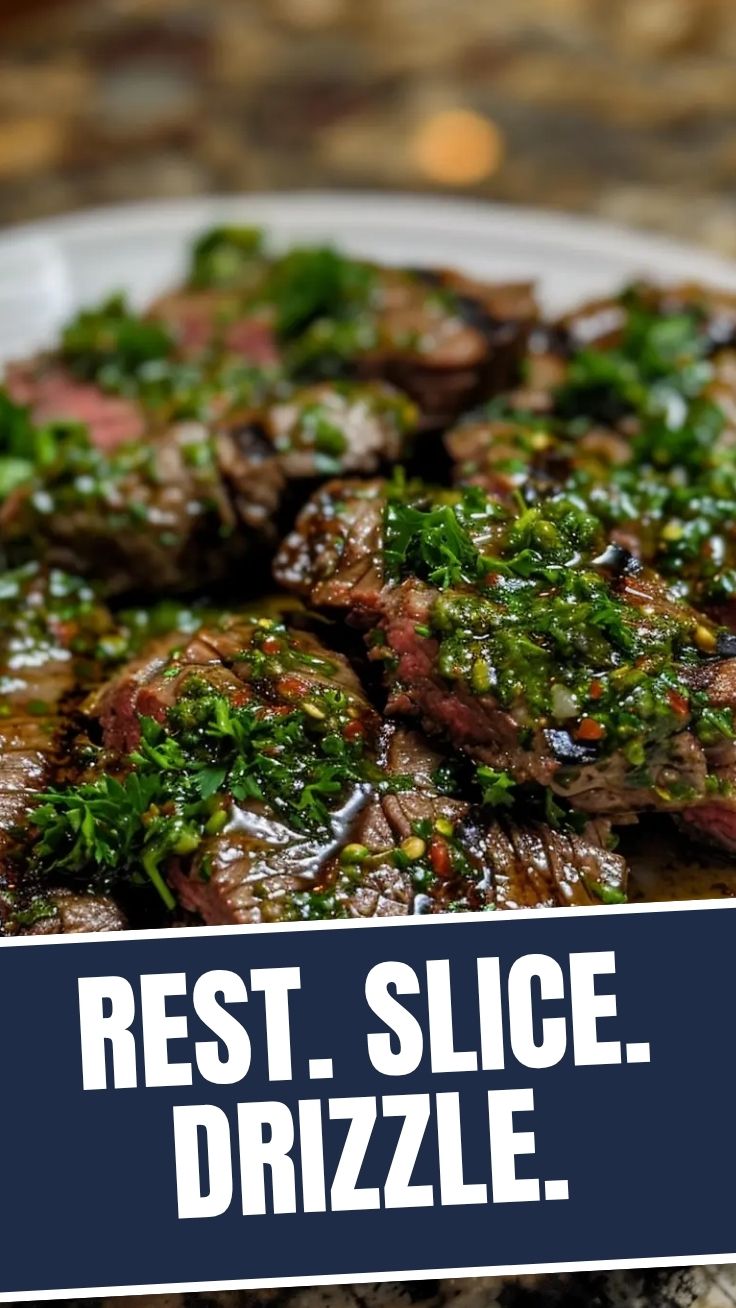
8. Slice and serve: Slice against the grain (perpendicular to the muscle fibers) into ½-inch strips. Drizzle generously with chimichurri sauce and serve immediately with extra sauce on the side.
Nutritional Benefits & Advantages
This Chimichurri Steak offers impressive nutritional density. A 6-ounce serving (with 2 tablespoons chimichurri) provides approximately 450 calories, 35g protein, 35g fat, and only 2g carbohydrates, making it suitable for keto, paleo, and low-carb diets.
– High-quality protein: Ribeye provides complete amino acids essential for muscle repair and recovery
– Iron and B vitamins: Beef is rich in heme iron (more absorbable than plant sources) and vitamin B12 for energy metabolism
– Healthy fats from olive oil: The sauce’s extra-virgin olive oil delivers anti-inflammatory polyphenols
– Antioxidant-rich herbs: Parsley contains flavonoids and vitamin K (one cup provides 550% of daily vitamin K needs)
– Garlic benefits: Allicin in garlic supports immune function and cardiovascular health
Tips Variations & Cooking Advice
Flavor Variations
– Smoky chipotle version: Add 1–2 minced chipotles in adobo to the chimichurri
– Citrus twist: Replace half the vinegar with fresh lime juice and add 1 teaspoon lime zest
– Herb swap: Substitute half the parsley with fresh cilantro or mint for brighter flavor
Alternative Cooking Methods
– Grilling: Cook over high direct heat (450°F) for 4 minutes per side for medium-rare
– Sous vide: Cook at 130°F for 1–2 hours, then sear 60 seconds per side in smoking hot pan
– Air fryer: Cook at 400°F for 8–10 minutes, flipping halfway through
Dietary Adaptations
– Gluten-free: Naturally gluten-free—no modifications needed
– Dairy-free: Omit optional butter; use only olive oil in pan
– Low-sodium: Reduce salt in both steak and sauce; use fresh herbs for flavor depth
– Budget-friendly: Substitute sirloin, flank, or skirt steak—cook flank/skirt medium-rare, slice thin against grain
Common Mistakes to Avoid
| Mistake | Solution |
|———|———-|
| Cooking cold steak | Always temper at room temperature for 20 minutes before cooking |
| Overcrowding the pan | Cook one steak at a time in a pan large enough for 1-inch clearance on all sides |
| Flipping too early | Let steak develop crust; it will naturally release from pan when ready |
| Overcooking | Use a meat thermometer; remove 5°F below target temperature |
| Slicing too early | Always rest steak 5–8 minutes to prevent juice loss |
| Making sauce too far ahead | While chimichurri can be refrigerated 3 days, serve at room temperature and use within 3 days for best color |
| Using dried herbs exclusively | Fresh herbs are critical; if using dried oregano, reduce to 1 tablespoon and add fresh parsley |
Storage & Meal Prep Tips
Refrigeration
– Cooked steak: Wrap tightly in foil or place in airtight container. Consume within 3–4 days. Store sliced steak separately from chimichurri to prevent sogginess.
– Chimichurri sauce: Store in a glass jar with a tight lid. Refrigerate up to 5 days. The olive oil may solidify—simply let sit at room temperature 15 minutes before serving.
Freezing
– Cooked steak: Slice first, then freeze in single layer on baking sheet. Transfer to freezer bag for up to 3 months. Thaw overnight in refrigerator.
– Chimichurri sauce: Freeze in ice cube trays, then transfer cubes to freezer bag for up to 6 months. Thaw individual cubes as needed.
Reheating
– Best method: Skillet over medium-high heat with a splash of beef broth or water, 2–3 minutes per side
– Second best: Oven at 325°F for 5–7 minutes covered with foil
– Avoid: Microwave, which toughens meat and makes it rubbery
Meal Prep Strategy
– Marinate steak up to 24 hours ahead in chimichurri (use ⅓ of sauce)
– Cook steak Sunday, slice, and refrigerate for weekday salads, wraps, or rice bowls
– Keep chimichurri and steak separate until serving to maintain texture
Conclusion
Mastering this Chimichurri Steak transforms a simple weeknight dinner into a restaurant-quality experience without leaving your home. The key takeaways are simple: start with quality meat, let it come to room temperature, sear in a screaming hot pan, rest it properly, and finish with vibrant chimichurri made from fresh herbs. The beauty of this dish lies in its flexibility—whether you prefer ribeye or sirloin, cast iron or grill, spicy or mild chimichurri, the fundamental techniques remain the same. By making this staple at home, you gain complete control over ingredients, doneness, and cost while impressing everyone at your table. If you want to explore more, try adapting this Chimichurri sauce recipe with other proteins like grilled chicken, roasted salmon, or even roasted vegetables. Give this recipe a try this week, snap a photo of your creation, and share your results—we’d love to see how it turns out in your kitchen.
Frequently Asked Questions
Can I use dried herbs instead of fresh for chimichurri?
Fresh herbs are strongly recommended for authentic texture and flavor. If dried is your only option, use 1 tablespoon dried oregano and ¼ cup dried parsley, but expect a less vibrant taste and darker color. Soak dried herbs in the vinegar for 10 minutes before adding oil.
How do I know when my steak is done without a thermometer?
Use the hand test: Touch the steak, then touch your palm at the base of your thumb. For rare (120-125°F), the steak feels like your cheek when relaxed. For medium-rare (130-135°F), feels like your chin when touching thumb to middle finger. For medium (140-145°F), like the fleshy part of your forehead.
Can I make chimichurri ahead of time?
Yes! Make chimichurri up to 3 days ahead and refrigerate in an airtight container. However, for best color and flavor, bring it to room temperature before serving and use within 2–3 days. The parsley will gradually darken from oxidation.
What’s the best cheap steak cut for this recipe?
Flank steak or skirt steak are excellent budget-friendly options. They’re leaner than ribeye and benefit from a 30-minute soak in chimichurri before cooking. Cook to medium-rare (130°F) and always slice thinly against the grain at a slight angle for tenderness.
How do I prevent my steak from smoking up the kitchen?
Use a high smoke-point oil like avocado oil (520°F smoke point) instead of extra-virgin olive oil (375°F). Ensure your pan is clean from previous cooking. Crack a window or turn on your range hood. If smoking is extreme, lower heat slightly—you still want a sear, but not burnt oil.
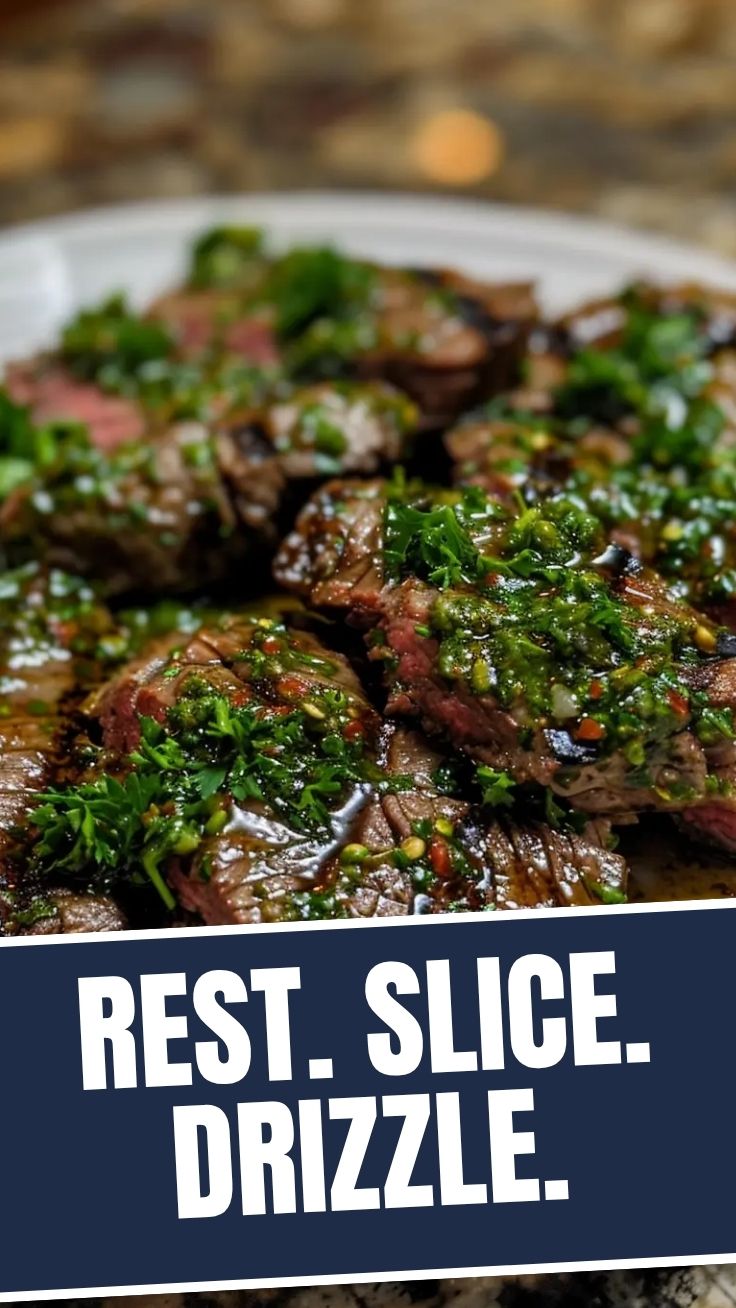
Best way to grow tender Chimichurri Steak
Ingredients
Equipment
Method
- Finely chop parsley, cilantro, and garlic then combine in a bowl.
- Whisk in red wine vinegar, olive oil, red pepper flakes, dried oregano, salt, and pepper until well combined.
- Pat the flank steak dry and season generously with olive oil, salt, and black pepper on both sides.
- Preheat a grill or cast-iron skillet to medium-high heat and sear the steak for 4-6 minutes per side for medium-rare.
- Remove the steak from heat and let it rest for 5-10 minutes before slicing against the grain into thin strips.
- Spoon the chimichurri generously over the sliced steak.
- Serve immediately with optional lime wedges and crusty bread.