Blackened Salmon vs. Cajun Salmon: Which Bold Recipe Will You Master Tonight?
Have you ever bitten into a perfectly charred, spice-crusted salmon fillet and wondered how restaurants achieve that deep, smoky flavor without drying out the fish? The secret lies in the technique—and you can absolutely replicate it at home. Whether you’re craving the classic Blackened Salmon with its dramatic black crust or the herbaceous kick of a Cajun Salmon, preparing this restaurant-quality dish in your own kitchen saves money, lets you control the spice level, and ensures fresh, nutritious ingredients. Today we’re diving into both approaches, starting with a focus on blackened salmon and its close cousin, Cajun salmon, to help you choose—or combine—the best of both worlds.
—
Ingredients & Kitchen Tools
For the Blackened/Cajun Spice Blend
– Paprika (smoked or sweet) – adds color and earthy depth.
– Garlic powder – essential aromatic base.
– Onion powder – balances the heat.
– Dried thyme & oregano – classic Cajun herbs.
– Cayenne pepper – adjustable for heat preference.
– Salt & black pepper – to taste.
– Optional: white pepper, chili powder, or a pinch of brown sugar for caramelization.
For the Salmon
– 4 salmon fillets (6 oz each, skin-on or skinless) – wild-caught preferred for flavor.
– 2 tbsp unsalted butter (or avocado oil for dairy-free) – helps the crust adhere and prevents sticking.
– Lemon wedges – for serving.
Kitchen Tools
– Cast-iron skillet – best for even, high heat (or stainless steel).
– Tongs – for flipping without tearing.
– Instant-read thermometer – guarantees perfect doneness (125°F for medium).
– Paper towels – to dry fillets thoroughly.
– Small bowl – for mixing the spice blend.
—
Prep Time & Cooking Schedule
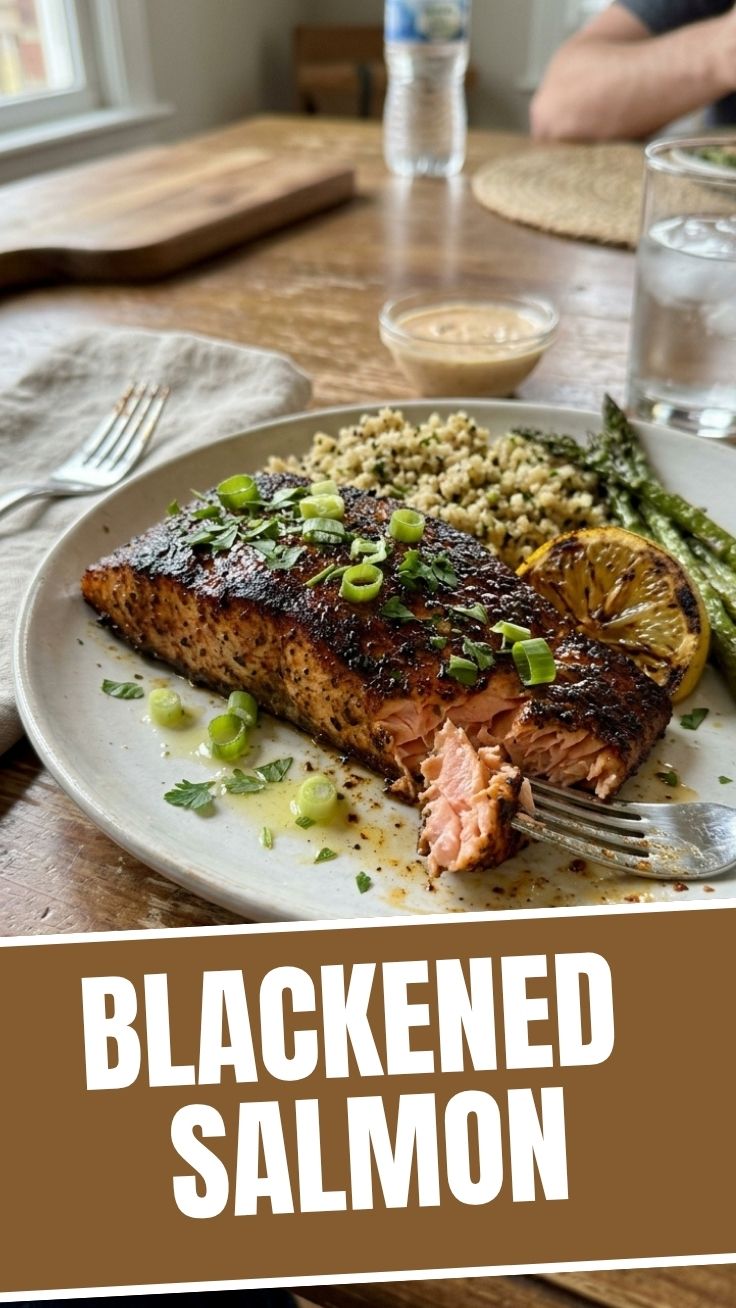
– Prep time: 10 minutes (mix spices, pat salmon dry).
– Cooking time: 6–8 minutes total (3–4 minutes per side in a screaming-hot skillet).
– Resting time: 3 minutes off heat – crucial for juices to redistribute.
– Total: under 20 minutes.
Pro tip: While the skillet heats (5 minutes on high), you can prep sides like roasted asparagus or a quick cucumber salad. The entire meal comes together faster than takeout delivery.
—
Step-by-Step Instructions
1. Dry and season – Pat salmon fillets completely dry with paper towels. Moisture is the enemy of a good crust. Generously coat both sides with your spice blend (use about 1 tablespoon per fillet). Press the seasoning gently into the flesh.
2. Heat the skillet – Place a cast-iron skillet over high heat for 3–5 minutes until it’s nearly smoking. Drop a water droplet in; it should sizzle instantly.
3. Add fat – Carefully add 1 tbsp butter (or oil) and swirl to coat. The butter will brown quickly – that’s perfect.
4. Sear the first side – Lay fillets flesh-side down (if skin-on, start skin-side up). Cook undisturbed for 3 minutes. The crust should be dark – nearly black – but not burnt. This is where the magic of blackened salmon happens.
5. Flip and finish – Flip with tongs. If using butter, add another tablespoon. Cook 2–3 minutes for 1-inch thick fillets. Check internal temperature at 125°F for moist, flaky results. The spice crust should be aromatic and slightly charred.
6. Rest and serve – Transfer to a plate, tent with foil, and rest 3 minutes. Squeeze lemon over top. The Cajun salmon variation shines here – the lemon cuts through the rich spice blend beautifully.
Tip: For a more intense crust, pat the fillet with butter before applying the spice mix. This helps the seasoning stick better.
—
Nutritional Benefits & Advantages
Salmon is a superstar of omega-3 fatty acids (EPA and DHA), which support heart health and reduce inflammation. A single 6-ounce serving provides about 35g of high-quality protein, plus significant amounts of vitamin D, selenium, and B vitamins.
The spice blend adds minimal calories but delivers antioxidants from paprika and cayenne. The blackening method uses only a small amount of butter or oil – far less fat than deep-frying. This dish fits perfectly into keto, paleo, low-carb, and Mediterranean diets. By cooking at home, you also avoid the excess sodium and preservatives often found in restaurant versions of blackened salmon or Cajun salmon.
—
Tips, Variations & Cooking Advice
– Spice level: Reduce cayenne to 1/4 tsp for mild heat; double it for a fiery kick.
– Herb swap: Replace dried oregano with fresh thyme or tarragon for a different profile.
– Cooking alternative: Grill over high heat for 4 minutes per side – the smoke adds incredible flavor.
– Dairy-free: Use coconut oil or ghee (clarified butter is still dairy-free-friendly).
– Gluten-free: All spices are naturally gluten-free – just ensure your paprika brand is certified if needed.
– Serving suggestion: Serve over creamy grits, with steamed green beans, or on a bed of arugula with vinaigrette.
—
Common Mistakes to Avoid
– Skipping the dry step – Wet fillets steam instead of searing, leading to a pale, soggy crust.
– Using a non-stick skillet – Non-stick pans can’t reach the high heat needed for true blackening. Cast iron or carbon steel is essential.
– Overcrowding the pan – Cook in batches if needed. Crowding drops the pan temperature and causes steaming.
– Flipping too early – Let the crust form naturally. If the fillet sticks, it’s not ready to flip.
– Ignoring resting time – Cutting into hot salmon causes juices to run out, leaving dry fish. Patience pays off.
—
Storage & Meal Prep Tips
– Refrigeration: Store leftover cooked salmon in an airtight container for up to 3 days. The crust will soften slightly, but the flavor remains bold.
– Freezing: Wrap individual fillets tightly in plastic wrap then foil. Freeze for up to 2 months. Thaw overnight in the fridge.
– Reheating: For best texture, reheat in a skillet over medium heat for 1–2 minutes per side, or in a toaster oven at 350°F for 5 minutes. Avoid microwaving – it makes the fish rubbery.
– Meal prep: Cook a double batch on Sunday. Use leftover flaked salmon in salads, wraps, or over rice bowls for quick lunches.
—
Conclusion
From the dramatic, smoky crust of blackened salmon to the herb-forward punch of Cajun salmon, this recipe proves that a 15-minute dinner can rival any seafood restaurant. You’ve learned the essential steps: dry the fillet, get the skillet screaming hot, trust the crust, and rest before serving. Now it’s your turn – fire up that cast iron, mix your spice blend, and taste the difference homemade makes. Try it tonight, share your photos, and explore more spice-forward seafood recipes on the blog. Remember, the perfect blackened salmon or Cajun salmon is just a skillet away.
—
FAQs
Q: Can I use skin-on salmon for blackening?
Yes – cook skin-side first for extra crispiness, then flip to finish. The skin helps protect the delicate flesh from the high heat.
Q: My spice blend tasted bitter – what went wrong?
Burnt spices! Ensure your pan isn’t too hot (aim for medium-high, not screaming hot) and don’t let the butter burn black. Toasted spices should smell aromatic, not acrid.
Q: How do I make it less spicy without losing flavor?
Reduce cayenne and add smoked paprika plus a pinch of brown sugar. The sugar caramelizes nicely and balances heat.
Q: Can I use frozen salmon?
Yes, but thaw completely in the fridge overnight and pat extremely dry. Frozen fish releases more water, so extra drying is key.
Q: Is blackened salmon and Cajun salmon the same thing?
They’re very similar, but Cajun seasoning typically includes more herbs like thyme and oregano, while blackening relies heavily on paprika and cayenne. Both use the same high-heat searing technique.
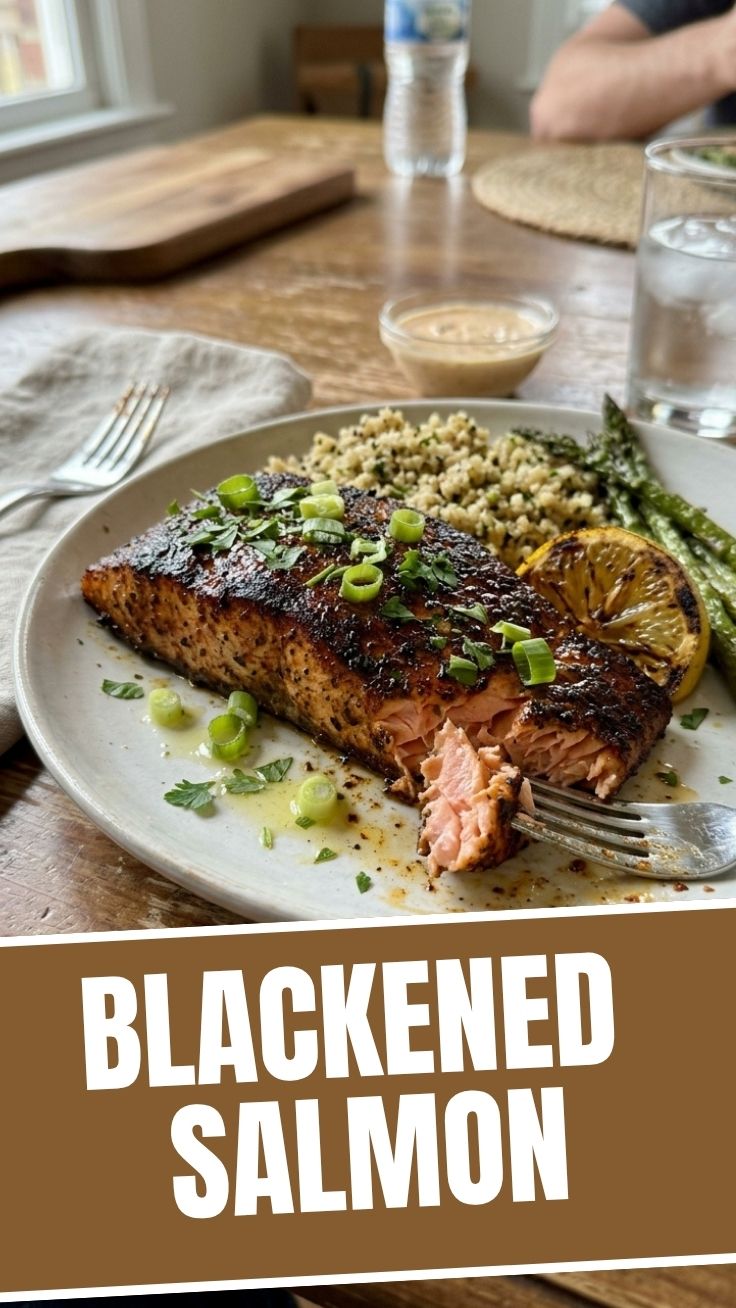
Proven way to grow a perfect Blackened Salmon meal
Ingredients
Equipment
Method
- Pat the salmon fillets dry with paper towels to ensure a crispy crust.
- Season both sides of the salmon fillets generously with the blackening seasoning.
- Heat olive oil in a cast-iron skillet over medium-high heat until it begins to smoke lightly.
- Carefully place the seasoned salmon fillets, skin-side up, into the hot skillet.
- Cook for 3-4 minutes per side, or until a dark crust forms and the salmon flakes easily with a fork.
- Remove the salmon from the skillet and let it rest for a few minutes before serving.
- Serve hot with your preferred side dishes, such as roasted vegetables or rice.