The Ultimate Guide to Perfect Blackened Salmon at Home
Have you ever craved that restaurant-quality, smoky, spicy fish with a crispy crust but assumed it’s too complicated to replicate in your own kitchen? Think again. Mastering Blackened Salmon at home is not only achievable—it’s faster, healthier, and far more rewarding than ordering out. By controlling the seasoning blend and cooking method, you get a restaurant-worthy meal in under 15 minutes. In this guide, we’ll walk through every step, from selecting the right fillet to achieving that signature char, while also exploring the bold, spicy cousin known as Cajun Salmon for those who love an extra kick. Let’s fire up the skillet and get cooking.
—
Ingredients & Kitchen Tools
Ingredients
– Salmon fillets (6 oz each, skin-on or skinless) – Look for wild-caught for better flavor and firmer texture.
– Paprika (2 tbsp) – Sweet or smoked; adds color and depth.
– Garlic powder (1 tbsp) – Provides savory umami.
– Onion powder (1 tbsp) – Complements the garlic.
– Dried thyme (1 tsp) – Earthy herb that balances heat.
– Dried oregano (1 tsp) – Classic in blackening seasoning.
– Cayenne pepper (1 tsp) – Adjust for desired spice level.
– Salt (1 tsp) – Enhances all flavors.
– Black pepper (½ tsp) – Freshly ground is best.
– Butter (2 tbsp) – For pan-frying; use clarified butter or oil if preferred.
– Lemon wedges – For serving; acidity cuts the richness.
Optional Substitutions
– Swap cayenne for chipotle powder for smoky heat.
– Use avocado oil instead of butter for a dairy-free version.
– Add ½ tsp white pepper for extra sharpness.
Kitchen Tools
– Cast-iron skillet (or heavy-bottomed stainless steel) – Retains high heat for crust formation.
– Spatula (preferably fish spatula) – Thin, flexible, and gentle.
– Mixing bowl – For seasoning blend.
– Paper towels – For drying salmon.
– Tongs – To handle hot fillets.
—
Prep Time & Cooking Schedule
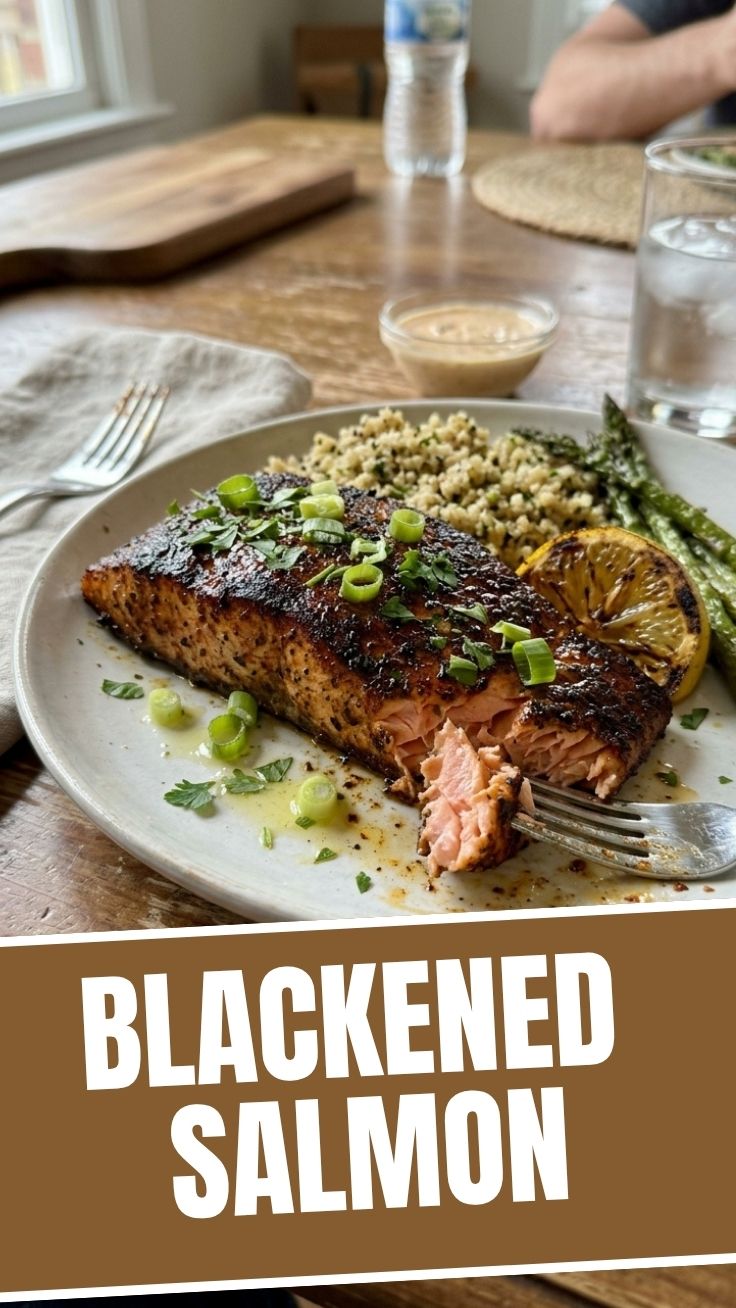
– Prep time: 10 minutes (mix seasoning, pat salmon dry, coat fillets)
– Cook time: 6–8 minutes total (3–4 minutes per side)
– Resting time: 2 minutes – allows juices to redistribute
– Total time: ~20 minutes
Planning tip: Season the salmon just before cooking. Do not marinate – the dry rub will draw out moisture if left too long. Have your side dishes (like rice, greens, or roasted vegetables) ready before you start searing, as the cooking window is tight.
—
Step-by-Step Instructions
1. Prepare the Blackening Seasoning: In a small bowl, combine paprika, garlic powder, onion powder, thyme, oregano, cayenne, salt, and black pepper. Whisk until evenly mixed. This bold blend is the heart of any Blackened Salmon recipe, and it also works perfectly for Cajun Salmon if you increase the cayenne.
2. Pat the salmon dry with paper towels on both sides. Moisture is the enemy of a good crust. Lightly brush each fillet with melted butter (or oil) to help the seasoning adhere.
3. Coat generously: Sprinkle the seasoning mixture over both sides of each fillet. Press gently so it sticks. Do not be shy – a thick crust is what blackening is all about.
4. Heat your skillet over high heat until it is smoking hot (about 2–3 minutes). Add 1 tbsp butter and swirl to coat. The pan must be blazing to get that char.
5. Sear the fillets: Place salmon skin-side down (if using skin) or presentation-side down first. Cook without moving for 3–4 minutes. Listen for a steady sizzle – that’s the caramelization happening. Check the crust: it should be deep brown, not burnt.
6. Flip carefully using a fish spatula. Cook for another 3–4 minutes, depending on thickness. For medium-rare (center still slightly translucent), aim for 125°F internal temperature. For well-done, remove at 140°F.
7. Rest and serve: Transfer to a plate, squeeze fresh lemon juice on top, and let rest 2 minutes. The residual heat will finish cooking while keeping the interior moist.
Temperature control tip: If your smoke alarm protests, reduce heat to medium-high after the first side is seared. Butter can burn quickly, so use clarified butter or a high-smoke-point oil like avocado oil.
—
Nutritional Benefits & Advantages
Salmon is a nutritional powerhouse. A 6-ounce serving of Blackened Salmon provides:
– Protein: ~34g – supports muscle repair and satiety.
– Omega-3 fatty acids: ~2.5g – promotes heart health, reduces inflammation.
– Vitamin D: ~100% RDI – essential for bone health and immunity.
– B vitamins: B12, B6, niacin – boost energy metabolism.
– Selenium: ~75% RDI – antioxidant that supports thyroid function.
The blackening method uses minimal added fat (just a bit of butter or oil), making it a low-carb, keto-friendly, and gluten-free protein option. Unlike fried versions, you’re not deep-frying, so calories stay around 350–400 per fillet. Plus, the spice blend (cayenne, paprika) contains capsaicin, which may boost metabolism slightly.
—
Tips Variations & Cooking Advice
Flavor Variations
– Lemon-Herb Blackened Salmon: Add 1 tsp dried dill and ½ tsp lemon zest to the seasoning.
– Smoky Chipotle Blackened Salmon: Replace cayenne with 1 tsp chipotle powder and add ½ tsp cumin.
– Blackened Salmon with Mango Salsa: Top finished fish with fresh mango, red onion, cilantro, and lime juice for a tropical contrast.
Alternative Cooking Methods
– Oven-broil: Place seasoned fillets on a baking sheet lined with foil. Broil on high for 6–8 minutes, flipping halfway. Crust won’t be as crispy, but it’s hands-off.
– Grill: Use a well-oiled grill basket or plank. Sear 4 minutes per side over high heat. Works great for Cajun Salmon if you want extra smokiness.
Dietary Adaptations
– Dairy-free: Use avocado oil or coconut oil instead of butter.
– Lower sodium: Reduce salt to ½ tsp and add a pinch of smoked paprika for depth.
– Milder spice: Cut cayenne to ¼ tsp or omit. The dish will still be flavorful from the other spices.
—
Common Mistakes to Avoid
– Overcrowding the pan: Too many fillets lower the pan temperature; cook in batches or use two skillets.
– Not enough heat: If your pan isn’t smoking, you won’t get that blackened crust. Patience on preheat is key.
– Moving the fish too early: Let it sear undisturbed for at least 3 minutes. If it sticks, it’s not ready to flip.
– Using frozen salmon directly: Thaw completely and pat extremely dry. Frozen fish releases water and steams instead of sears.
– Over-seasoning with salt alone: The salt content in commercial blackening blends can be high – taste your mix first.
—
Storage & Meal Prep Tips
– Refrigeration: Store leftover Blackened Salmon in an airtight container for up to 3 days. Place a paper towel inside to absorb excess moisture.
– Freezing: Wrap each fillet tightly in plastic wrap, then foil. Freeze for up to 2 months. Thaw overnight in the fridge.
– Reheating: For best texture, reheat in a 350°F oven for 5–7 minutes. Avoid microwaving – it makes the crust soggy. Alternatively, flake the cold salmon over salads or pasta.
Meal prep idea: Make a double batch of the blackening seasoning and store in an airtight jar. Then, season and sear fillets on Sunday; enjoy throughout the week in greens bowls, tacos, or grain bowls.
—
Conclusion
Cooking Blackened Salmon at home delivers a crispy, flavorful crust without the wait or cost of a restaurant. Whether you stick with the classic recipe or spice it up as Cajun Salmon, the technique is simple: hot pan, dry fish, generous seasoning, and patience. The result is a protein-packed, versatile dish that fits busy weeknights or special dinners alike. I encourage you to try this method this week, and if you experiment with a twist (like mango salsa or extra cayenne), share your results in the comments. Your perfect blackened crust is just one sear away.
—
FAQs
Q1: Can I use frozen salmon for blackening?
Yes, but thaw it completely in the refrigerator, then pat extremely dry. Excess moisture will steam the fish and prevent a proper crust.
Q2: Why is my blackened salmon burning and not cooking through?
Heat is likely too high. After the first side sears (3–4 minutes), reduce to medium-high. You want a brown crust, not black ashes. Also, thinner fillets (under 1 inch) cook faster – adjust time accordingly.
Q3: What if I don’t have a cast-iron skillet?
Use any heavy-bottomed stainless steel or nonstick pan. Avoid thin pans that lose heat quickly. Preheat thoroughly and use a high-smoke-point oil.
Q4: Can I make this dairy-free?
Absolutely. Substitute butter with avocado oil, ghee (if tolerated), or coconut oil. The crust will still form beautifully.
Q5: How do I tone down the spice without losing flavor?
Cut the cayenne to ¼ tsp or replace with smoked paprika. Add a pinch of brown sugar to balance heat, but avoid making it sweet – blackening is savory.
Q6: Can I use this seasoning on other proteins?
Yes! Try it on chicken thighs, shrimp, or even cauliflower steaks. Adjust cooking times accordingly – shrimp needs only 2 minutes per side.
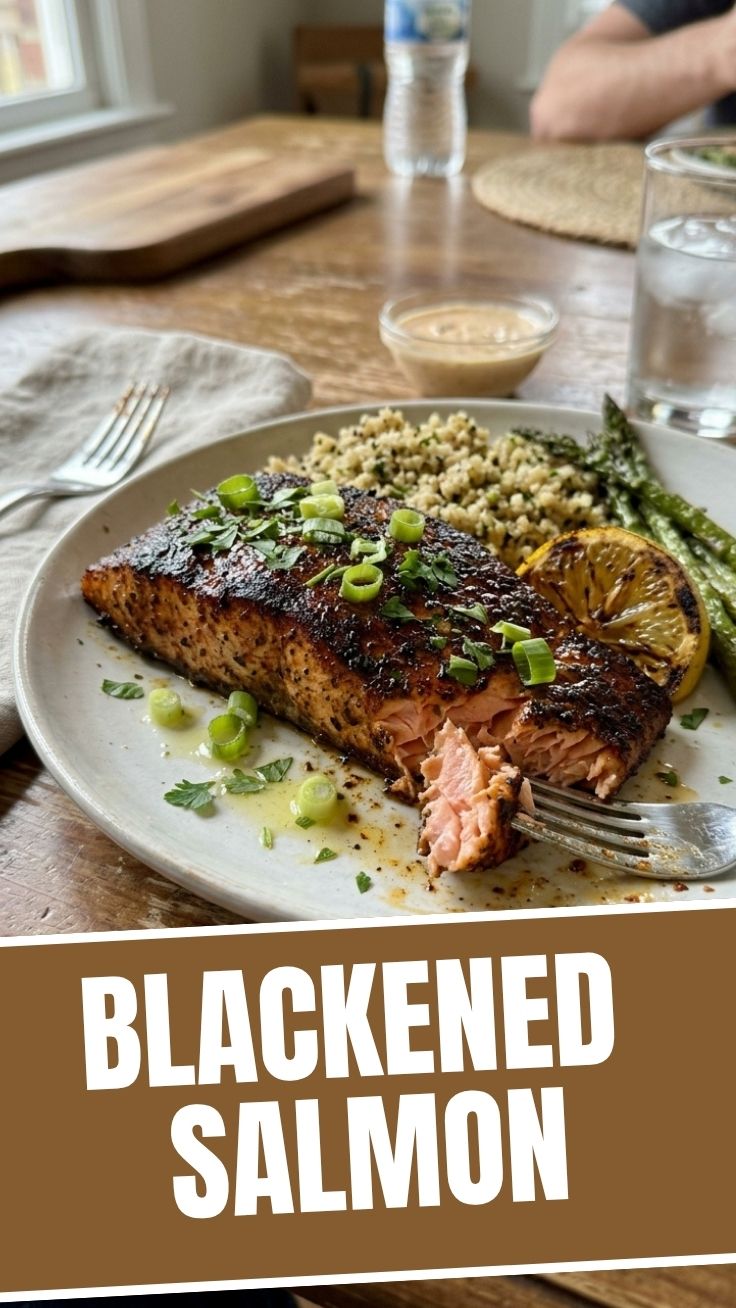
Proven way to grow a perfect Blackened Salmon meal
Ingredients
Equipment
Method
- Combine all blackened seasoning ingredients in a small bowl and mix well.
- Pat the salmon fillets dry with paper towels; brush both sides with melted butter.
- Generously coat all sides of the salmon fillets with the blackened seasoning.
- Heat a cast-iron skillet over high heat with olive oil until very hot and smoking.
- Carefully place salmon, presentation side down, in the hot skillet and cook for 3-5 minutes until a dark crust forms.
- Flip the salmon and cook for another 3-5 minutes on the other side, or until cooked through to your desired doneness.
- Remove salmon from the skillet and serve immediately with lemon wedges and fresh herbs, if desired.