The Ultimate Guide to Making the Best Pasta Salad at Home
Have you ever wondered why restaurant-quality pasta salad always tastes fresher, more vibrant, and perfectly balanced? The secret isn’t a magic ingredient—it’s technique, timing, and knowing how to marry flavors. Preparing a Pasta Salad at home gives you complete control over ingredients, texture, and seasoning, while saving you money and avoiding preservatives. Whether you’re planning a backyard barbecue, a picnic, or a quick weekday lunch, mastering this dish is a game-changer. In this data-driven guide, we’ll walk through every step—from ingredient selection to storage—so you can consistently create a crowd-pleasing Summer pasta salad that bursts with color and flavor.
Ingredients & Kitchen Tools
For the Salad
– Pasta: 12 oz (340g) of short shapes like fusilli, penne, or farfalle – they hold dressing and mix-ins well.
– Cherry tomatoes: 1 pint, halved – add sweetness and acidity.
– Fresh mozzarella pearls: 8 oz – creamy, mild contrast; substitute with feta for a tangier profile.
– Fresh basil: ½ cup, chiffonade – essential for aroma.
– Red onion: ½ cup, thinly sliced – soak in cold water 10 minutes to reduce sharpness.
– Kalamata olives: ½ cup, sliced – briny depth; optional if you prefer milder flavor.
– English cucumber: 1 cup, diced – crisp texture; peel if waxed.
– Bell pepper: 1, any color, diced – adds crunch and vitamins.
For the Dressing
– Extra-virgin olive oil: ¼ cup – use high-quality for flavor.
– Red wine vinegar: 3 tablespoons – bright acidity; substitute with balsamic for sweetness.
– Dijon mustard: 1 teaspoon – emulsifies dressing.
– Garlic: 1 clove, minced – opt for fresh, not jarred.
– Salt & black pepper: to taste.
– Italian seasoning: 1 teaspoon – or dried oregano + basil.
Kitchen Tools
– Large pot (6+ quarts) for pasta
– Colander
– Large mixing bowl
– Whisk or jar for dressing
– Cutting board & sharp knife
– Measuring spoons & cups
– Serving platter or bowl
Prep Time & Cooking Schedule
– Prep time: 15 minutes (wash, chop, make dressing)
– Cook time: 10–12 minutes (al dente pasta)
– Cooling: 10 minutes (rinse under cold water if serving immediately)
– Marinating: 15–30 minutes (optional, for deeper flavor)
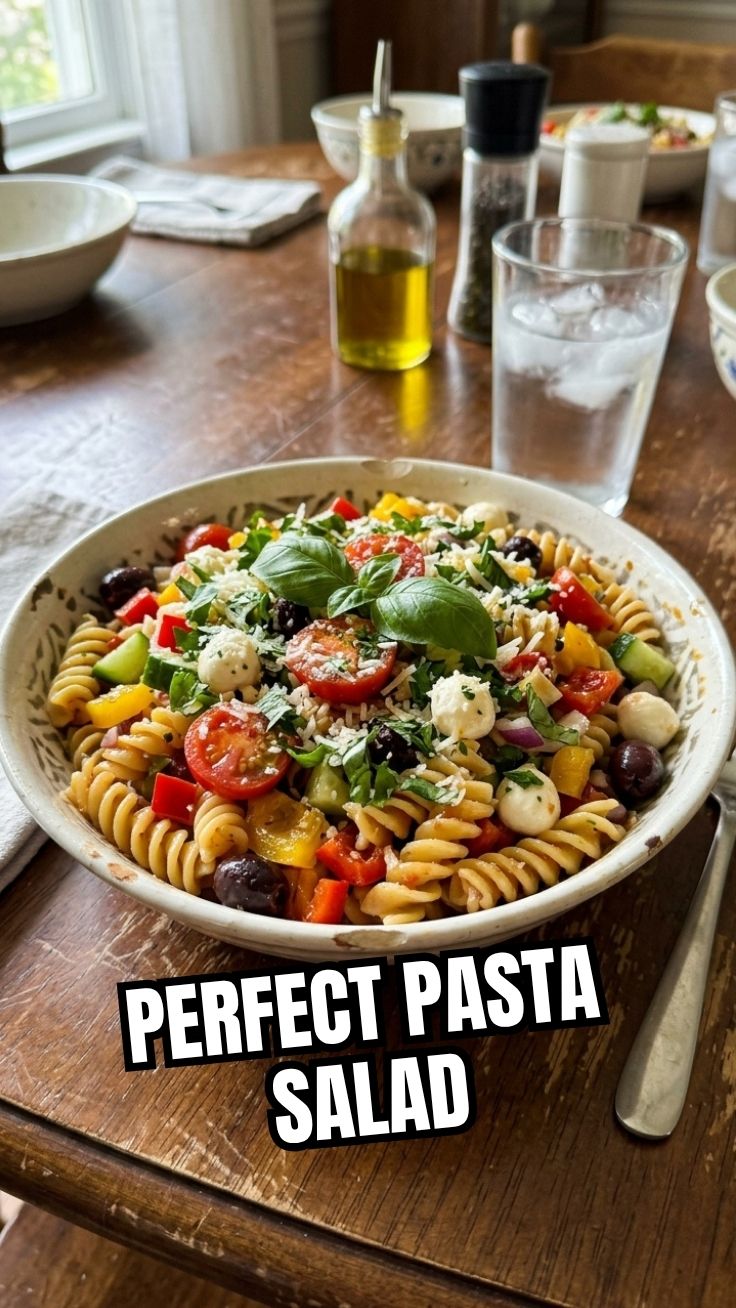
Plan ahead: if you’re making this for a gathering, cook the pasta and prep ingredients up to 24 hours in advance. Combine everything and dress just before serving to keep textures crisp.
Step-by-Step Instructions
1. Cook pasta – Bring a large pot of salted water to a rolling boil (1½ tablespoons salt per 4 quarts water). Add pasta and cook 1 minute less than package directions for true al dente – this prevents mushiness once dressed.
2. Drain & cool – Immediately drain in a colander. Rinse under cold running water for 30 seconds to stop cooking and wash away excess starch. Shake off water well. Spread on a baking sheet to cool faster if needed.
3. Make dressing – In a small bowl or jar, whisk together olive oil, red wine vinegar, Dijon mustard, minced garlic, Italian seasoning, ½ teaspoon salt, and ¼ teaspoon black pepper. Taste and adjust acidity or salt.
4. Prep vegetables – While pasta cools, halve tomatoes, slice olives, dice bell pepper and cucumber, thinly slice red onion (soak if desired). Tear basil leaves – avoid cutting with a knife to prevent bruising.
5. Combine – In a large bowl, toss cooled pasta with vegetables, mozzarella, olives, and basil. Drizzle dressing over and gently fold until evenly coated.
6. Rest & serve – Let the salad sit at room temperature for 15 minutes to meld flavors. For the best texture, serve within 2 hours. This is your perfect Pasta Salad foundation! And don’t forget – this recipe shines as a Summer pasta salad when you add grilled zucchini or corn.
Nutritional Benefits & Advantages
A well-made pasta salad isn’t just delicious – it’s nutritionally smart. Whole-wheat or legume-based pasta boosts fiber and protein (up to 12g per serving). Tomatoes provide lycopene, an antioxidant linked to heart health, while olive oil offers monounsaturated fats that reduce inflammation. Fresh mozzarella adds calcium and protein without heavy saturated fat. Cucumbers and bell peppers deliver vitamins A and C. By controlling the oil and cheese, you can keep a serving under 400 calories while still feeling satisfied.
Tips Variations & Cooking Advice
– Gluten-free: Use brown rice or chickpea pasta – cook slightly less time as they soften faster.
– Dairy-free: Skip mozzarella; add artichoke hearts or roasted red peppers for creaminess.
– Protein boost: Toss in grilled chicken, shrimp, or canned chickpeas.
– Herb swap: Try chives, parsley, or mint instead of basil.
– Dressing upgrade: Add a teaspoon of honey or maple syrup for sweetness.
– Make ahead: Keep dressing separate until serving to avoid soggy pasta.
Common Mistakes to Avoid
– Overcooking pasta: Mushy noodles ruin texture. Cook to al dente, then rinse.
– Skipping salt: Undersalted pasta absorbs bland dressing – season the water generously.
– Too much dressing: Start with half; add more only if needed. Pasta continues absorbing.
– Wet vegetables: Excess moisture from cucumbers or tomatoes dilutes flavor – pat dry with paper towels.
– Forgetting to chill: Serve cool but not ice-cold. Refrigerate leftovers after 2 hours for safety.
Storage & Meal Prep Tips
Store leftover salad in an airtight container in the refrigerator for up to 3 days. The pasta will absorb dressing and soften slightly – revive it with a splash of olive oil and vinegar before serving. Do not freeze – the texture of pasta and fresh vegetables deteriorates badly. For meal prep, keep undressed pasta and veggies separate, then combine and dress each morning. Reheating is not recommended; serve cold or at room temperature.
Conclusion
Creating a memorable pasta salad boils down to fresh ingredients, al dente pasta, and a balanced vinaigrette. Whether you stick with the classic caprese-style or experiment with additions, this method guarantees consistent results. Remember, the best Pasta Salad is one you love – so taste and adjust as you go. And don’t overlook the versatility of a Summer pasta salad: it’s perfect for picnics, potlucks, or those hot evenings when you crave something light yet satisfying. Give this recipe a try, share your twist in the comments, or explore other seasonal variations on our site.
FAQs
1. Can I use gluten-free pasta?
Yes – choose a sturdy shape like fusilli from chickpea or brown rice. Cook 1–2 minutes less than package directions and rinse well.
2. How do I keep pasta from sticking together after cooking?
Rinse under cold water immediately after draining and toss with a teaspoon of olive oil if not dressing right away.
3. What if my dressing tastes too acidic?
Add a pinch of sugar or honey to balance the vinegar, or increase olive oil gradually.
4. Can I add meat to make it a main dish?
Absolutely – grilled chicken, sliced steak, or flaked tuna all work. Add them just before serving.
5. How long can this sit out at a party?
No more than 2 hours at room temperature – after that, refrigerate. For outdoor events, place the bowl on ice.
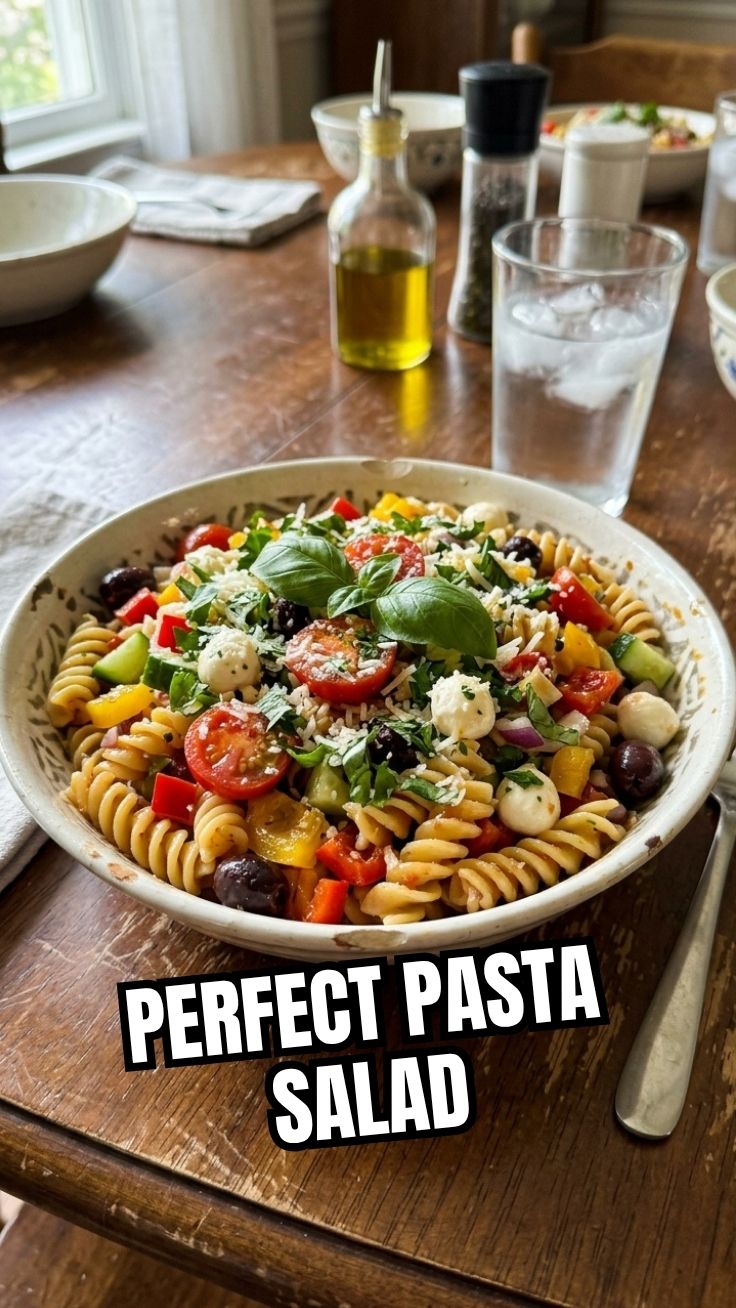
Proven way to grow 5-star Pasta SaladPasta Salad
Ingredients
Equipment
Method
- Cook the pasta according to package directions until al dente, then drain and rinse with cold water to stop cooking and cool it down.
- While the pasta cooks, chop the cherry tomatoes, dice the seeded cucumber, finely dice the red onion, dice the bell pepper, and chop the fresh parsley.
- In a small bowl, whisk together the extra virgin olive oil, red wine vinegar, Dijon mustard, minced garlic, dried oregano, salt, and black pepper until well combined.
- In a large bowl, combine the cooled pasta, chopped cherry tomatoes, diced cucumber, diced red onion, diced bell pepper, and chopped fresh parsley.
- Pour the dressing over the pasta and vegetables, then toss gently to ensure everything is evenly coated; serve immediately or chill for later.