Fresh & Authentic Greek Salad: A Mediterranean Classic You Can Make in Minutes
Have you ever wondered why the best salads you’ve tasted always seem to come from a sun-drenched taverna by the sea? The secret isn’t just the ingredients—it’s the balance of flavors, textures, and a little bit of love. Preparing a traditional Greek Salad at home is not only incredibly easy, but it also saves you money and lets you control the quality of every single component. Whether you’re looking for a quick lunch, a light dinner, or a vibrant side dish, this recipe delivers authentic taste in under 15 minutes. Packed with ripe tomatoes, crisp cucumbers, tangy feta, and briny olives, this salad is a celebration of simplicity. And if you love bold, fresh flavors, you’ll also enjoy the similar versatility of a Mediterranean Salad, which adds hearty chickpeas for extra protein and texture.
—
Ingredients & Kitchen Tools
Required Ingredients
– 4 medium ripe tomatoes – Use vine-ripened or Roma tomatoes for sweetness. Chop into bite-sized chunks.
– 1 large English cucumber – Partially peeled (leave stripes of skin) for color and crunch. Halve lengthwise, then slice.
– 1 medium red onion – Thinly sliced into half-rings. Soak in cold water 5 minutes to mellow sharpness.
– ½ cup Kalamata olives – Pitted whole or halved. Their briny depth is key.
– 200g (7 oz) feta cheese – A solid block, not crumbled. Slice into thick slabs or cubes.
– 3 tbsp extra virgin olive oil – Use a high-quality, fruity Greek variety for best flavor.
– 1 tbsp red wine vinegar – Or substitute with fresh lemon juice.
– 1 tsp dried oregano – Greek oregano preferred. Rub between palms to release aroma.
– Salt and black pepper – Sea salt flakes and freshly ground pepper.
Kitchen Tools
– Large mixing bowl
– Chef’s knife and cutting board
– Vegetable peeler (optional)
– Small bowl or jar for dressing
– Serving platter or shallow bowl
Optional Substitutions
– Tomatoes – Cherry or grape tomatoes (halved) work well in winter.
– Cucumber – Persian or Lebanese cucumbers (no need to peel).
– Onion – Shallots or sweet Vidalia onions for milder taste.
– Feta – Dairy-free? Use marinated tofu feta or vegan feta.
– Olives – Gaeta or Castelvetrano olives for a milder brine.
– Oregano – Fresh oregano (1 tbsp chopped) or thyme.
—
Prep Time & Cooking Schedule
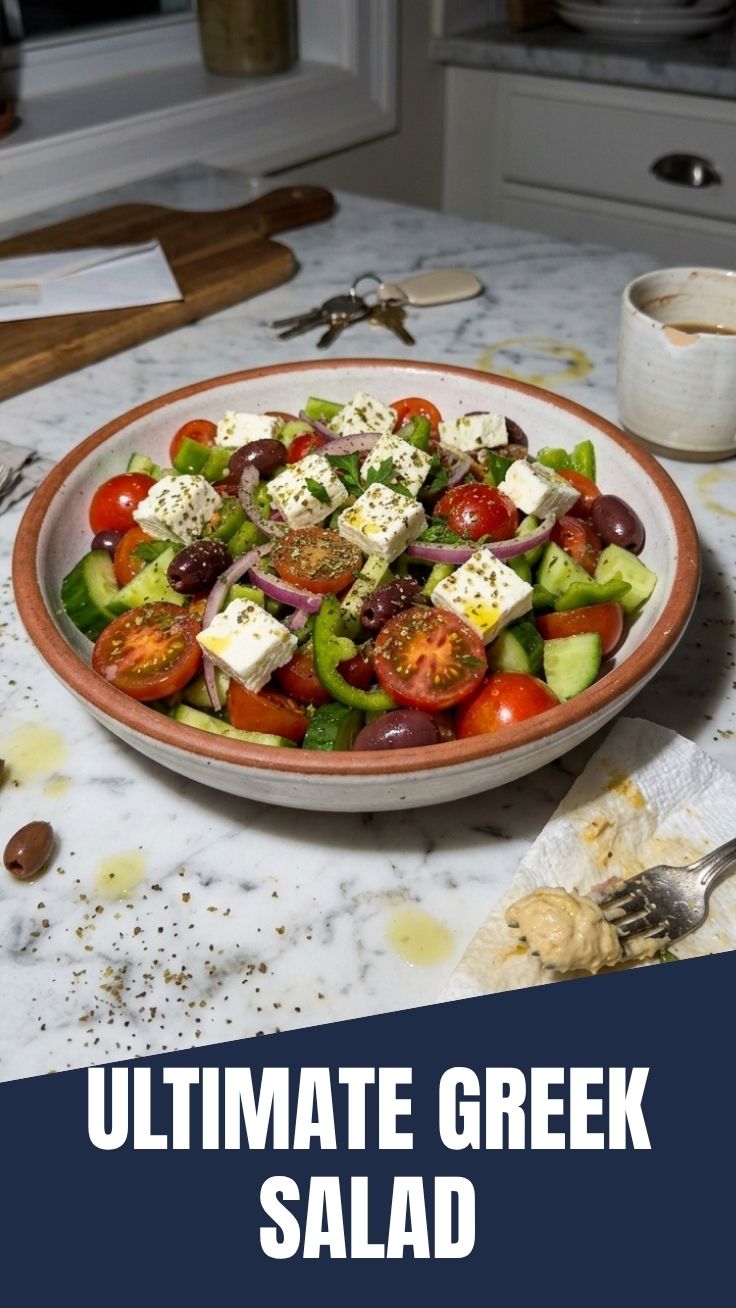
– Prep time: 15 minutes
– Cook time: 0 minutes (no cooking required)
– Resting time: 10–15 minutes (optional but recommended for flavors to meld)
Context for planning: This salad comes together in a flash, making it perfect for busy weeknights or last-minute gatherings. Since there’s no heat involved, you can prep all ingredients ahead and toss just before serving. For best flavor, let the dressed salad rest at room temperature for 10–15 minutes—this allows the tomatoes to release their juices and mingle with the olive oil and vinegar.
—
Step-by-Step Instructions
1. Prepare the vegetables
Wash and dry all produce. Cut tomatoes into wedges or 1-inch chunks. Halve the cucumber lengthwise, then slice into half-moons about ½ inch thick. Thinly slice the red onion into rings. If the onion is strong, soak slices in cold water for 5 minutes, then drain and pat dry.
2. Combine in a bowl
Place tomatoes, cucumber, and onion in a large mixing bowl. Add the Kalamata olives. Do not add the feta yet—it will be placed on top for presentation.
3. Make the dressing
In a small jar or bowl, whisk together olive oil, red wine vinegar, dried oregano, a pinch of salt, and several grinds of black pepper. Taste and adjust acidity—some prefer a little more vinegar.
4. Toss gently
Pour the dressing over the vegetables and toss gently with a large spoon or your hands. Be careful not to crush the tomatoes. Let sit for 5 minutes at room temperature.
5. Add the feta and finish
Transfer the dressed salad to a serving platter or shallow bowl. Arrange thick slices or cubes of feta on top. Drizzle any remaining dressing from the bowl over the feta. Sprinkle an extra pinch of oregano and a flaky salt to finish.
6. Rest and serve
Let the salad rest another 5–10 minutes for flavors to develop. Serve at room temperature—do not refrigerate before serving, as cold dulls the taste.
> Pro tip: For perfect texture control, add the feta only at serving time. If you toss feta earlier, it will crumble and turn the salad cloudy. This step ensures that every bite of Greek Salad delivers a bright, tangy feta punch. Similarly, when making a Mediterranean Salad, layering ingredients rather than mixing everything at once preserves texture and visual appeal.
—
Nutritional Benefits & Advantages
This salad is a powerhouse of nutrition. Tomatoes supply lycopene, a potent antioxidant linked to heart health and reduced inflammation. Cucumbers are hydrating and low in calories, while red onions provide quercetin, a flavonoid with anti-inflammatory properties. Kalamata olives and extra virgin olive oil deliver heart-healthy monounsaturated fats and polyphenols. Feta cheese adds calcium and protein—just a moderate amount per serving (about 2 oz) keeps saturated fat in check.
Per serving (approx. 1/4 of recipe):
– Calories: ~280
– Protein: 8g
– Fat: 22g (mostly unsaturated)
– Carbs: 12g
– Fiber: 3g
– Vitamin C: 30% DV
– Calcium: 25% DV
The dish is naturally gluten-free, low-carb, and vegetarian. For a vegan version, swap feta for marinated tofu or a plant-based feta alternative. This salad also supports Mediterranean diet principles—linked to longevity and reduced risk of chronic diseases.
—
Tips Variations & Cooking Advice
– Flavor variation: Add ½ cup chopped fresh mint or parsley for a herby lift.
– Ingredient swap: Replace half the tomatoes with roasted red peppers for a sweeter note.
– Protein boost: Toss in canned chickpeas (rinsed) or grilled chicken strips. This turns the salad into a full meal, much like a hearty Mediterranean Salad.
– Dairy-free: Use crumbled vegan feta or omit cheese entirely—the olives and dressing still provide plenty of flavor.
– Portion changes: For a crowd, double the recipe and serve family-style. For individual portions, layer ingredients in mason jars (dressing at bottom, then veggies, feta on top) for grab-and-go lunches.
– Alternative method: For a more intense oregano flavor, toast dried oregano in a dry pan for 30 seconds until fragrant, then add to the dressing.
– Temperature cue: Serve at room temperature—refrigerated Greek salad loses its vibrancy. If you must chill, take it out 20 minutes before eating.
—
Common Mistakes to Avoid
❌ Using pre-crumbled feta – It’s often dry and coated in anti-caking agents. Always buy a block and cut it yourself for creaminess.
❌ Over-dressing – The vegetables release water, so use just enough dressing to coat. You can always add more, but you can’t take it away.
❌ Skipping the resting time – Letting the salad sit for 10 minutes allows the salt to draw out tomato juices, creating a natural light “dressing” that marries flavors.
❌ Adding feta too early – If you toss feta with the vegetables, it breaks down and turns the salad milky. Place it on top at the end.
❌ Using unripe tomatoes – Hard, pale tomatoes lack sweetness and acidity. Choose ones that are deep red and give slightly when pressed.
❌ Over-salting – Feta and olives are already salty. Go easy on added salt, especially in the dressing.
—
Storage & Meal Prep Tips
– Refrigeration: Store undressed salad (vegetables + feta separately) in airtight containers for up to 2 days. Dressing keeps 1 week in a jar in the fridge.
– Freezing: Not recommended—tomatoes and cucumber become mushy upon thawing.
– Assembled leftovers: If already dressed, keep in the fridge for up to 1 day. The texture will soften, but flavors intensify. Drain excess liquid before serving.
– Reheating: Do not heat. Serve cold or at room temperature. If the salad has been refrigerated, let it sit out for 15 minutes before serving.
– Meal prep tip: Chop veggies and make dressing up to 2 days ahead. Store veggies in a sealed container lined with paper towels to absorb excess moisture. Combine and dress only when ready to eat.
—
Conclusion
A great Greek Salad is more than the sum of its parts—it’s a testament to the beauty of fresh, high-quality ingredients and simple technique. By following this recipe, you’ll create a dish that’s crisp, tangy, and deeply satisfying, with every bite transporting you to the Mediterranean coast. Don’t be afraid to experiment: swap in chickpeas or avocado for variety, or serve alongside grilled fish for a complete meal. If you enjoyed this recipe, try the chickpea-loaded version of a Mediterranean Salad for a protein-packed twist. Share your results in the comments—I’d love to see your take on this classic!
—
FAQs
1. Can I use lemon juice instead of red wine vinegar?
Yes! Fresh lemon juice is a classic substitute and adds a brighter, more citrusy note. Use about 1 tablespoon lemon juice for 1 tablespoon vinegar. Taste and adjust.
2. How do I keep the salad from getting watery?
Salt the tomatoes lightly and let them sit in a colander for 5 minutes before assembling. Also, pat cucumber dry with paper towels if it’s very wet. Don’t overdress.
3. Can I make this salad ahead for a party?
Absolutely. Prep all ingredients, store separately, and combine up to 1 hour before serving. Add feta at the very last minute. Dress right before guests arrive.
4. What if I can’t find Kalamata olives?
Substitute with any briny black olive like Gaeta, Niçoise, or even pitted black olives. Green olives like Castelvetrano work too, but they’re milder—add a pinch of extra salt to compensate.
5. Is this salad suitable for a low-carb or keto diet?
Yes! It’s naturally low in carbs (about 12g per serving). Omit the tomatoes or use fewer to reduce carbs further. Add more cucumber and olives instead. The high fat content from olive oil and feta makes it keto-friendly.
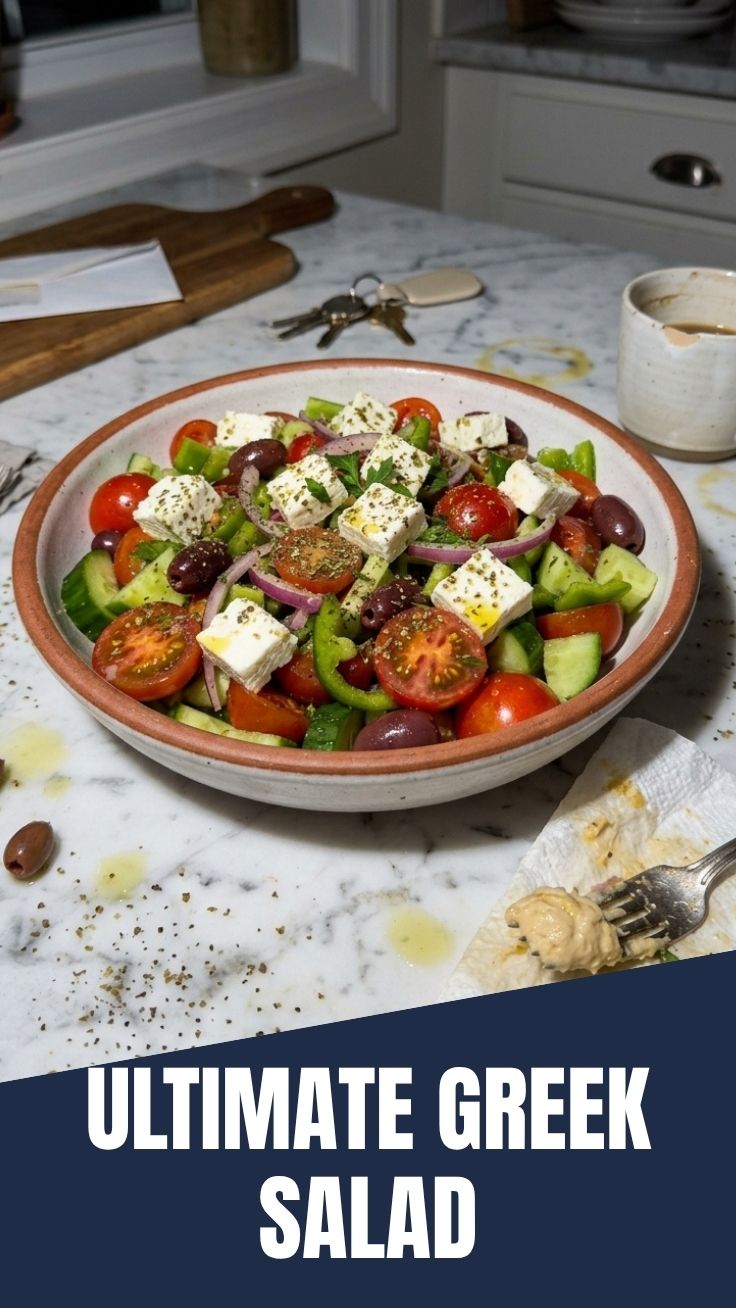
Greek Salad
Ingredients
Equipment
Method
- Chop the cucumber, tomatoes, and red onion into bite-sized pieces and combine them in a large bowl.
- Add the pitted Kalamata olives and crumbled feta cheese to the bowl with the chopped vegetables.
- In a separate small bowl, whisk together the extra virgin olive oil and red wine vinegar, if using, until well combined.
- Pour the dressing over the salad ingredients and gently toss to ensure everything is evenly coated.
- Serve immediately as a refreshing side dish or a light main course.