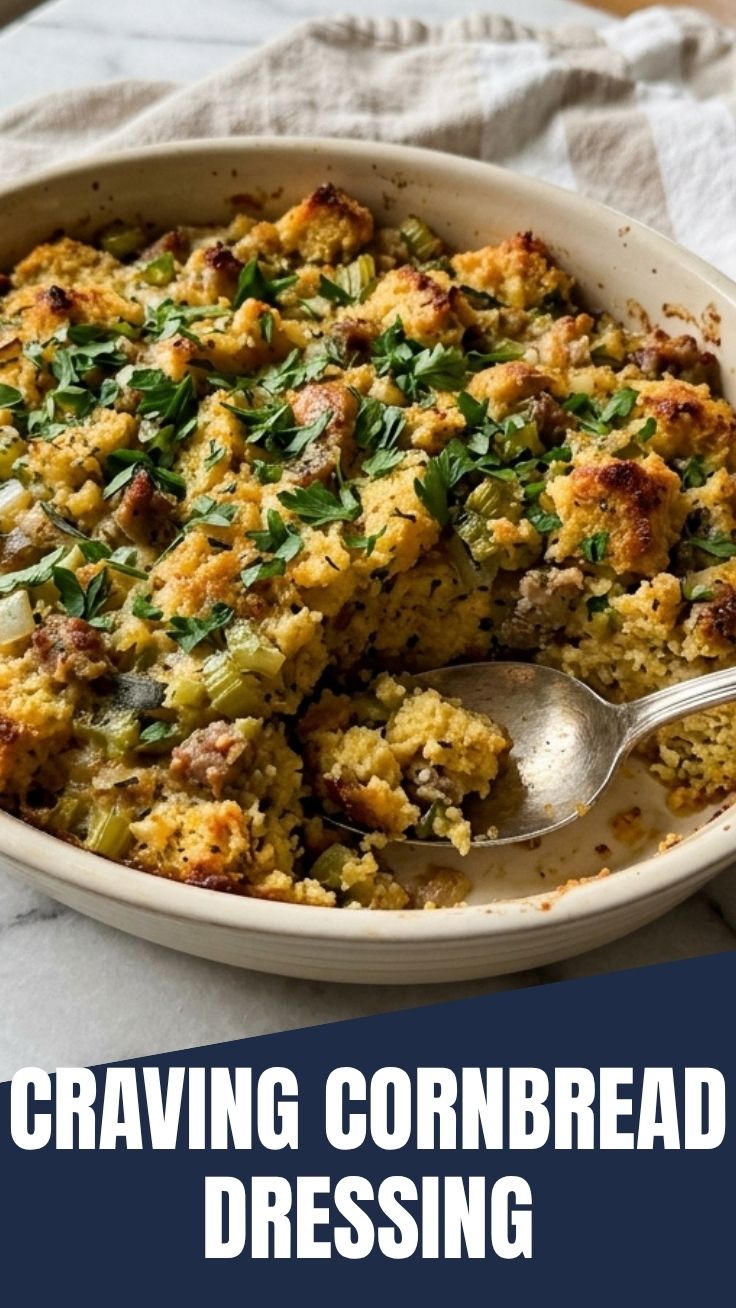
Meta Description: Master the art of a classic holiday side with this data-driven guide. Learn how to prepare a perfectly moist, deeply flavorful Cornbread Dressing at home. Plus, discover the secrets behind a traditional Southern Cornbread Dressing that’s crisp on the outside, tender inside.
—
Introduction
Have you ever wondered why some holiday meals leave you reaching for seconds of the stuffing—or dressing—while the turkey sits untouched? The answer often lies in the bread base, the broth, and the precise balance of moisture. Making your own Cornbread Dressing at home transforms a simple side into the star of the table. It’s more economical, healthier (no mystery preservatives), and completely customizable. Whether you’re after the classic Southern Cornbread Dressing or a modern twist, this guide breaks down every step with science-backed tips to ensure success every time.
—
Ingredients & Kitchen Tools
Before diving in, gather everything you need. Each ingredient plays a role in texture and flavor.
Core Ingredients
– 2 boxes (8.5 oz each) of dry cornbread mix – Use a mix that doesn’t have added sugar if you prefer savory dressing. (Substitute: 3 cups crumbled homemade cornbread.)
– 4 tablespoons unsalted butter – Adds richness and helps brown the vegetables.
– 1 large onion, finely diced – Sweet onion (Vidalia) is best; yellow works too.
– 3 celery stalks, chopped – Provides crispness and moisture.
– 1–2 cloves garlic, minced – Enhances savory depth.
– 2 large eggs, beaten – Binds the dressing and gives structure.
– 2½ cups low-sodium chicken or vegetable broth – Adjust based on desired moisture; more broth = softer dressing.
– 1 teaspoon dried sage – The classic aromatic for dressing.
– ½ teaspoon dried thyme – Adds earthy notes.
– ¼ teaspoon ground black pepper – For a subtle kick.
– Salt to taste – Go easy if your broth is salty.
– Optional: ½ cup cooked crumbled sausage, bacon, or mushrooms – For a protein boost.
Kitchen Tools
– 9×13-inch baking dish
– Large skillet or sauté pan
– Mixing bowls (medium and large)
– Whisk
– Wooden spoon or spatula
– Measuring cups and spoons
– Aluminum foil (for covering)
—
Prep Time & Cooking Schedule
Planning is key to a stress-free holiday. Here’s the timeline:
– Prep Time: 20–25 minutes (chopping vegetables, crumbing cornbread)
– Cook Time: 35–40 minutes in the oven + 10–15 minutes resting
– Total Time: About 1 hour 10 minutes
For best results, prepare the dressing the day before (see Storage section). Bake it fresh on serving day, or simply reheat.
—
Step-by-Step Instructions
1. Preheat & Prepare the Pan
Set your oven to 350°F (175°C). Grease a 9×13-inch dish with butter or nonstick spray. This prevents sticking and creates a golden crust.
2. Crumble the Cornbread
If using a mix, prepare it according to package directions and let cool completely. Then crumble into a large bowl – you want coarse crumbs with some larger pieces for texture. If using homemade cornbread, ensure it’s at least a day old; stale bread absorbs liquid better.
3. Sauté the Aromatics
In a large skillet over medium heat, melt the butter. Add the diced onion and celery. Cook for 5–7 minutes until softened and translucent. Add the minced garlic and cook 1 more minute. Remove from heat.
4. Combine Dry and Wet Ingredients
To the crumbled cornbread, add the sautéed vegetables, dried sage, thyme, black pepper, and a pinch of salt. Toss gently. In a separate bowl, whisk the beaten eggs with the broth. Pour the liquid mixture over the cornbread mixture and stir until uniformly moistened. The consistency should be like a thick porridge – not soupy, not dry. Adjust with a splash more broth if needed.
5. Bake to Perfection
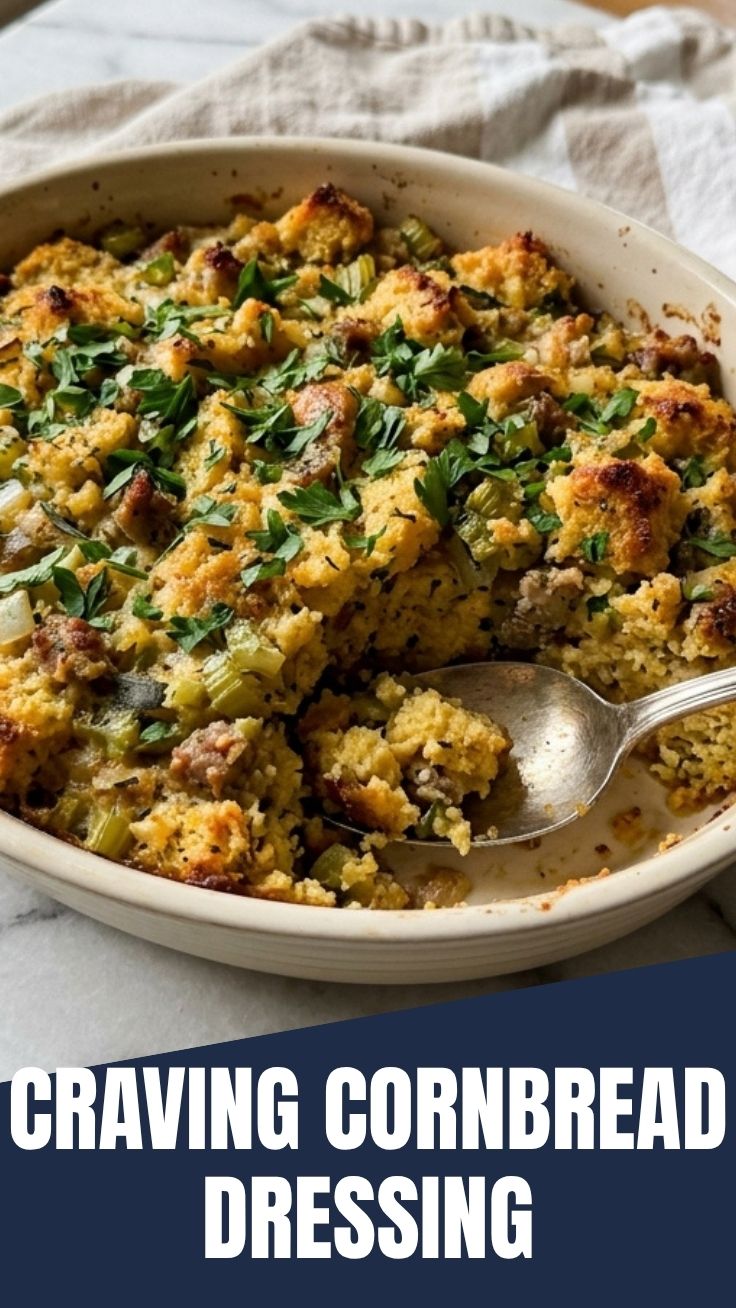
Transfer the mixture to the prepared dish. Spread evenly. Bake uncovered for 35–40 minutes. The top should be golden brown and slightly crisp. A toothpick inserted into the center should come out clean. For extra crispiness, broil for 2–3 minutes at the end. Let rest for 10 minutes before serving.
Pro Tips:
– For a moist, custard-like dressing, cover the dish with foil for the first 20 minutes of baking, then uncover.
– If the top browns too quickly, tent loosely with foil.
– Always taste your broth before adding salt – store-bought broths can be very salty.
> [Important Keyword Mention] This method achieves the perfect balance of texture and flavor in every Cornbread Dressing, while the addition of sautéed aromatics ensures your Southern Cornbread Dressing tastes like it came straight from grandma’s kitchen.
—
Nutritional Benefits & Advantages
Homemade cornbread dressing is more than comfort food. A single serving (about 1 cup) provides:
– Complex carbohydrates from cornmeal for steady energy.
– Fiber from celery and onion (about 2g per serving).
– Vitamin A from corn and onions (supports immune function).
– Protein (around 6–8g from eggs and broth).
– Lower sodium than boxed mixes when you control the salt.
Because you avoid processed additives and use real butter, the dish is also free of artificial preservatives. Using whole-grain cornmeal (if available) boosts fiber and nutrients.
—
Tips, Variations & Cooking Advice
Flavor Variations
– Herbaceous – Add 1 tablespoon of fresh chopped rosemary or parsley.
– Spicy – Include ¼ teaspoon cayenne or a chopped jalapeño with the vegetables.
– Meaty – Fold in ½ cup crumbled cooked bacon or spicy Italian sausage.
– Vegetarian/Vegan – Use vegetable broth and replace eggs with flax eggs (1 tbsp ground flax + 3 tbsp water per egg). Use vegan butter.
Dietary Adaptations
– Gluten-Free – Use a certified gluten-free cornbread mix. Double-check all other ingredients.
– Dairy-Free – Substitute butter with coconut oil or vegan butter. Use vegetable broth.
– Lower-Carb – Replace half the cornbread with cauliflower rice (pre-cooked, squeezed dry).
Cooking Methods
– Slow Cooker – Prepare mixture, place in greased slow cooker, cook on low for 3–4 hours (stir once). Top will be less crisp.
– Air Fryer – Spoon into a small greased pan, air fry at 325°F for 15 minutes, then 350°F for 5 minutes for extra crispiness.
—
Common Mistakes to Avoid
1. Too dry – Solution: Use enough broth. Mix until it looks like “wet sand.” Add more broth if the cornbread absorbs quickly.
2. Too mushy – Solution: Do not overmix. Also, ensure cornbread is stale; fresh cornbread holds too much moisture.
3. Bland flavor – Solution: Season the vegetables well while sautéing. Taste the cornbread before adding broth – if it’s sweet, increase sage and pepper.
4. Soggy bottom – Solution: Bake in a single layer, and do not cover for the entire baking time. Use a metal or glass dish, not ceramic.
5. Egg curdling – Solution: Temper the eggs by adding a little warm broth to them before mixing into the hot cornbread.
—
Storage & Meal Prep Tips
– Refrigeration: Cool completely, cover tightly with foil or plastic wrap, store in fridge for up to 4 days.
– Freezing: Wrap the baked, cooled dressing in foil and then a freezer bag. Freeze for up to 3 months. Thaw overnight in the fridge.
– Reheating: To maintain crispness, reheat in a 350°F oven for 15–20 minutes. For a softer texture, microwave in 30-second bursts. Avoid reheating more than once.
– Meal Prep: Assemble the dressing (step 4) up to 24 hours ahead. Pour into the baking dish, cover, and refrigerate. Bake as directed, adding 5–10 minutes to the bake time since starting cold.
—
Conclusion
Mastering Cornbread Dressing is a skill that will earn you a permanent place on any holiday invitation list. This classic side brings warmth, texture, and nostalgia to the table. With the step-by-step guidance above, you can confidently create a version that’s moist, flavorful, and perfectly crisp on top. Whether you stick to the traditional Southern Cornbread Dressing or adapt it to your dietary needs, the result will be a dish everyone raves about. Give it a try this holiday season and share your creation with loved ones. For more seasonal recipes, browse our collection of sides and mains.
—
FAQs
1. Can I use store-bought croutons instead of cornbread?
Not recommended – cornbread has a unique crumb and texture that’s essential for classic dressing. You can, however, use a blend of cornbread and white bread for a lighter texture.
2. Why did my dressing turn out dense?
Likely too much liquid or overmixing. Aim for a consistency that’s just moist enough to hold together. Also, let the cornbread stale overnight for better structure.
3. Can I add fruit or nuts to the dressing?
Absolutely. Dried cranberries, chopped apples, or toasted pecans add sweetness and crunch. Fold them in with the vegetables.
4. Is it safe to stuff the turkey with dressing?
It’s safer to bake dressing separately to ensure even cooking. If you do stuff the bird, use a food thermometer – the dressing must reach 165°F. We recommend separate baking for best texture.
5. How can I make this recipe vegan without losing flavor?
Use vegan butter or coconut oil, vegetable broth, and flax eggs. Increase the herbs and add a splash of liquid smoke for depth. The texture will be slightly less custard-like but still delicious.