Indulge in a Slice of History: Crafting the Perfect Juneteenth Red Velvet Cake
Are you ready to elevate your Juneteenth celebration with a dessert that’s as rich in flavor as it is in history? There’s something profoundly special about preparing a homemade treat for a meaningful occasion, and few desserts capture the spirit and beauty of Juneteenth quite like a vibrant red velvet cake. Beyond the delicious taste, the act of baking for a holiday like Juneteenth imbues your creation with personal meaning and connection. This year, ditch the store-bought and embrace the joy of crafting a show-stopping Juneteenth Red Velvet Cake from scratch. This comprehensive guide will walk you through every step, ensuring your oven-fresh delight is a testament to skill and celebration. Get ready to bake one of the best Juneteenth celebration desserts, a true symbol of joy and togetherness.
Ingredients & Kitchen Tools
Crafting the perfect red velvet cake requires a precise combination of ingredients and the right tools. Here’s everything you’ll need:
Ingredients:
- 2 ½ cups All-Purpose Flour: Sifted for a lighter, more tender crumb.
- 1 tsp Baking Soda: The primary leavening agent, creating rise.
- 1 tsp Salt: Balances sweetness and enhances other flavors.
- 2 Tbsp Unsweetened Cocoa Powder (natural): Provides that subtle chocolatey depth and reacting with the acidic ingredients to deepen the red color.
- 1 cup Unsalted Butter (room temperature): For richness and a tender texture. If using salted butter, reduce added salt by ¼ tsp.
- 2 cups Granulated Sugar: Sweetness and moisture.
- 2 Large Eggs: Binds ingredients and adds structure.
- 1 tsp Vanilla Extract: Essential flavor enhancer.
- 1 cup Buttermilk: Its acidity reacts with baking soda to create rise and tenderize the cake.
- 1 oz Red Food Coloring (liquid or gel): For that iconic vibrant red hue. Gel coloring offers a deeper, more consistent color.
- 1 tsp White Vinegar: Further reacts with baking soda and buttermilk for leavening and tenderness.
For the Cream Cheese Frosting:
- 8 oz Cream Cheese (full-fat, softened): The signature tangy base of red velvet frosting.
- ½ cup Unsalted Butter (softened): Adds richness and creaminess.
- 4-5 cups Powdered Sugar (confectioners’ sugar), sifted: Sweetness and body for the frosting. Add gradually to desired consistency.
- 1 tsp Vanilla Extract: Enhances the frosting’s flavor.
Kitchen Tools:
- Two 9-inch Round Cake Pans: For even baking and a classic layered look.
- Mixing Bowls (various sizes): For combining ingredients separately.
- Electric Mixer (stand or hand-held): Essential for creaming butter and sugar, and whipping frosting.
- Rubber Spatula: For scraping bowls and folding ingredients gently.
- Whisk: For dry ingredients.
- Measuring Cups and Spoons: For accurate ingredient portions.
- Parchment Paper: To line cake pans for easy release.
- Cooling Racks: For cakes to cool completely.
- Offset Spatula or Butter Knife: For spreading frosting.
Prep Time & Cooking Schedule
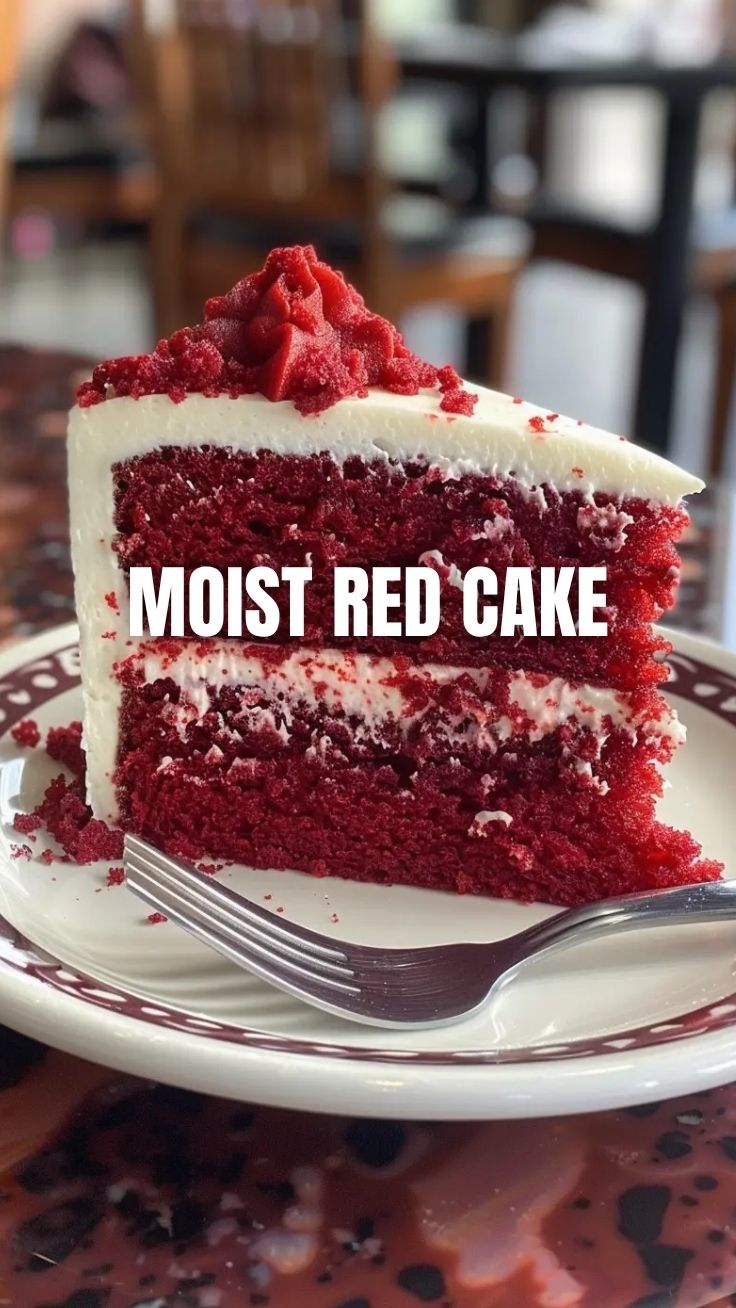
Planning is key for a successful bake, especially for a layered cake. Giving yourself ample time ensures each step is executed perfectly, leading to a moist, delicious result.
- Prep Time: 30 minutes
- Cook Time: 25-30 minutes per cake layer
- Cooling Time: 1-2 hours (crucial for frosting)
- Total Time: Approximately 2.5 – 3 hours
Context: The cooling time is non-negotiable. Attempting to frost warm cakes will cause the frosting to melt and slide off, creating a messy situation. Plan to bake your cakes well in advance of when you plan to serve them, allowing for complete cooling. You can even bake the layers a day ahead, wrap them tightly, and store them at room temperature.
Step-by-Step Instructions
Follow these clear directions to bake your delightful Red Velvet Cake:
1. Preheat & Prep Pans: Preheat oven to 350°F (175°C). Grease and flour two 9-inch round cake pans. Line the bottoms with parchment paper for extra insurance against sticking.
2. Combine Dry Ingredients: In a medium bowl, whisk together the sifted flour, baking soda, salt, and cocoa powder. Set aside.
3. Cream Wet Ingredients: In a large mixing bowl, cream the softened butter and granulated sugar with an electric mixer on medium-high speed until light and fluffy (3-5 minutes). Beat in the eggs one at a time, incorporating each fully before adding the next. Stir in the vanilla extract.
4. Develop Color & Flavor: In a separate small bowl, combine the buttermilk, red food coloring, and white vinegar. This mix of acidic ingredients and coloring is key to the distinctive hue and tender crumb of your Juneteenth Red Velvet Cake.
5. Alternate Wet & Dry: Gradually add the dry ingredient mixture to the wet ingredients, alternating with the buttermilk mixture, beginning and ending with the dry. Mix on low speed until just combined. Be careful not to overmix; overmixing develops gluten, leading to a tough cake.
6. Bake: Divide the batter evenly between the prepared cake pans. Bake for 25-30 minutes, or until a wooden skewer inserted into the center comes out clean.
7. Cool: Let the cakes cool in their pans on a wire rack for 10-15 minutes before inverting them onto the rack to cool completely. This full cooling period is vital before you start assembling your Juneteenth celebration desserts.
8. Prepare Frosting: While cakes cool, prepare the cream cheese frosting. In a large bowl, beat the softened cream cheese and butter until smooth and creamy. Gradually add the sifted powdered sugar, one cup at a time, mixing on low until incorporated, then increasing speed until fluffy. Beat in the vanilla extract.
9. Assemble & Frost: Once the cakes are completely cool, level them if necessary using a serrated knife. Place one cake layer on your serving plate, spread a generous layer of frosting, then top with the second cake layer. Frost the top and sides of the entire cake. Chill for at least 30 minutes before serving for the best set.
Nutritional Benefits & Advantages
While often seen as an indulgence, a homemade Red Velvet Cake can offer some surprising benefits when made with quality ingredients. The cocoa powder, even in small amounts, provides antioxidants. Buttermilk contributes probiotics, which are beneficial for gut health. Making it from scratch also gives you control over the quality of ingredients, allowing you to choose organic dairy or lower-sugar options if desired. Compared to many store-bought options, your homemade version will be free of artificial preservatives and hydrogenated oils, offering a fresher, more wholesome treat.
Tips, Variations, & Cooking Advice
- Layering Perfection: For perfectly even cake layers, use a kitchen scale to divide batter evenly between the pans.
- Buttermilk Substitute: If you don’t have buttermilk, you can make your own by adding 1 tablespoon of white vinegar or lemon juice to a measuring cup, then filling the rest with regular milk until it reaches 1 cup. Let it sit for 5-10 minutes until it slightly curdles.
- Gel vs. Liquid Food Coloring: Gel food coloring provides a more intense and consistent red color with less product, preventing over-watering the batter.
- Flavor Variations: Add a hint of almond extract to the cake batter or frosting for a nuanced flavor profile.
- Dietary Adaptations: For a gluten-free version, use a 1:1 gluten-free all-purpose flour blend. For a dairy-free option, use plant-based milk and butter alternatives, and a vegan cream cheese alternative for the frosting. Results may vary slightly.
- Cupcakes: This recipe can easily be adapted for cupcakes. Bake for 18-22 minutes.
Common Mistakes to Avoid
- Overmixing: This is the most common culprit for dense, tough cakes. Mix until just combined; a few small lumps are better than a smooth, overmixed batter.
- Incorrect Oven Temperature: An oven that’s too hot can lead to dry cakes, while one that’s too cool results in a sunken center. Use an oven thermometer to ensure accuracy.
- Warm Cake, Melted Frosting: Always, always, ensure your cake layers are completely cool before frosting. Even slightly warm layers will cause your beautiful frosting to melt and slide.
- Over-frosting: While delicious, too much frosting can overpower the cake. Aim for a balanced ratio.
- Skipping Sifting: Sifting dry ingredients prevents lumps and ensures a lighter, more uniform texture.
Storage & Meal Prep Tips
Your homemade Red Velvet Cake tastes best at room temperature, but requires refrigeration due to the cream cheese frosting.
- Refrigeration: Store frosted cake uncovered for 30 minutes to allow the frosting to set, then loosely cover with plastic wrap or a cake dome. It will stay fresh for 3-4 days in the refrigerator.
- Freezing: For longer storage, freeze individual slices or whole unfrosted layers for up to 2-3 months. Wrap layers tightly in plastic wrap, then aluminum foil. For frosted slices, freeze them on a baking sheet until solid, then wrap individually. Thaw in the refrigerator overnight before serving.
- Reheating: Red velvet cake is not typically reheated; it’s best served chilled or at room temperature. Allow refrigerated cake to sit at room temperature for 30-60 minutes before serving for optimal flavor and texture.
Conclusion
Baking a Juneteenth Red Velvet Cake is more than just following a recipe; it’s about infusing a celebration with love, tradition, and delicious flavors. This striking cake, with its tender crumb and rich, tangy cream cheese frosting, is a beautiful centerpiece for any gathering. By following these detailed instructions, you’re not just making a dessert; you’re crafting a memory and a symbol of joy. We hope this guide empowers you to create an unforgettable treat. Go ahead, bake this incredible dessert and make your Juneteenth celebration even sweeter! Don’t hesitate to share your results, and explore other Juneteenth celebration desserts to broaden your culinary horizons.
FAQs
Q1: Can I make the cake layers ahead of time?
A1: Yes, absolutely! You can bake the cake layers up to 2 days in advance. Once completely cooled, wrap them tightly in plastic wrap and store them at room temperature or in the refrigerator.
Q2: My red velvet cake came out dry. What went wrong?
A2: Common causes for dry cake include overmixing the batter (which develops gluten), baking at too high a temperature, or baking for too long. Ensure you measure ingredients accurately and don’t overbake.
Q3: How can I achieve a super vivid red color?
A3: Using gel food coloring is key. It’s more concentrated than liquid food coloring. Also, ensure your cocoa powder is natural (not Dutch-processed) as its acidity helps react with the red coloring for a deeper hue.
Q4: Can I make this cake into a bundt cake?
A4: Yes, you can. You’ll likely need to adjust the baking time, often longer, typically around 45-60 minutes for a bundt. Ensure the bundt pan is well-greased and floured.
Q5: My cream cheese frosting is too runny. How can I fix it?
A5: This usually happens if the butter or cream cheese is too warm, or if not enough powdered sugar is used. Chill the frosting for 15-30 minutes, then re-whip. You can also add more sifted powdered sugar, one tablespoon at a time, until the desired consistency is reached.
Proven way to grow Juneteenth Red Velvet Cake in 5
Ingredients
Equipment
Method
- Prepare the red velvet cake mix according to package directions, adding eggs, oil, and water.
- Bake in an 8-inch round pan for approximately 25-30 minutes, or until a toothpick inserted into the center comes out clean. Let the cake cool completely.
- In a large bowl, beat the softened cream cheese and butter until smooth and creamy.
- Gradually add the powdered sugar, one cup at a time, until fully incorporated and smooth.
- Stir in the vanilla extract. Take half of the frosting and mix it with a few drops of green food coloring to create a "leafy" effect.
- Once the cake is cool, spread the white cream cheese frosting over the top and sides of the cake. This will be your "pot" or "soil" base.
- Sprinkle the crushed chocolate wafers or Oreos evenly over the top of the white frosting to mimic rich soil.
- Carefully pipe or spread the green frosting in a small mound in the center of the "soil" to create a "seedling" shape. This represents the emerging plant.
- Decorate the green seedling with red and gold edible glitter, symbolizing the festive Juneteenth colors. Place a small toy shovel next to the cake for a playful touch.