The Ultimate Guide to Perfect Beef Enchiladas at Home
Have you ever craved the warm, cheesy, and slightly spicy comfort of a well-made enchilada but hesitated because ordering takeout felt easier? I’ve been there. But here’s the truth: nothing compares to the depth of flavor and control you get when you prepare your own Beef Enchiladas from scratch. Not only do you choose the quality of the meat and the heat level of the sauce, but you also save money and create a meal that fills your kitchen with an irresistible aroma. In today’s post, I’ll walk you through every step to achieve restaurant‑worthy results, using data‑backed techniques to avoid common pitfalls. By the end, you’ll master one of the most beloved classic enchilada recipes and impress everyone at your table.
Ingredients & Kitchen Tools
Main Ingredients
– 1 lb ground beef (80/20 blend for juiciness; substitute with shredded beef or plant‑based crumbles)
– 1 medium onion, diced – adds sweetness and texture.
– 2 cloves garlic, minced – for aromatic depth.
– 1 can (15 oz) black beans, drained (optional, but boosts fiber).
– 2 cups shredded Mexican blend cheese – use Monterey Jack, cheddar, or a dairy‑free alternative.
– 8–10 corn tortillas – they hold up better than flour under sauce.
– 2 cups red enchilada sauce – store‑bought or homemade (see Tips).
– 1 tbsp ground cumin – essential for warm, earthy notes.
– ½ tsp chili powder – adjust for spice preference.
– Salt and pepper – to taste.
– Fresh cilantro – for garnish.
– Sour cream or Greek yogurt – for serving.
Kitchen Tools & Utensils
– Large skillet (12‑inch) – for browning beef.
– 9×13 inch baking dish – deep enough to hold sauce.
– Mixing bowls – for filling.
– Spatula and wooden spoon.
– Ladle – for pouring sauce.
– Oven – preheated to 375°F (190°C).
– Tongs – for handling tortillas.
Optional Substitutions
– Ground turkey or chicken – reduces fat while keeping protein high.
– Gluten‑free tortillas – use corn or cassava‑based.
– Dairy‑free cheese – look for meltable vegan shreds.
– Homemade sauce – 2 tbsp tomato paste + 1 cup broth + spices.
Prep Time & Cooking Schedule
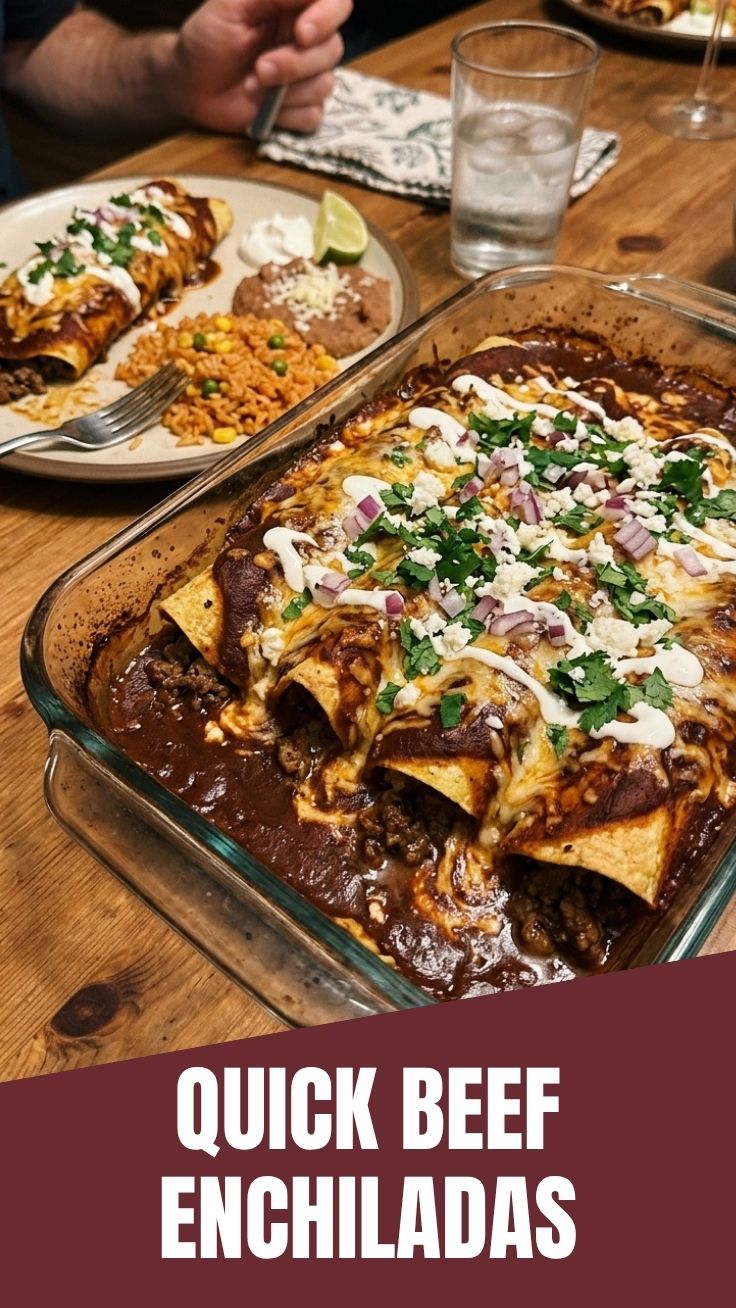
– Prep time: 20 minutes (chopping, browning beef, heating sauce)
– Cook time: 25 minutes (baking)
– Resting time: 5 minutes before serving
– Total time: 50 minutes
Plan ahead: You can prepare the filling a day in advance and store it in the fridge. If you’re making your own enchilada sauce, give an extra 15 minutes. This timeline works perfectly for a weeknight dinner or a weekend gathering.
Step-by-Step Instructions
1. Preheat oven to 375°F (190°C). Lightly grease your 9×13 baking dish.
2. Brown the beef in a large skillet over medium‑high heat. Break it into small crumbles with a spatula. Cook until no pink remains (about 6–8 minutes). Drain excess fat if desired, but leaving a little adds flavor.
3. Add onion and garlic to the skillet. Sauté for 2 minutes until onion is translucent. Stir in cumin, chili powder, salt, and pepper. Cook 1 more minute.
4. Combine the filling in a mixing bowl: the beef mixture, black beans (if using), and 1 cup of cheese. Stir well.
5. Soften tortillas – wrap in a damp towel and microwave for 30 seconds, or quickly fry in a dry pan for 10 seconds per side. This prevents cracking.
6. Assemble enchiladas: Pour ½ cup of enchilada sauce into the bottom of the baking dish. Place a tortilla on a flat surface, add about ¼ cup of filling, roll tightly, and place seam‑side down in the dish. Repeat with remaining tortillas.
7. Cover with sauce – pour the remaining 1½ cups of sauce over the rolled tortillas, spreading evenly. Sprinkle the rest of the cheese on top.
8. Bake uncovered for 20–25 minutes, until the cheese is bubbly and golden. For a deeper color, switch to broil for the last 2 minutes.
9. Rest for 5 minutes before slicing. Garnish with cilantro and serve with sour cream.
Keyword mention: These Beef Enchiladas come together beautifully, and like many classic enchilada recipes, they taste even better the next day as the flavors meld.
Nutritional Benefits & Advantages
A single serving (two enchiladas) provides approximately 450–500 calories, with 28g protein, 35g carbohydrates, and 22g fat (depending on cheese and sourcing). The ground beef delivers iron and B vitamins, while black beans add fiber and folate. Corn tortillas are naturally gluten‑free and lower in calories than flour ones. Using Greek yogurt instead of sour cream reduces saturated fat. This dish is an excellent source of resistant starch from the beans and slow‑cooked beef, aiding digestion and satiety. By preparing at home, you control sodium levels (store‑bought sauces can be high) and avoid preservatives.
Tips, Variations & Cooking Advice
– Homemade enchilada sauce – whisk 2 tbsp tomato paste, 1 cup beef broth, 1 tsp cumin, 1 tsp chili powder, and 1 tbsp flour (or cornstarch for GF) in a saucepan; simmer 5 minutes.
– Vegetarian version – replace beef with 2 cups sautéed mushrooms and zucchini, plus extra beans.
– Dairy‑free – use vegan cheese shreds and omit sour cream or use cashew cream.
– Spice it up – add pickled jalapeños or chipotle pepper in adobo to the filling.
– Pro tip: To prevent soggy tortillas, dip each one lightly in sauce before filling (instead of pouring it all on top). This keeps the center firm.
– Shortcut: Use leftover shredded beef from a roast; shred it and follow the same steps.
Common Mistakes to Avoid
– Overfilling tortillas – use only ¼ cup of filling per tortilla. Too much causes bursting and messy baking.
– Skipping the tortilla softening – cold tortillas crack the moment you try to roll. Always warm them.
– Baking too long – 25 minutes is maximum; longer dries out the beef and makes the sauce thicken too much.
– Not draining beef fat – while a little fat is fine, excess makes the enchiladas greasy. Pour off all but 1 tablespoon.
– Using cold cheese – shred cheese straight from the fridge; pre‑shredded often contains anti‑caking agents that hinder melting.
Storage & Meal Prep Tips
– Refrigeration: Place leftover enchiladas in an airtight container. They stay fresh for 3–4 days.
– Freezing: Assemble the enchiladas completely but do not bake. Wrap tightly in plastic wrap and foil. Freeze for up to 3 months. When ready, thaw overnight in the fridge, then bake as directed.
– Reheating: Best in a 350°F oven for 15 minutes (covered with foil to prevent drying). Microwave on high for 2–3 minutes, but the tortillas may soft. For crispy edges, reheat in a skillet with a lid.
– Meal prep: Prep filling and sauce separately on Sunday. Assemble and bake the night you serve. This cuts active time to 10 minutes.
Conclusion
Mastering homemade Beef Enchiladas is a rewarding skill that transforms weeknight dinners into a celebration of Mexican flavors. The key lies in balancing the richness of the beef, the creaminess of the cheese, and the tangy kick of the sauce. By following these steps, you’ll avoid common pitfalls and produce a dish that’s both comforting and impressive. I hope this guide becomes your go‑to reference for all enchilada recipes you want to try. Give it a try this week, snap a photo, and tag me in your results—I can’t wait to see your creations!
FAQs
1. Can I use flour tortillas instead of corn?
Yes, but flour tortillas absorb more sauce and become very soft. If you prefer a sturdier bite, stick with corn. For flour, warm them longer and roll gently.
2. How do I make the enchilada sauce less spicy?
Use mild chili powder or reduce the amount by half. You can also add a tablespoon of brown sugar or a splash of cream to balance heat.
3. Can I substitute ground beef with shredded chicken?
Absolutely. Follow the same method but use pre‑cooked shredded chicken. Adjust cooking time: chicken enchiladas need only 15–20 minutes in the oven.
4. My tortillas cracked when rolling—what went wrong?
They likely weren’t warmed long enough. Wrap them in a damp paper towel and microwave for 45 seconds, or dip each one briefly in hot sauce before filling.
5. How do I keep the enchiladas from getting soggy?
Dip tortillas in sauce only briefly, and avoid over‑sauce‑coating the top. Bake uncovered, and let rest for 5 minutes after baking to allow excess moisture to evaporate.
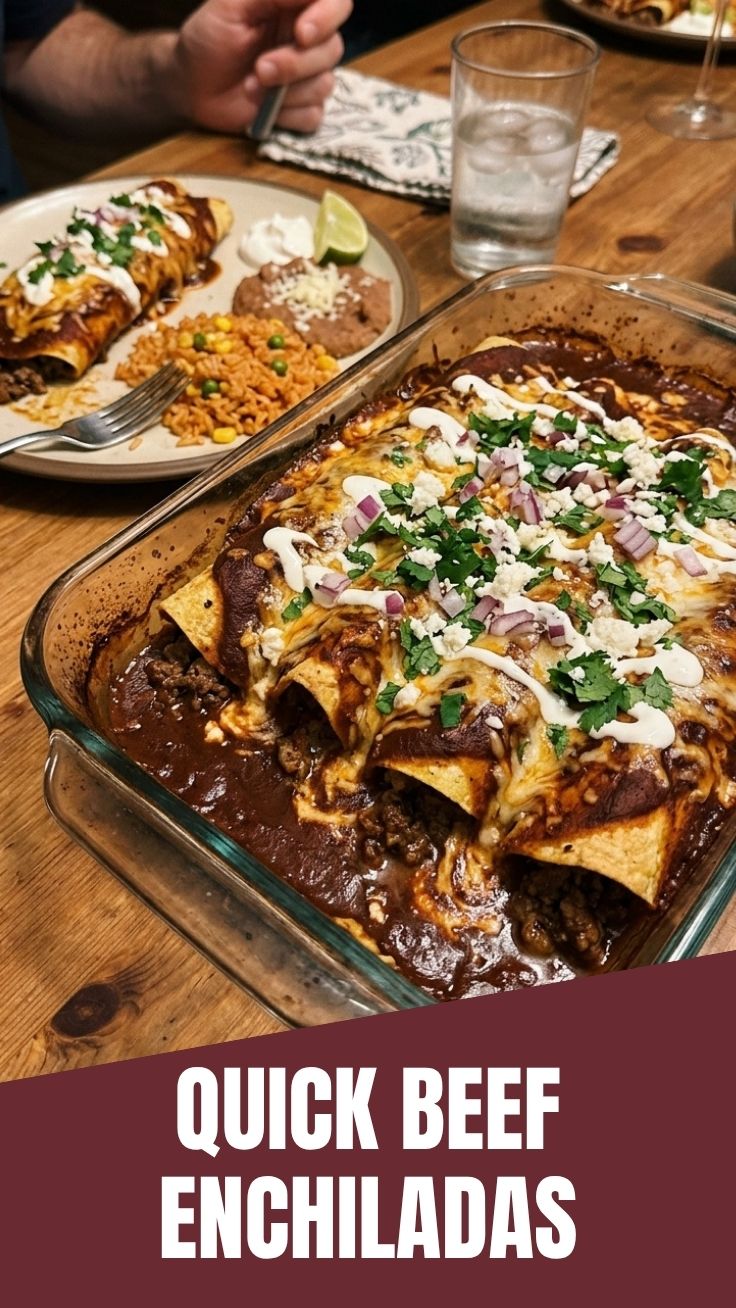
Proven way to grow your 5 star Beef Enchiladas recipe
Ingredients
Equipment
Method
- Brown ground beef with chopped onion in a large skillet, then drain any excess grease.
- Stir in minced garlic and enchilada seasoning, cooking for another minute until fragrant.
- Add tomato sauce and simmer for 5-7 minutes, allowing the flavors to meld and the sauce to thicken slightly.
- Preheat oven to 375°F (190°C) and lightly grease a 9x13 inch baking dish.
- Warm tortillas briefly in microwave or oven to make them pliable, preventing tearing.
- Dip each tortilla in enchilada sauce, ensuring both sides are coated.
- Place a portion of beef filling down the center of each tortilla, sprinkle with cheese, and roll it up tightly.
- Arrange rolled enchiladas seam-side down in the prepared baking dish.
- Pour remaining enchilada sauce evenly over the rolled enchiladas, then top with the rest of the shredded cheese.
- Bake for 20-25 minutes, or until the cheese is bubbly and golden brown.
- Garnish with sliced green onions and optional toppings like sour cream, avocado, and cilantro before serving.