The Ultimate Guide to Crafting the Perfect Olive Garden Chicken Gnocchi Soup at Home
Have you ever craved that velvety, creamy soup from the Italian restaurant chain but wished you could enjoy it without leaving your kitchen—or paying the restaurant markup? You’re not alone. The good news is that replicating this beloved comfort food is not only achievable but also surprisingly simple when you follow the right method. Preparing this soup at home gives you complete control over ingredients, sodium levels, and portion sizes, while saving you time and money. If you’ve been searching for a way to recreate that signature bowl of [Chicken Gnocchi Soup (Olive Garden Style)] in your own kitchen, you’ve found the perfect resource. This guide breaks down every step, from ingredient selection to serving suggestions, so you can master this restaurant classic. Whether you’re a seasoned cook or a beginner looking for an easy chicken gnocchi soup recipe, you’ll find everything you need right here.
Ingredients & Kitchen Tools
For the Soup Base:
– 2 tablespoons unsalted butter – Provides richness; substitute with olive oil for dairy-free.
– 1 medium yellow onion, diced – Adds aromatic depth; white onion works too.
– 3 cloves garlic, minced – Fresh is best; use 1 teaspoon jarred minced garlic in a pinch.
– 2 medium carrots, peeled and diced – For sweetness and color.
– 2 celery stalks, diced – Adds classic mirepoix flavor.
– 1 teaspoon dried thyme – Earthy notes; use 1 tablespoon fresh thyme if available.
– ½ teaspoon dried rosemary – Crush it between your fingers to release oils.
– ¼ cup all-purpose flour – Thickens the soup; use a gluten-free all-purpose blend for GF version.
– 4 cups low-sodium chicken broth – Controls salt level; vegetable broth works.
– 1 cup heavy cream – Creates that silky texture; half-and-half or full-fat coconut milk are lighter alternatives.
– 2 cups cooked, shredded chicken – Rotisserie chicken is a huge time-saver.
– 1 package (16 oz) potato gnocchi – Shelf-stable or refrigerated; do not use frozen without thawing first.
– 3 cups fresh spinach, roughly chopped – Wilts down significantly; kale can substitute (add 5 minutes earlier).
– ½ cup grated Parmesan cheese – For umami and final richness; Pecorino Romano is sharper.
– Salt and black pepper to taste
Kitchen Tools:
– Large Dutch oven or heavy-bottomed pot (5–6 quart capacity)
– Cutting board and sharp chef’s knife
– Wooden spoon or silicone spatula
– Measuring cups and spoons
– Ladle for serving
– Box grater (if grating Parmesan from a block)
Prep Time & Cooking Schedule
– Prep time: 15 minutes (dicing vegetables, shredding chicken, mincing garlic)
– Cook time: 30 minutes total
– Resting time: 5 minutes off the heat before serving (allows flavors to meld)
– Total time: approximately 50 minutes
Plan ahead: If using raw chicken breasts, poach them while you dice vegetables—simmer in broth for 15 minutes until cooked through, then shred. This dual-tasking keeps your overall timeline tight.
Step-by-Step Instructions
1. Sauté the aromatics. Place your Dutch oven over medium heat and melt the butter. Add diced onion, carrots, and celery. Cook, stirring occasionally, for 5–6 minutes until the onions are translucent and the vegetables begin to soften. Stir in minced garlic, thyme, and rosemary, and cook for another 30 seconds until fragrant.
2. Build the roux. Sprinkle the flour evenly over the vegetable mixture. Stir constantly for 1–2 minutes until the flour is fully incorporated and turns a pale golden color. This step prevents raw flour taste in the final soup.
3. Add liquid slowly. Gradually pour in the chicken broth while whisking continuously to avoid lumps. Bring the mixture to a gentle simmer; the soup will begin to thicken slightly.
4. Simmer the base. Add the heavy cream and stir to combine. Season with ½ teaspoon salt and ¼ teaspoon pepper. Let the soup simmer on low heat for 8–10 minutes, allowing the vegetables to become tender and the flavors to deepen.
5. Cook the gnocchi. Drop the gnocchi directly into the simmering soup. They will cook in the liquid, absorbing flavor. Stir gently and cook for 3–4 minutes—the gnocchi are ready when they float to the top. Do not overcook; they can become mushy.
6. Add chicken and spinach. Fold in the shredded chicken and fresh spinach. Stir until the spinach wilts, about 1–2 minutes. The greens will reduce significantly.
7. Finish with cheese and season. Remove the pot from heat. Stir in the grated Parmesan cheese until melted. Taste and adjust salt and pepper as needed. For an extra touch, add a pinch of nutmeg—it enhances the creaminess.
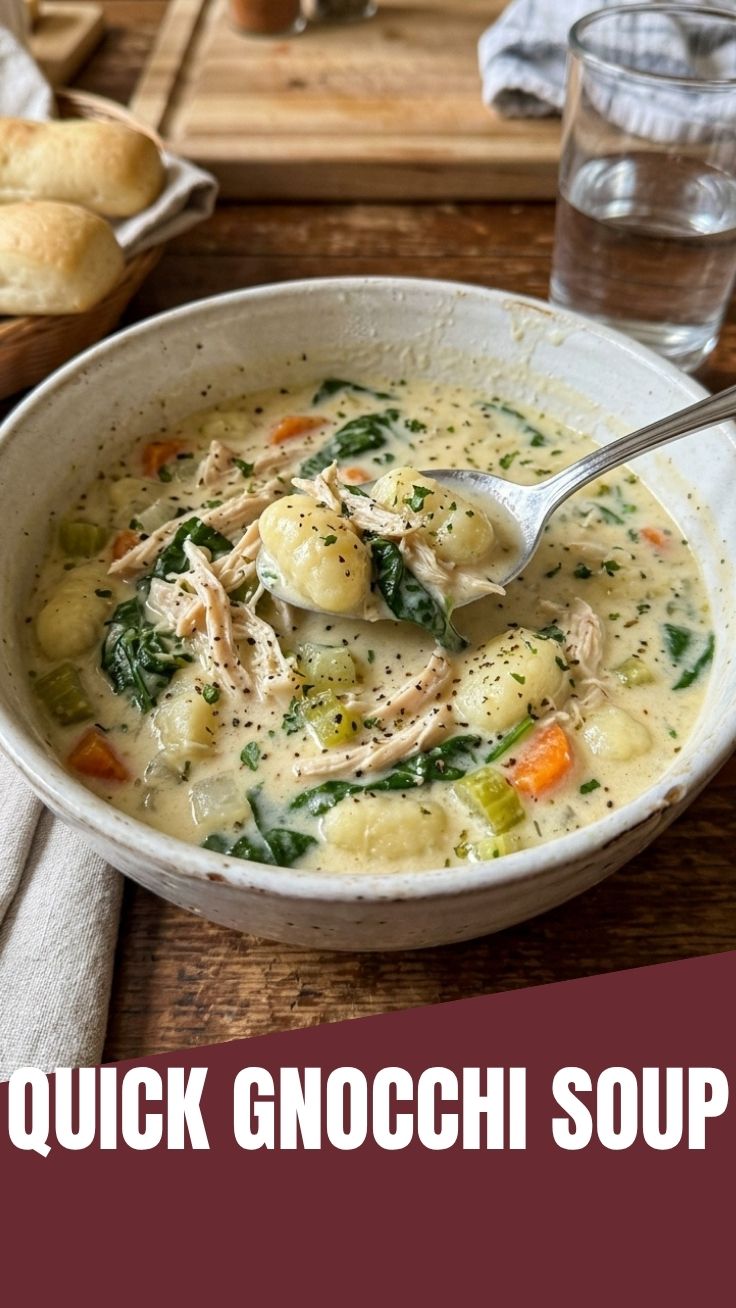
8. Rest and serve. Let the soup sit uncovered for 5 minutes. Ladle into bowls and garnish with additional Parmesan and fresh cracked pepper. This is where you’ll truly enjoy your Chicken Gnocchi Soup (Olive Garden Style) at its peak creaminess. This method proves why this easy chicken gnocchi soup recipe works so well—the gnocchi cooks right in the broth, saving you a pot and intensifying flavor.
Nutritional Benefits & Advantages
This soup offers a balanced nutritional profile when made with mindful ingredients. A single serving (approximately 1.5 cups) provides roughly 420 calories, 25g protein, 28g carbohydrates, and 22g fat. The chicken offers lean protein essential for muscle repair and satiety. Spinach contributes iron, vitamin K, and antioxidants that support immune function. Carrots and celery deliver fiber and vitamin A. By using low-sodium broth and controlling added salt, you reduce sodium by up to 40% compared to restaurant versions. For a lighter option, swap heavy cream with half-and-half (saves ~80 calories per serving) while retaining much of the creamy texture.
Tips Variations & Cooking Advice
– Flavor variation: Add ¼ teaspoon red pepper flakes with the garlic for gentle heat.
– Swap proteins: Use diced cooked Italian sausage instead of chicken for a heartier, spicier version.
– Alternative cooking method: Prepare in a slow cooker—sauté aromatics on the stovetop first, then transfer to the slow cooker with broth and cream. Cook on low for 4 hours; add gnocchi and spinach 30 minutes before serving.
– Dietary adaptations: For dairy-free, use full-fat coconut milk (adds slight sweetness) and a vegan Parmesan alternative; omit butter and use olive oil. For gluten-free, substitute all-purpose flour with a 1:1 gluten-free blend and use certified gluten-free gnocchi (usually rice-based).
– Portion changes: Double the gnocchi for a more filling, stew-like consistency, or add an extra cup of broth for a thinner soup.
Common Mistakes to Avoid
– Adding gnocchi too early: If gnocchi simmers longer than 5 minutes, it becomes gummy and disintegrates. Cook just until they float.
– Skipping the roux step: Flour must cook for at least 1 minute to remove raw taste and ensure smooth thickening.
– Over-salting early: Parmesan and chicken broth both add salt. Season progressively and taste before final adjustment.
– Using frozen gnocchi without thawing: Frozen gnocchi release excess water and can make soup watery. Thaw them in the refrigerator overnight or let them sit at room temperature for 20 minutes.
– Cooking at high heat: High heat can cause cream to curdle. Keep soup at a gentle simmer (small bubbles, not a rolling boil).
Storage & Meal Prep Tips
– Refrigeration: Cool soup completely, then transfer to an airtight container. It stays fresh for 3–4 days. Note that gnocchi will absorb liquid and soften over time; the soup will thicken.
– Freezing: This soup freezes reasonably well for up to 2 months, but the gnocchi texture may become slightly softer. Cool completely, then freeze in portion-sized containers. Leave ½-inch headspace for expansion.
– Reheating: Thaw frozen soup overnight in the refrigerator. Reheat on the stovetop over medium-low heat, adding a splash of chicken broth or milk to restore the creamy consistency. Microwave in 30-second intervals, stirring between each, if preferred. Avoid boiling aggressively.
– Meal prep tip: Prepare the soup base (without gnocchi, chicken, and spinach) up to 2 days in advance. When ready to serve, reheat the base, then add pre-cooked chicken, gnocchi, and spinach. This preserves the best texture for the gnocchi.
Conclusion
Recreating that iconic bowl of creamy, savory soup at home is entirely within your reach. By following this guide, you’ve learned how to build deep flavor from simple ingredients, cook gnocchi directly in the broth for maximum taste, and customize the recipe to your dietary needs. The result is a hearty, satisfying meal that rivals any restaurant version. Whether you’re making it for a weeknight dinner or meal-prepping for busy days, this Chicken Gnocchi Soup (Olive Garden Style) delivers comfort in every spoonful. Plus, you now have an easy chicken gnocchi soup recipe that you can turn to again and again. Give it a try—tweak the seasonings to your liking, snap a photo of your creation, and share your results. What’s your favorite way to customize a creamy soup? Let us know in the comments.
FAQs
1. Can I use frozen gnocchi?
Yes, but thaw them completely at room temperature or in the refrigerator first. Adding frozen gnocchi directly to simmering soup will lower the temperature and increase cooking time, potentially making them gummy.
2. How do I make this soup dairy-free without losing creaminess?
Replace butter with olive oil, skip the cream, and use full-fat coconut milk or unsweetened oat milk. Nutritional yeast can replace Parmesan for a cheesy flavor. The coconut milk adds richness without a strong coconut taste when balanced with garlic and herbs.
3. My soup turned out too thin. How can I thicken it?
Create a slurry: whisk 1 tablespoon cornstarch with 2 tablespoons cold water, then stir into the simmering soup. Cook 2 extra minutes until thickened. Alternatively, mash a few cooked gnocchi against the side of the pot—their starch helps thicken.
4. Can I substitute kale for spinach?
Absolutely. Lacinato kale (dinosaur kale) works best. Remove the tough ribs, chop the leaves, and add them 5 minutes before serving instead of 2 minutes, since kale needs slightly longer to wilt.
5. Why did my soup separate or become grainy?
This usually happens if the soup boils after adding cream or if you added cold cream directly to hot liquid. Always warm cream slightly before adding, and keep the soup at a gentle simmer, not a boil, once cream is incorporated.
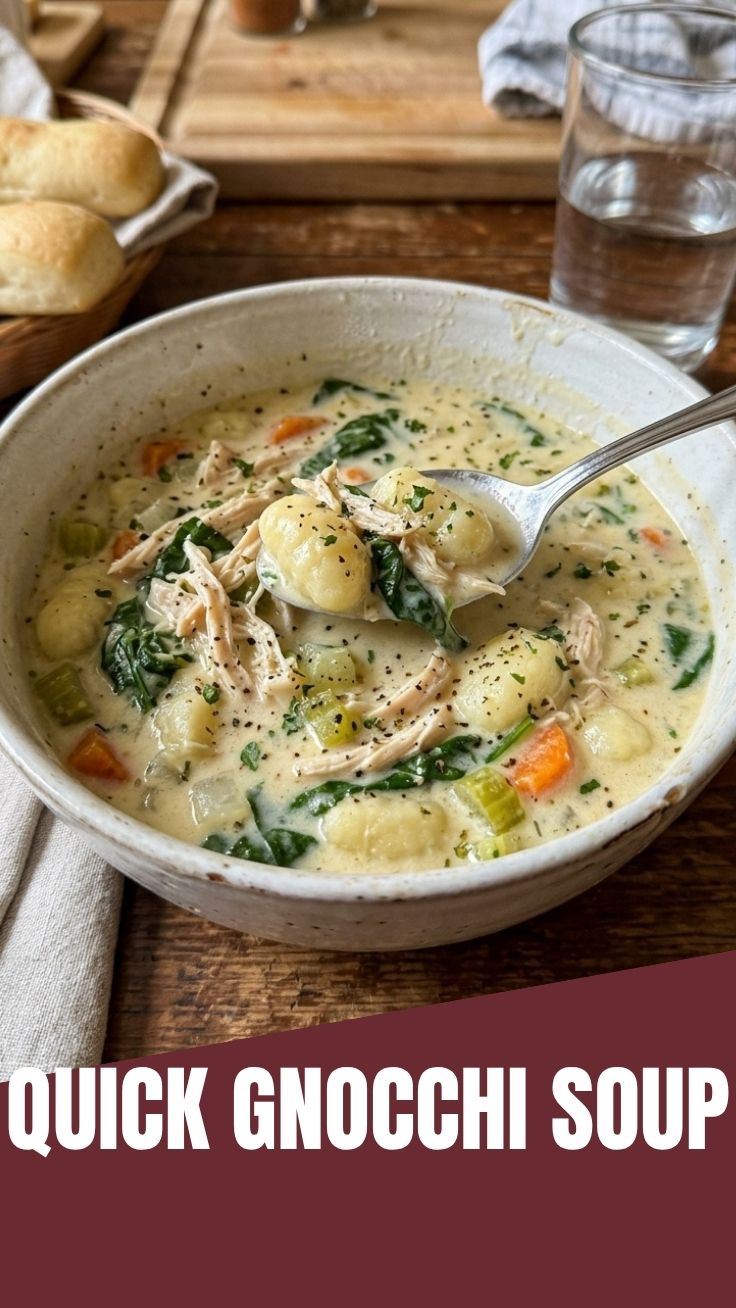
Best way to grow Chicken Gnocchi Soup (Olive Garden Style)
Ingredients
Equipment
Method
- Heat olive oil in a large pot over medium heat, then add cubed chicken and cook until browned; remove chicken and set aside.
- In the same pot, sauté onion, carrots, and celery until softened, then add minced garlic and cook for another minute.
- Melt butter in the pot, whisk in flour to create a roux, and gradually add milk, stirring until thickened.
- Pour in chicken broth, bring to a simmer, then return chicken to the pot.
- Add gnocchi to the simmering soup and cook according to package directions, typically 2-3 minutes.
- Stir in half-and-half, fresh spinach, salt, and pepper, cooking until spinach wilts and the soup is heated through.