The Ultimate Guide to Perfect Classic Mac and Cheese: Creamy, Cheesy, and Irresistible
Have you ever wondered why some homemade mac and cheese turns out gritty, watery, or bland, while others achieve that velvety, soul-warming perfection? The answer lies not just in the cheese you choose, but in the precise technique and timing. Preparing a truly unforgettable Classic Mac and Cheese at home is more valuable than any boxed mix, as it allows you to control the quality of ingredients, the level of creaminess, and the balance of flavors. Whether you are cooking for a weeknight dinner or a holiday gathering, this recipe guarantees a rich, savory, and creamy macaroni and cheese that will become a family staple.
—
Ingredients & Kitchen Tools
Ingredients
– Elbow macaroni (1 lb): The classic shape holds sauce best, but any short pasta like shells or cavatappi works.
– Butter (4 tbsp): Unsalted is preferred to control sodium; adds richness to the roux.
– All-purpose flour (1/4 cup): Thickens the sauce without lumps if whisked properly.
– Whole milk (4 cups): Full-fat ensures the creamiest texture; 2% can be used but will be less decadent.
– Heavy cream (1 cup): Adds luxurious body; substitute with half-and-half for a lighter version.
– Sharp cheddar cheese (3 cups, shredded): Provides bold, tangy flavor; pre-shredded won’t melt as smoothly.
– Gruyère cheese (1 cup, shredded): Melts into a silky sauce; substitute with Gouda or Monterey Jack.
– Dijon mustard (1 tsp): Enhances cheese flavor without tasting like mustard.
– Salt & white pepper (to taste): White pepper avoids black specks in the sauce.
– Breadcrumbs (1/2 cup): Panko gives the best crunch; mix with melted butter for topping.
– Optional: Paprika, garlic powder, or cayenne for heat.
Kitchen Tools
– Large pot (5-6 quart): For boiling pasta and cooking sauce.
– Colander: To drain pasta without rinsing (starch helps sauce cling).
– Wooden spoon or whisk: For smooth roux and sauce mixing.
– Baking dish (9×13 inch): Glass or ceramic holds heat evenly.
– Cheese grater (not pre-shredded cheese): Freshly grated melts perfectly.
– Measuring cups & spoons: Precision is key for roux ratio.
—
Prep Time & Cooking Schedule
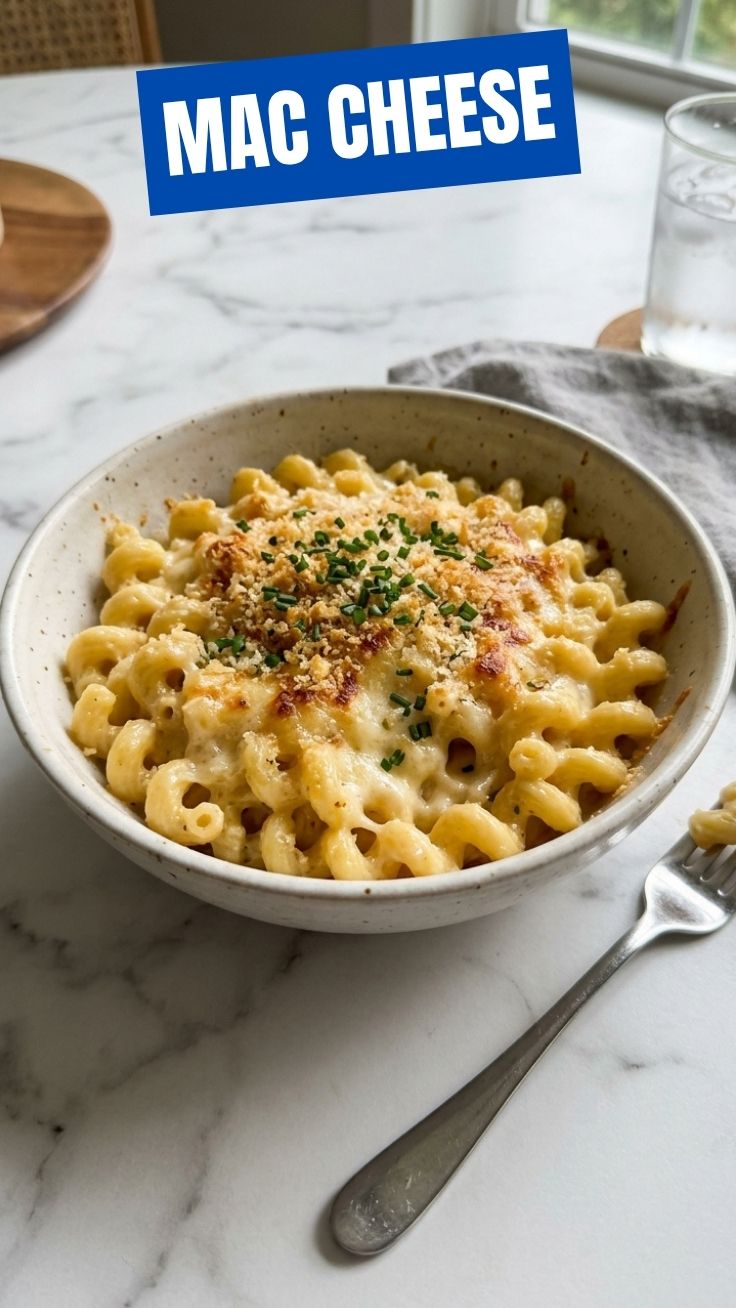
– Prep Time: 15 minutes (grate cheese, measure ingredients, preheat oven to 375°F).
– Cook Time: 30 minutes (20 minutes for stovetop sauce + pasta, 10-15 minutes baking).
– Resting Time: 5 minutes after baking (allows sauce to set for cleaner slices).
– Total Time: Approximately 50 minutes.
Pro Tip: Start boiling pasta water while grating cheese—multitasking saves 10 minutes. The sauce takes exactly as long as the pasta to cook, so everything finishes together.
—
Step-by-Step Instructions
1. Boil the pasta: In a large pot, bring 4 quarts of water to a rolling boil. Add 1 tbsp salt (water should taste like the sea). Cook macaroni 1 minute less than package directions—it will finish cooking in the oven. Drain without rinsing.
2. Make the roux: In the same pot, melt butter over medium heat. Whisk in flour and cook for 2 minutes until golden and bubbly. This removes raw flour taste.
3. Build the sauce: Gradually add milk and cream while whisking constantly to prevent lumps. Cook 4-5 minutes until thickened enough to coat a spoon (nappe consistency). Season with salt and white pepper.
4. Melt the cheese: Remove pot from heat. Stir in shredded cheddar and Gruyère in three batches until fully melted. Add Dijon mustard. Note: Never boil cheese sauce—it will separate and become grainy.
5. Combine and season: Fold cooked pasta into the sauce. Taste and adjust seasoning. This is where you can add cayenne or paprika for depth. The Classic Mac and Cheese should now have a thick, clingy consistency.
6. Assemble and bake: Pour mixture into buttered baking dish. Top with breadcrumbs mixed with 2 tbsp melted butter. Bake at 375°F for 10-15 minutes until bubbling and golden. If you prefer a creamy macaroni and cheese, cover with foil for the first 10 minutes to keep moisture in, then uncover for final 5 minutes.
7. Rest and serve: Let sit 5 minutes before serving to avoid a runny sauce.
—
Nutritional Benefits & Advantages
This homemade version offers superior nutrition compared to boxed alternatives. Each serving (about 1 cup) provides:
– Calories: ~450 (moderate for a comfort dish)
– Protein: 18g (from cheese and milk—supports muscle repair)
– Calcium: 35% Daily Value (essential for bone health, especially from Gruyère)
– Vitamin A: 15% DV (from butter and cheese—good for vision and immunity)
Advantages: Using whole ingredients avoids preservatives, artificial colors, and excess sodium found in boxed mixes. The protein content makes it a satisfying main dish, while the complex carbohydrates from pasta (if using whole wheat) provide sustained energy. Cheese contains conjugated linoleic acid (CLA), linked to improved metabolism.
—
Tips Variations & Cooking Advice
– Flavor Variations: Add cooked bacon bits, caramelized onions, or roasted broccoli for texture. Swap cheddar for smoked Gouda and add chipotle for a smoky-spicy version.
– Dietary Adaptations: For gluten-free, use gluten-free pasta and replace flour with cornstarch (2 tbsp cornstarch + 4 tbsp cold milk slurry). For dairy-free, use oat milk and vegan cheddar shreds (soak cashews for a creamy base).
– Cooking Method: Skip the bake for a stovetop-only version (reduce milk by 1/2 cup). For an extra-crispy top, broil the breadcrumb-covered dish for 2 minutes at the end.
– Portion Changes: Double the recipe and freeze one batch unbaked (see Storage Tips). For smaller portions, use 8×8 dish and halve all ingredients.
—
Common Mistakes to Avoid
– Using pre-shredded cheese: Contains anti-caking agents that prevent smooth melting. Always shred your own from a block.
– Overcooking pasta: Soggy macaroni releases starch, making the sauce gluey. Cook al dente and drain immediately.
– Boiling the sauce after adding cheese: High heat causes proteins to tighten, resulting in a gritty texture. Keep heat low or remove from burner.
– Skipping the roux cook time: Undercooked flour tastes raw and won’t thicken properly. Watch for golden color and nutty aroma.
– Adding too much liquid: The sauce should be slightly thin before baking—pasta absorbs moisture during baking. If too thick, add milk 1/4 cup at a time.
—
Storage & Meal Prep Tips
– Refrigeration: Store leftovers in an airtight container for up to 5 days. Allow cooling completely before sealing to avoid condensation.
– Freezing: Assemble the dish unbaked (sauce + pasta, no breadcrumbs). Wrap tightly with foil and freeze for up to 3 months. To serve, thaw overnight in the fridge, add fresh breadcrumbs, and bake at 375°F for 25-30 minutes.
– Reheating: For single servings, add 1 tbsp milk per cup and microwave at 50% power for 90 seconds (prevents drying). For larger portions, reheat covered in a 350°F oven for 15 minutes with a splash of milk.
– Texture tip: Stir in a pat of butter before reheating to restore creaminess.
—
Conclusion
Mastering this Classic Mac and Cheese recipe transforms a simple comfort food into a culinary achievement worth sharing. By using freshly grated cheese, a proper roux, and the right baking technique, you achieve that ultra-satisfying creamy macaroni and cheese texture that store-bought versions can only dream of. Whether you stick to the traditional cheddar-Gruyère blend or experiment with smoked paprika and bacon, the foundation remains foolproof. We encourage you to make this for your next family dinner—tag us with your golden-crusted results or ask questions in the comments. For more cheesy inspiration, explore our related pasta bake recipes.
—
FAQs
1. Can I use a different pasta shape?
Absolutely. Shells, fusilli, or cavatappi work wonderfully because their ridges hold sauce. Avoid angel hair or spaghetti, which become mushy.
2. Why is my cheese sauce oily or separated?
This happens when the sauce is overheated or when pre-shredded cheese is used. Always shred your own cheese and remove the pot from heat before adding it. If separation occurs, whisk in 1 tbsp cold milk to re-emulsify.
3. Can I make this without heavy cream?
Yes. Replace cream with an equal amount of whole milk mixed with 1 tbsp melted butter for a similar fat content. Evaporated milk also works but adds slight sweetness.
4. How do I keep the mac and cheese creamy after baking?
Ensure the sauce is slightly thinner before baking (like heavy cream, not pudding) because pasta absorbs liquid. Also, avoid overbaking—check at 10 minutes and remove once bubbly and golden.
5. Can I add vegetables or protein?
Definitely. Fold in steamed broccoli, roasted mushrooms, or cooked chicken before baking. Just reduce the pasta amount slightly (e.g., use 3/4 lb pasta + 1 cup veggies) to maintain the sauce-to-solid ratio.
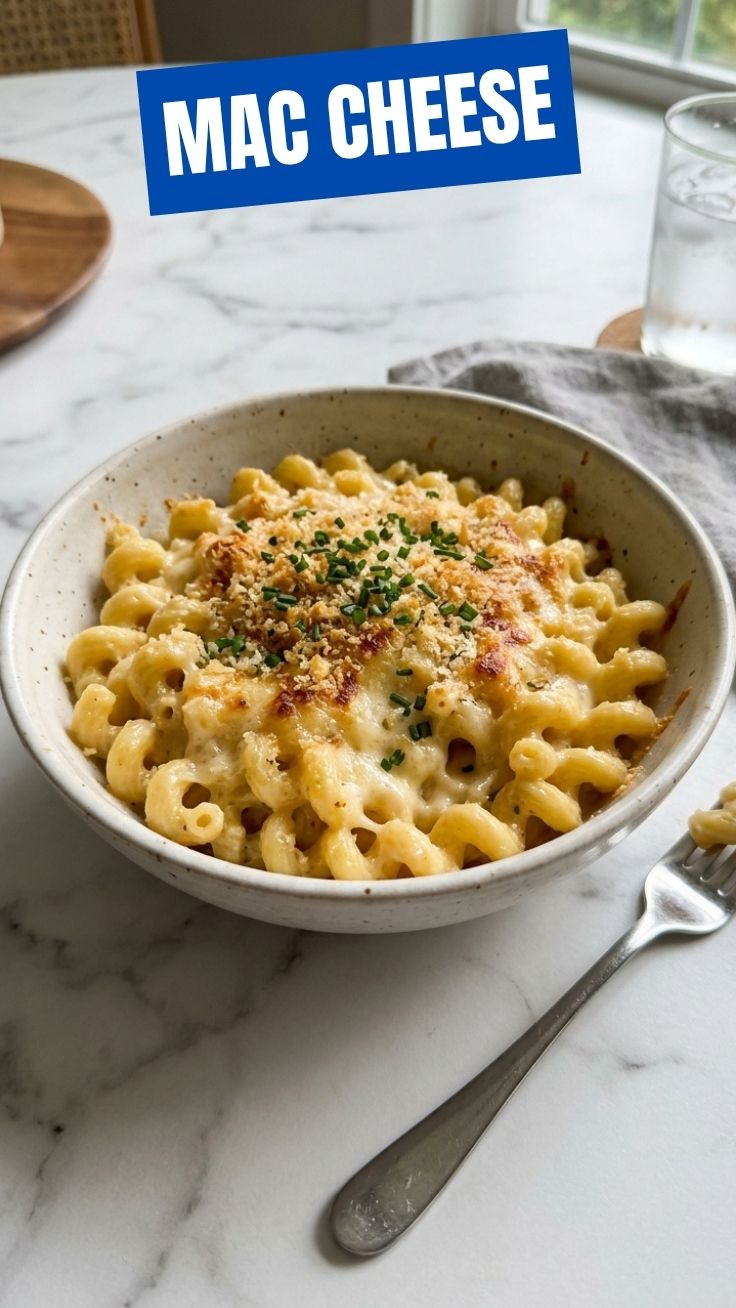
Quick way to grow classic mac and cheese in 5 minutes
Ingredients
Equipment
Method
- Combine macaroni and water in a microwave-safe bowl.
- Microwave on high for 3-4 minutes, until pasta is al dente.
- Stir in milk, cheddar cheese, salt, and pepper.
- Microwave for an additional 1-2 minutes until cheese is melted and sauce is creamy.