Beat the Heat: Your Ultimate Guide to Diabetic-Friendly Summer Recipes
Are you searching for delicious meals that won’t spike your blood sugar yet still satisfy those warm‑weather cravings? You’re not alone. Many people assume that managing diabetes means sacrificing flavor, especially during summer barbecues and poolside gatherings. The truth is, you can enjoy vibrant, refreshing dishes that are both nourishing and exciting. That’s why mastering diabetic friendly summer recipes at home is a game‑changer—you control the ingredients, avoid hidden sugars, and still indulge in seasonal bounty. Plus, once you learn the basics, you can experiment with low carb barbecue marinades to transform grilled proteins into flavorful, guilt‑free staples. Let’s dive into a complete, easy‑to‑follow recipe that proves healthy eating can be deliciously simple.
Ingredients & Kitchen Tools
Ingredients
– 4 boneless, skinless chicken breasts (about 6 oz each) – lean protein, keeps blood sugar stable.
– 1 large zucchini, sliced into ½‑inch rounds – low‑carb, high in fiber.
– 1 red bell pepper, cut into chunks – vitamin C powerhouse.
– 1 cup cherry tomatoes – lycopene‑rich, minimal impact on glucose.
– 2 tablespoons olive oil – healthy fat for satiety and absorption.
– 2 tablespoons fresh lemon juice – bright acidity, no added sugar.
– 2 cloves garlic, minced – adds depth without carbs.
– 1 teaspoon dried oregano – antioxidant‑packed herb.
– 1 teaspoon smoked paprika – earthy, smoky flavor.
– Salt and black pepper to taste – essential for seasoning.
– Optional substitution: Replace chicken with firm tofu or salmon; use avocado oil instead of olive oil.
Kitchen Tools
– Medium mixing bowl – for marinade.
– Grill pan or outdoor grill – best for char and minimal oil.
– Tongs – to flip proteins and veggies easily.
– Cutting board and chef’s knife – for prep.
– Measuring spoons – accuracy matters for marinades.
– Instant‑read thermometer – ensures chicken reaches 165°F without overcooking.
Prep Time & Cooking Schedule
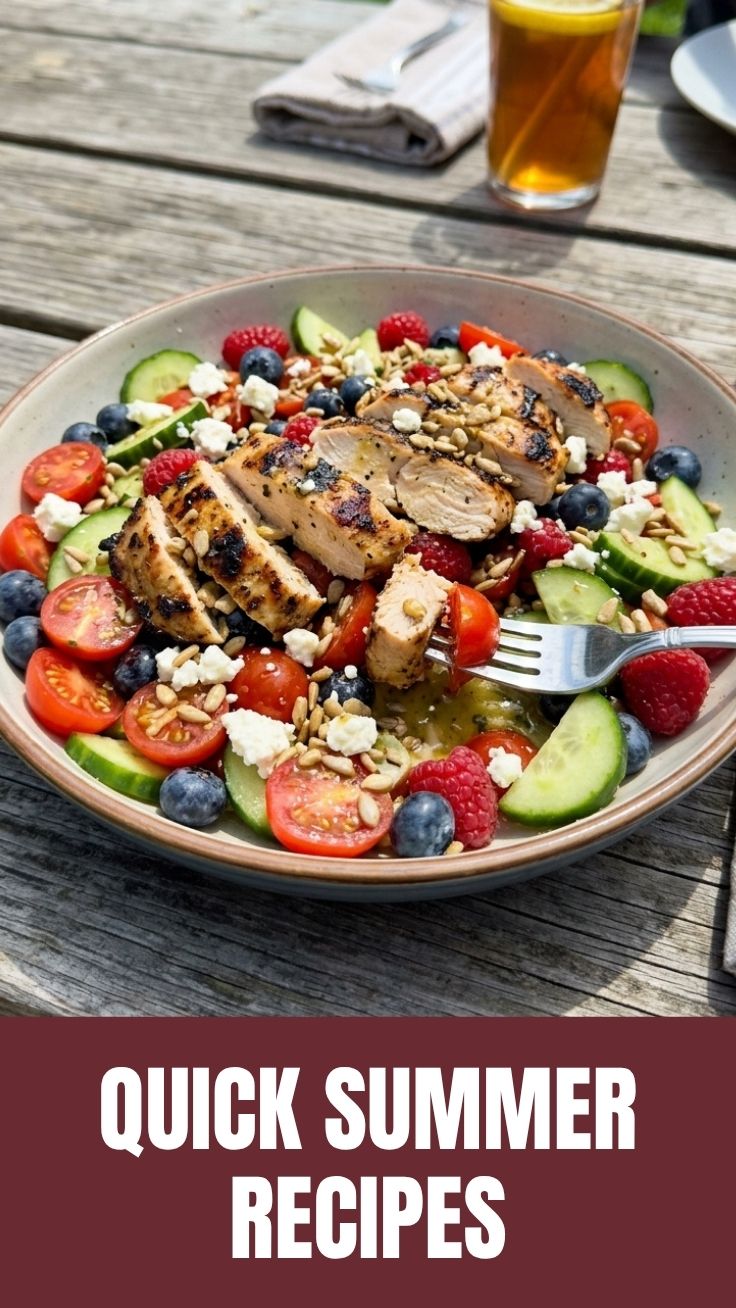
– Prep Time: 15 minutes – washing, chopping, mixing marinade.
– Marinating Time: at least 30 minutes (up to 2 hours) – allows flavors to penetrate.
– Cook Time: 12–15 minutes – 6–7 minutes per side over medium‑high heat.
– Resting Time: 5 minutes – keeps juices inside.
– Total Time: 1 hour – includes active prep and inactive marinating.
Plan ahead by marinating in the morning; the chicken will be ready to grill when you return from work or the pool.
Step-by-Step Instructions
1. Prepare the marinade: In a medium bowl, whisk together olive oil, lemon juice, minced garlic, oregano, smoked paprika, salt, and pepper. Reserve 1 tablespoon for brushing vegetables later.
2. Marinate the chicken: Place chicken breasts in the bowl, turning to coat evenly. Cover and refrigerate for at least 30 minutes. While it rests, slice your zucchini, bell pepper, and halve the cherry tomatoes.
3. Preheat the grill: Set your grill or grill pan to medium‑high heat (about 400°F). Lightly oil the grates to prevent sticking.
4. Grill the chicken: Remove chicken from marinade, letting excess drip off. Place on grill and cook 6–7 minutes without moving. Flip and cook another 6–7 minutes until internal temperature reaches 165°F. Transfer to a plate and tent with foil.
5. Grill the vegetables: In the same bowl (discard used marinade), toss zucchini, bell pepper, and tomatoes with the reserved 1 tablespoon of marinade. Grill vegetables 3–4 minutes per side until tender and lightly charred.
6. Rest and serve: Let chicken rest 5 minutes, then slice against the grain. Arrange on a platter with grilled vegetables. For extra flavor, squeeze a lemon wedge over everything.
Chef’s tip: If you’re craving a smoky kick, consider brushing the vegetables with one of the low carb barbecue marinades featured in our related recipe collection—the cumin‑chicken heart skewers marinade works brilliantly on bell peppers and zucchini too. This dish is a perfect example of diabetic friendly summer recipes because it’s packed with lean protein and non‑starchy veggies, keeping insulin response gentle.
Nutritional Benefits & Advantages
This meal is a powerhouse for blood sugar management:
– Chicken breast: High‑quality protein slows digestion and prevents glucose spikes.
– Zucchini and bell peppers: Low glycemic index, rich in fiber and antioxidants.
– Olive oil: Monounsaturated fats improve insulin sensitivity.
– Lemon and garlic: Anti‑inflammatory compounds support metabolic health.
– No added sugar: The marinade relies on herbs and citrus, not honey or brown sugar.
Per serving (1 chicken breast + 1 cup veggies): ~280 calories, 35g protein, 12g fat, 10g carbs (3g fiber). Ideal for a balanced diabetic plate.
Tips, Variations & Cooking Advice
– Switch up the protein: Try shrimp (grill 2–3 minutes per side) or portobello mushrooms for a vegetarian option.
– Global twists: Add curry powder and coconut milk for a Caribbean vibe, or use za’atar and sumac for Middle Eastern flair.
– Portion control: Pair with a small side of quinoa or cauliflower rice if you need extra carbs.
– Dairy‑free/gluten‑free: This recipe is naturally both—just ensure any store‑bought marinade you use is certified.
– Meal prep: Double the batch and store grilled chicken in the fridge for salads or wraps later.
For more inspiration, check out these diabetic friendly summer recipes like our [mango sorbet](https://homecookedrecipe.com/mango-sorbet-3-ingredient/)—a refreshing, sugar‑free dessert made with just three ingredients. And if you love bold grilling, don’t miss these low carb barbecue marinades from our [spicy cumin chicken heart skewers](https://rapidorecetas.com/spicy-cumin-chicken-heart-skewers/)—perfect for adventurous palates.
Common Mistakes to Avoid
– Over‑marinating – Citrus‑based marinades can break down chicken texture if left longer than 2 hours.
– Crowding the grill – Too many pieces lower the temperature, causing steaming instead of searing. Grill in batches.
– Skipping the rest – Cutting into chicken immediately releases juices, making it dry. Always rest 5 minutes.
– Underseasoning vegetables – Veggies need a generous pinch of salt before grilling to draw out moisture and caramelize.
– Using high‑sugar sauces – Bottled barbecue sauces often hide added sugars. Stick to homemade marinades or spice rubs.
Storage & Meal Prep Tips
– Refrigeration: Store leftovers in an airtight container for up to 4 days. Keep chicken and veggies separate to maintain crispness.
– Freezing: Grilled chicken freezes well for up to 3 months. Wrap individually in plastic wrap, then place in a freezer bag. Thaw in the fridge overnight.
– Reheating: Warm in a skillet over medium heat with a splash of water or broth to restore moisture. Avoid microwaving—it toughens chicken and makes veggies mushy.
– Meal prep ideas: Slice chicken and toss with greens, cucumber, and a light vinaigrette for next‑day lunches. The grilled vegetables make an excellent omelet filling or grain bowl base.
Conclusion
Cooking at home empowers you to enjoy the summer season without compromising your health goals. This grilled lemon herb chicken with vegetables proves that diabetic friendly summer recipes can be vibrant, satisfying, and simple to execute. By mastering a few core techniques—like balancing marinades with low‑carb ingredients—you open the door to endless variations, including experimenting with low carb barbecue marinades that add zest to any protein. Give this recipe a try this weekend, then share your creation on social media or explore more dishes in our collection. Your taste buds and your blood sugar will thank you.
FAQs
1. Can I use chicken thighs instead of breasts?
Yes. Thighs are slightly higher in fat and calories but remain low‑carb. Adjust grilling time to 8–10 minutes per side, or until internal temperature reaches 170°F.
2. My vegetables turned out soggy. What went wrong?
Most likely the grill wasn’t hot enough. Always preheat to medium‑high (400°F) and pat veggies dry before oiling. Avoid overcrowding; grill in a single layer.
3. How can I add more flavor without sugar?
Use fresh herbs (basil, cilantro, mint), spices (cumin, coriander, chili powder), citrus zest, and vinegars (balsamic, apple cider). These boost taste without carbs.
4. Is this recipe suitable for keto?
Absolutely. With only 7 net carbs per serving (fiber subtracted), it fits perfectly into a ketogenic meal plan.
5. Can I make the marinade ahead of time?
Yes. Mix the marinade (without the chicken) and store in the fridge for up to 3 days. Add the chicken when you’re ready to marinate. Discard any leftover marinade that touched raw poultry.
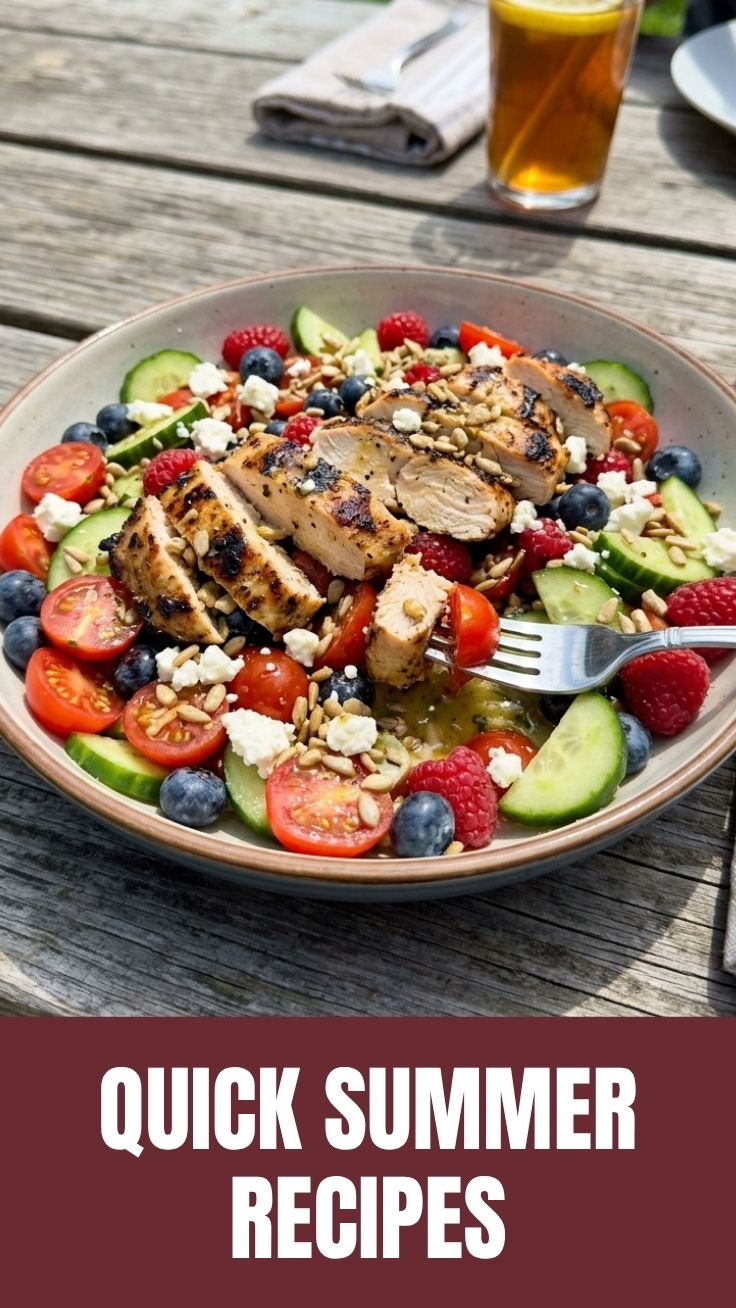
Quick way to grow 12 diabetic friendly summer recipes
Ingredients
Equipment
Method
- Preheat your oven to 400°F (200°C) and prepare a baking sheet with parchment paper.
- Cut the chicken breast and vegetables, including zucchini, bell peppers, and red onion, into bite-sized pieces; mince the garlic.
- In a large bowl, combine chicken and vegetables with olive oil, lemon juice, minced garlic, oregano, salt, and pepper, ensuring everything is well coated.
- Spread the mixture in a single layer on the prepared baking sheet and roast for 20-25 minutes, or until the chicken is cooked through and vegetables are tender.
- While roasting, cook quinoa according to package instructions for serving.
- Once roasted, remove from oven and stir in fresh basil; optionally, sprinkle with crumbled feta cheese.
- Serve the chicken and vegetable mixture over cooked quinoa for a complete meal.