The Ultimate Guide to Making a Perfect Falafel Bowl at Home
Have you ever craved that perfectly balanced, vibrant bowl packed with crispy chickpea fritters, fluffy grains, and a tangy drizzle of sauce—only to find yourself settling for a lackluster takeout version? You’re not alone. Falafel Bowl enthusiasts know that the magic of this dish lies in the harmony of textures and flavors, but achieving restaurant-quality results at home can feel elusive. The truth is, preparing a Mediterranean Food staple like this from scratch not only saves money but also gives you complete control over ingredients, ensuring every bite is fresh and tailored to your taste. When you master the art of the Falafel Bowl, you unlock a world of customizable, nutrient-dense meals that satisfy cravings without compromise. Below, we’ll walk through every step to create a bowl that rivals your favorite spot.
—
Ingredients & Kitchen Tools
For the Falafel Bowl Base
– Chickpeas (dried, soaked overnight): Canned work in a pinch, but dried provide better texture and less moisture.
– Fresh parsley & cilantro: Essential for that authentic green hue and herbal punch.
– Onion & garlic: Finely diced for even distribution; avoid chunky pieces that cause fritters to fall apart.
– Cumin, coriander, salt, pepper: The backbone of classic falafel seasoning.
– Baking powder: Helps achieve light, fluffy interiors—a non-negotiable tip.
– Flour (chickpea or all-purpose): Binds without making the mixture heavy.
– Neutral oil: For shallow frying (like avocado or sunflower) to avoid overpowering flavors.
For the Bowl Components
– Cooked quinoa or basmati rice: Adds hearty texture; use farro or freekeh for variation.
– Cherry tomatoes, cucumber, red onion: Fresh crunch that cuts through richness.
– Kalamata olives & pickled turnips: Briny accents typical in Mediterranean Food dishes.
– Lettuce or arugula: A peppery base to layer everything on.
– Lemon-tahini dressing: Homemade is best—blend tahini, lemon juice, water, garlic, and a pinch of salt.
Kitchen Tools
– Food processor: For a smooth but slightly chunky falafel mixture.
– Cast-iron skillet or heavy pot: Retains heat for even frying; avoid nonstick for crisp crusts.
– Slotted spoon: For draining fried falafel without excess oil.
– Mixing bowls, measuring spoons, chef’s knife, cutting board.
– Small cookie scoop or two spoons: For uniform falafel balls.
Optional Substitutions: Gluten-free eaters can swap all-purpose flour with chickpea flour; for oil-free falafel, bake at 375°F for 20 minutes (flip halfway).
—
Prep Time & Cooking Schedule
Proper timing transforms this from a stressful cook to a relaxed experience. Here’s your timeline:
– Soaking chickpeas: 8-12 hours (overnight). Dried chickpeas double in size, so use a large bowl with 2 inches of water above them.
– Prep time: 25 minutes (chopping, making falafel mixture, slicing veggies, cooking grains).
– Resting time: 30 minutes (chill falafel mixture in the fridge to firm up—this prevents crumbling).
– Cook time: 15 minutes (frying falafel in batches, 3-4 minutes per side).
– Assembly: 5 minutes (arranging bowls while falafel stays warm in a low oven).
Pro Tip: Cook quinoa or rice the night before and store in the fridge. This cuts active cooking time by 20 minutes and lets you jump straight to assembling.
—
Step-by-Step Instructions
1. Prepare the Falafel Mixture – In a food processor, combine drained chickpeas, parsley, cilantro, onion, garlic, cumin, coriander, salt, and pepper. Pulse until the mixture resembles coarse sand—don’t overprocess into a paste. Transfer to a bowl, fold in baking powder and 2 tablespoons of flour, then cover and refrigerate for 30 minutes.
2. Shape the Falafel – Using a small cookie scoop or wet hands, form 1.5-inch balls. Gently flatten slightly to ensure even cooking. If the mixture sticks to your hands, wet them with cold water.
3. Fry to Perfection – Heat 1 inch of oil in a cast-iron skillet to 350°F (use a thermometer). Gently slide falafel balls into oil, working in batches of 6-8 (crowding lowers temperature). Fry for 3-4 minutes until deep golden brown, then flip and fry the other side. Drain on paper towels. A perfectly cooked Falafel Bowl hinges on this step—undercooked centers happen when oil is too hot and exteriors burn before interiors set.
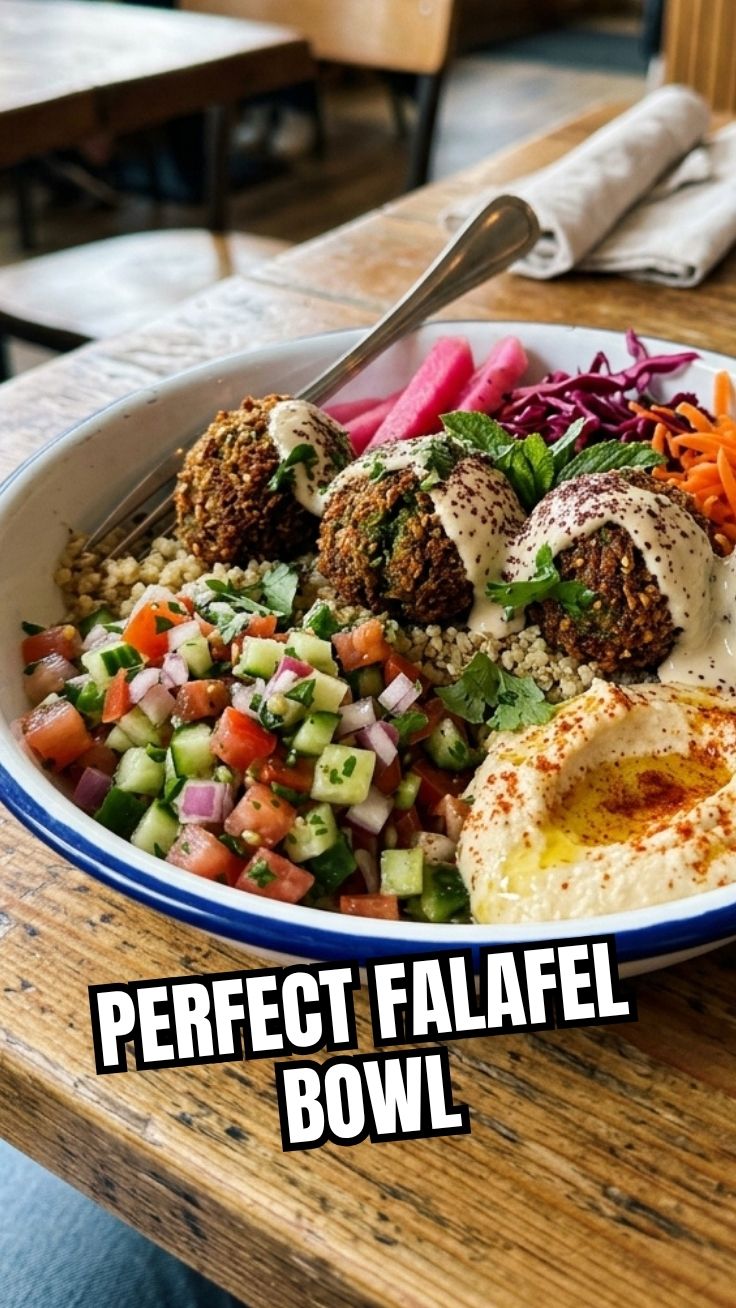
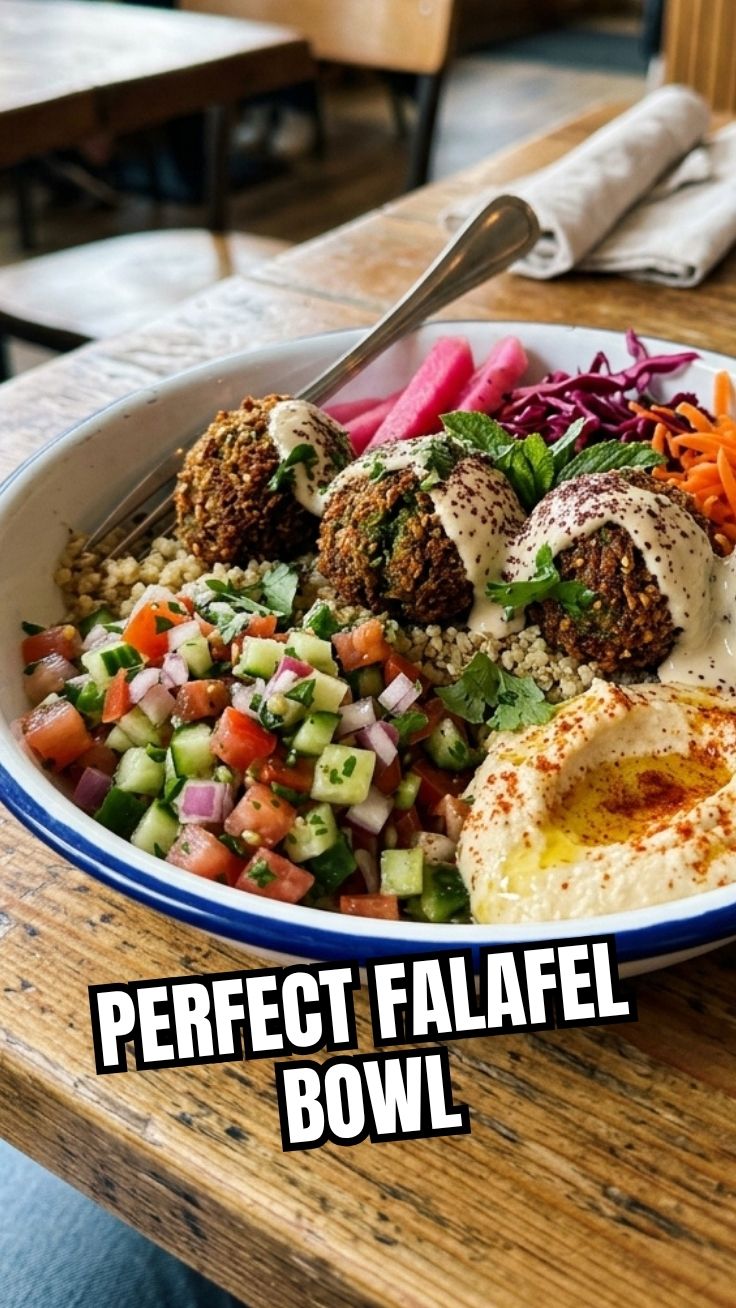
4. Assemble the Bowls – Divide cooked quinoa among bowls. Arrange lettuce, cherry tomatoes, cucumber slices, red onion, olives, and pickled turnips. Top with 4-5 falafel balls. Drizzle generously with lemon-tahini dressing. This Mediterranean Food staple is a canvas for fresh flavors and vibrant colors.
5. Serve Immediately – For best texture, serve within 10 minutes of frying. If preparing ahead, keep components separate and reheat falafel in a 350°F oven for 5 minutes to restore crispness.
Keywords naturally integrated: The focus keyword Falafel Bowl and related keyword Mediterranean Food are mentioned here.
—
Nutritional Benefits & Advantages
A single serving (2 falafel + grains + veggies) delivers approximately 450 calories, 18g protein, 15g fiber, and 25g healthy fats. Chickpeas are loaded with folate, iron, and magnesium—essential for energy and blood health. The tahini dressing provides calcium and healthy omega-3s, while the rainbow of vegetables offers antioxidants like lycopene (tomatoes) and quercetin (red onion). This Falafel Bowl is naturally vegan and can be gluten-free (use chickpea flour), making it a smart choice for diverse dietary needs. Compared to meat-based bowls, it has lower saturated fat and zero cholesterol without sacrificing satiety.
—
Tips Variations & Cooking Advice
– Flavor Twists: Add harissa paste to the falafel mixture for heat; swap tahini dressing for a yogurt-lemon mint version.
– Cooking Method Variations: Air-fry falafel at 375°F for 12 minutes (spray with oil); bake for a healthier version but expect a less crunchy exterior.
– Ingredient Swaps: Replace chickpeas with black beans for a different texture; use cauliflower rice to reduce carbs.
– Portion Adjustments: Double the falafel recipe and freeze half (uncooked) for quick weeknight dinners.
– Dietary Adaptations: Oil-free eaters can steam falafel (though texture changes); dairy-free and gluten-free versions are naturally compliant.
—
Common Mistakes to Avoid
1. Using canned chickpeas without drying – Canned chickpeas contain excess liquid that makes falafel soggy. Always pat them dry with paper towels and remove skins for smoother texture.
2. Overprocessing the mixture – Pulsing too long creates a paste that turns dense and gummy. Aim for small pieces that hold together.
3. Skipping the chilling step – Falafel mixture needs 30 minutes in the fridge to bind. Without it, balls fall apart in hot oil.
4. Inconsistent oil temperature – If oil is too cold, falafel soak up grease; if too hot, exteriors burn. Maintain a steady 350°F using a thermometer.
5. Overcrowding the pan – Adding too many at once drops the temperature, leads to greasy falafel. Cook in small batches.
—
Storage & Meal Prep Tips
– Refrigeration: Store falafel and components separately in airtight containers. Assemble bowls only when ready to eat to prevent sogginess.
– Freezing Cooked Falafel: Place cooled falafel in a single layer on a baking sheet, freeze for 2 hours, then transfer to a freezer bag. They keep for 3 months.
– Reheating: For crispy falafel, reheat in a 375°F oven or air fryer for 5-7 minutes. Avoid microwaving—it turns them rubbery.
– Freshness Timeframe: Cooked falafel stay good for 3 days in the fridge; dressed bowls should be eaten within 24 hours.
Meal Prep Hack: Cook quinoa, chop veggies, and prepare dressing up to 2 days ahead. Fry falafel the day you plan to serve for optimal texture.
—
Conclusion
Creating a stunning Falafel Bowl at home doesn’t require a professional kitchen—just attention to a few key details: properly soaked chickpeas, a well-chilled mixture, and precise oil temperature. This Mediterranean Food classic rewards you with a meal that’s endlessly versatile, nutritionally balanced, and deeply satisfying. Whether you’re meal-prepping for the week or impressing dinner guests, this recipe provides a reliable framework to experiment with flavors and textures. Don’t be afraid to swap ingredients or try our harissa variation—the best bowls are the ones you make your own. Ready to start? Whip up a batch tonight and let us know how it turns out in the comments below. For more globally inspired bowl recipes, explore our collection!
—
FAQs
1. Can I use canned chickpeas for falafel?
Yes, but you must dry them thoroughly with paper towels and remove skins. Expect a slightly softer texture than dried chickpeas. Adding an extra tablespoon of flour helps bind the mixture.
2. Why did my falafel fall apart while frying?
Three common reasons: the mixture was too wet (dry chickpeas more), you skipped the chilling step, or your oil wasn’t hot enough (ideal: 350°F). Also, avoid overprocessing—coarse mixture holds better.
3. How long can I store the lemon-tahini dressing?
In an airtight jar in the fridge, it lasts up to 5 days. Stir well before using as tahini naturally separates. If it thickens too much, whisk in a tablespoon of warm water.
4. Can I make this bowl gluten-free?
Absolutely. Swap all-purpose flour for chickpea flour or gluten-free oat flour. Ensure your quinoa is certified gluten-free if sensitive. All other ingredients are naturally gluten-free.
5. What’s the best substitute for tahini in this bowl?
Greek yogurt (thinned with lemon juice) works for a creamy alternative, or simply use a lemon-olive oil vinaigrette. For nut-free options, try sunflower seed butter blended with water and lemon.
Falafel Bowl
Ingredients
Equipment
Method
- Combine chickpeas, parsley, cilantro, onion, garlic, flour, cumin, coriander, salt, and pepper in a food processor.
- Pulse until the mixture is well combined but still has some texture.
- Form the mixture into small patties or balls. Place them on a plate and refrigerate for 15 minutes to firm up.
- Heat about 1 inch of vegetable oil in a large skillet over medium heat.
- Carefully place the falafel in the hot oil, ensuring not to overcrowd the skillet.
- Fry for 3-4 minutes per side, or until golden brown and crispy. Remove with a slotted spoon and place on a paper towel-lined plate to drain excess oil.
- Divide cooked quinoa, cherry tomatoes, and cucumber between two bowls. Top with the freshly cooked falafel and drizzle with tahini dressing to serve.