The Ultimate Guide to Perfect Homemade Falafel: Crispy, Flavorful, and Foolproof
Have you ever wondered why restaurant falafel is so perfectly crispy on the outside and tender on the inside, while your homemade versions often fall apart or turn out dry? The secret isn’t just in the ingredients—it’s in the technique. Preparing Falafel (Homemade) at home isn’t just about saving money; it’s about controlling the quality, freshness, and flavor profile to suit your preferences. When you make falafel (homemade) from scratch, you unlock a world of authentic Middle Eastern cuisine that’s both nutritious and deeply satisfying. The star ingredient, Chickpea, is a nutritional powerhouse that provides plant-based protein, fiber, and essential minerals. Whether you’re a seasoned home cook or a curious beginner, this falafel (homemade) guide will walk you through every step to achieve restaurant-quality results right in your own kitchen.
Ingredients & Kitchen Tools
Essential Ingredients
– Dried chickpeas (1 cup) – Never use canned; dried chickpeas provide the right texture without excess moisture.
– Fresh parsley (1/2 cup, packed) – Adds vibrant color and fresh flavor.
– Fresh cilantro (1/4 cup, packed) – Optional but recommended for authentic taste.
– Onion (1 small, roughly chopped) – Choose yellow or white for best results.
– Garlic (3-4 cloves) – Adjust based on your garlic tolerance.
– Ground cumin (1 tsp) – Earthy warmth that defines falafel.
– Ground coriander (1 tsp) – Citrusy notes that complement cumin.
– Baking powder (1/2 tsp) – The secret to light, airy texture.
– Salt (1 tsp) – Enhances all flavors.
– Black pepper (1/2 tsp) – For subtle heat.
– Sesame seeds (optional, 2 tbsp) – For garnish and nutty crunch.
– Neutral oil (for frying) – Canola, vegetable, or avocado oil work best.
Kitchen Tools Required
– Food processor – Crucial for achieving the right paste consistency.
– Large mixing bowl – For resting the mixture.
– Deep skillet or heavy-bottomed pot – For even frying.
– Slotted spoon or spider strainer – To remove falafel without excess oil.
– Paper towels – For draining.
– Measuring cups and spoons – Accuracy matters in texture.
– Cookie scoop (1.5 tbsp size) – For uniform balls.
Optional Substitutions
– Gluten-free option – Replace baking powder with chickpea flour (2 tbsp).
– Herb variation – Use mint or dill instead of cilantro for a different flavor profile.
– Baking alternative – Omit sesame seeds if unavailable.
Prep Time & Cooking Schedule
| Stage | Time | Notes |
|——-|——|——-|
| Chickpea soaking | 8-12 hours (overnight) | Submerge in cold water with 1 tsp baking soda for softer texture |
| Active prep time | 20 minutes | Includes chopping and food processing |
| Resting time | 30 minutes (minimum) | Crucial for binding and flavor development |
| Cooking time | 8-10 minutes per batch | Fry at 350°F (175°C) for crispiness |
| Total time | ~9 hours (mostly passive) | Plan ahead for overnight soaking |
Pro tip: Start soaking chickpeas the night before and complete remaining steps the next morning or before dinner.
Step-by-Step Instructions
Step 1: Prepare the Chickpeas
Rinse 1 cup dried Chickpea under cold water, then transfer to a large bowl. Cover with 3 inches of cold water, add 1 tsp baking soda (helps soften skins), and soak for 8-12 hours. Key note: Chickpeas will double in size—ensure enough water. After soaking, drain and rinse thoroughly.
Step 2: Process the Ingredients
In a food processor, combine drained Chickpea, parsley, cilantro, onion, garlic, cumin, coriander, salt, and pepper. Pulse 15-20 times until you achieve a coarse, sand-like texture. Texture check: Pinch the mixture—it should hold together without being pasty. If too dry, add 1 tbsp water; if too wet, add 1 tbsp chickpea flour.
Step 3: Rest the Mixture
Transfer mixture to a bowl, cover, and refrigerate for 30 minutes. Why this matters: Resting allows the starches to hydrate and flavors to meld. Meanwhile, prepare your work station with a tray lined with parchment paper.
Step 4: Shape the Falafel
Using a 1.5-tbsp cookie scoop or your hands (lightly oiled), form uniform balls (about 1.5 inches wide). Optional: Roll each ball in sesame seeds for added texture and visual appeal. Place on prepared tray. Tip: Don’t over-handle—gentle shaping prevents dense falafel.
Step 5: Heat the Oil
Pour 2 inches of neutral oil into a deep skillet. Heat over medium-high until it reaches 350°F (175°C). Temperature check: Drop a breadcrumb—it should sizzle immediately and float. Maintain temperature using a thermometer throughout.
Step 6: Fry in Batches
Carefully drop 4-5 falafel balls into the hot oil. Fry for 4-5 minutes per side, turning once, until deep golden brown. Cooking tip: Avoid overcrowding, which lowers oil temperature and creates greasy falafel. Transfer to paper towels to drain.
Step 7: Serve Immediately
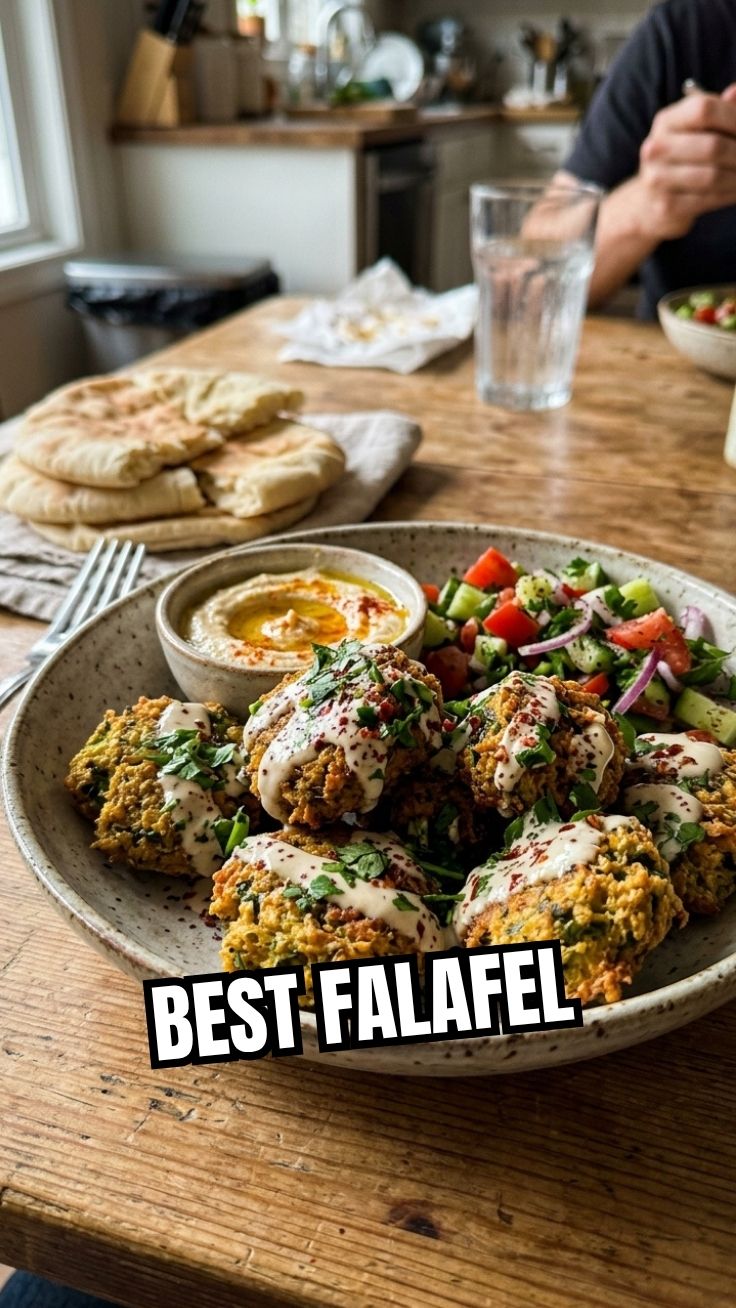
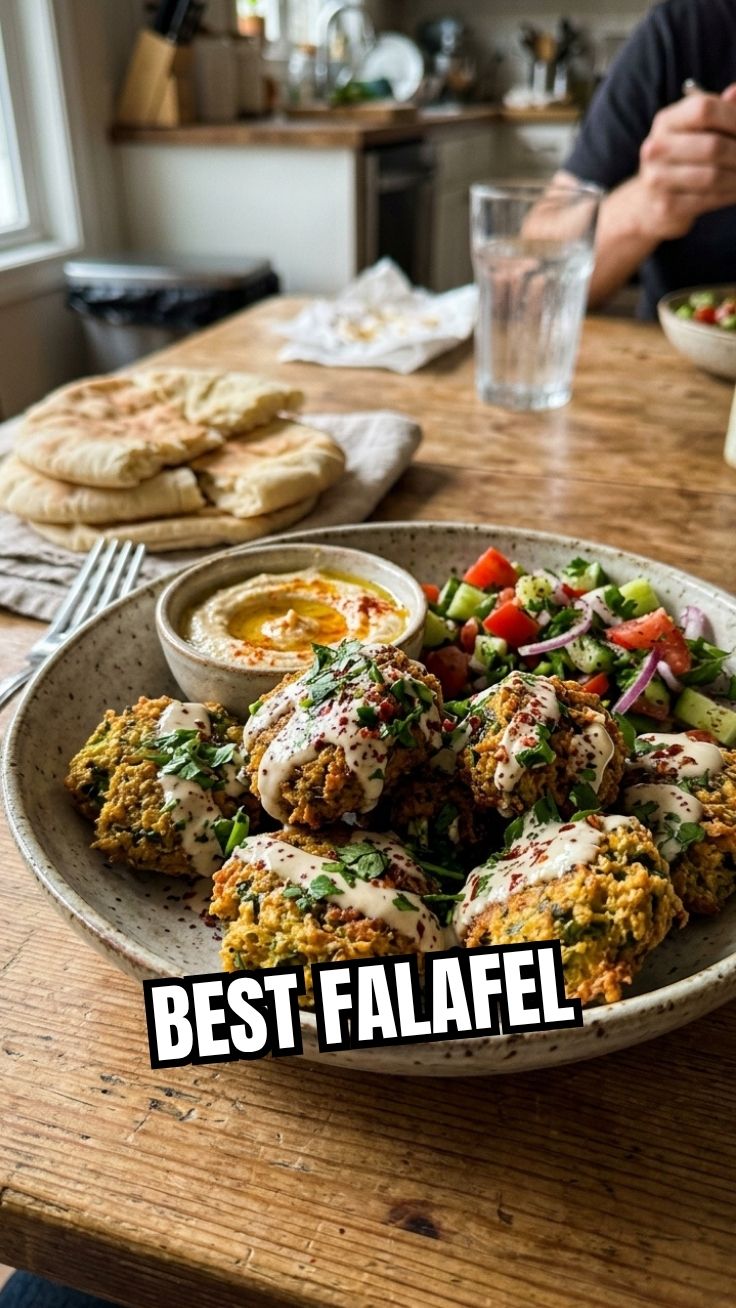
The best falafel (homemade) is fresh and hot. Serve in warm pita with tahini sauce, pickled turnips, and fresh veggies for an authentic experience. For the ultimate falafel (homemade) experience, pair with creamy hummus and a side of Israeli salad.
Nutritional Benefits & Advantages
Falafel (homemade) offers impressive nutritional density. Per 3-ball serving (approximately 180g):
– Calories: 230 kcal
– Protein: 12g (complete when paired with tahini or whole grains)
– Fiber: 8g (supports digestive health)
– Iron: 2.5mg (14% DV)
– Folate: 80mcg (20% DV)
The Chickpea base provides:
– Plant-based protein – Essential for muscle repair and satiety
– Slow-digesting carbohydrates – Stabilizes blood sugar levels
– Prebiotic fiber – Feeds beneficial gut bacteria
Additionally, fresh herbs (parsley, cilantro) contribute antioxidants like vitamin C and beta-carotene. When baked instead of fried, falafel (homemade) becomes a heart-healthy, low-fat meal option suitable for Mediterranean diets.
Tips, Variations & Cooking Advice
Flavor Variations
– Spicy falafel – Add 1 tsp cayenne or 2 fresh chili peppers during processing.
– Turmeric twist – Add 1/2 tsp turmeric for anti-inflammatory benefits and golden color.
– Herb-focused – Double the parsley and cilantro for a greener, more aromatic falafel.
Cooking Method Alternatives
| Method | Temperature | Time | Texture |
|——–|————-|——|———|
| Deep-frying | 350°F (175°C) | 8-10 min | Classic crispy |
| Air-frying | 375°F (190°C) | 12-15 min | Lightly crispy, less oil |
| Baking | 400°F (200°C) | 20-25 min | Firmer, less greasy |
| Pan-searing | Medium-high | 6-8 min | Crusty exterior, soft center |
Dietary Adaptations
– Gluten-free – Use chickpea flour instead of all-purpose flour if needed.
– Dairy-free – Naturally dairy-free; serve with tahini (sesame paste) instead of yogurt-based sauces.
– Low-FODMAP – Omit onion and garlic; replace with asafoetida powder and chives.
Portion Changes
– Mini falafel – Use a 1-tsp scoop for appetizers; reduce fry time by 2 minutes.
– Falafel patties – Flatten balls into discs (1/2 inch thick) for Burgers; cook 3-4 minutes per side.
Common Mistakes to Avoid
Mistake 1: Using canned chickpeas – Canned chickpeas are already cooked and contain too much moisture, causing falafel to fall apart in oil. Solution: Always use dried chickpeas soaked overnight.
Mistake 2: Over-processing the mixture – Processing until smooth creates a paste that fries into dense, heavy balls. Solution: Pulse until it resembles coarse sand—you want small bits, not a puree.
Mistake 3: Skipping the resting time – Without refrigeration, the mixture won’t hold together properly. Solution: Minimum 30 minutes rest; 1 hour is better.
Mistake 4: Frying at wrong temperature – Oil too hot (over 375°F) burns the outside before the inside cooks; too cool (under 325°F) results in greasy, oily falafel. Solution: Use thermometer and maintain 350°F.
Mistake 5: Overcrowding the pan – Adding too many falafel drops oil temperature, creating soggy results. Solution: Fry in batches of 4-5, allowing oil to return to temperature between batches.
Storage & Meal Prep Tips
Refrigeration (Short-term)
– Store cooked falafel in an airtight container lined with paper towels. Keep refrigerated for up to 5 days.
– Uncooked mixture can be refrigerated for up to 2 days in a covered bowl—shape and fry just before serving.
Freezing (Long-term)
– Freeze uncooked balls on a parchment-lined tray until solid (2 hours), then transfer to freezer bags. Store for up to 3 months.
– Freeze cooked falafel in a single layer on a tray, then transfer to bags. Reheat directly from frozen.
Reheating Instructions
– Oven (best for texture): 350°F for 8-10 minutes, flipping halfway.
– Air-fryer: 375°F for 5-7 minutes.
– Microwave (avoid if possible): 30-second bursts result in soggy texture.
Meal prep tip: Prepare a double batch of mixture on Sunday. Shape half and fry immediately; freeze the remaining mixture in portion-sized bags for quick weeknight dinners.
Conclusion
Making falafel (homemade) from scratch transforms this classic Middle Eastern street food into a rewarding culinary project that delivers unmatched freshness, flavor, and texture. The secret lies in using dried Chickpea instead of canned, allowing adequate resting time, and maintaining precise oil temperature for that coveted crispy exterior. Whether you serve it in warm pita with tahini, crumble it over salads, or enjoy it as a snack, this falafel (homemade) recipe proves that authentic, healthy, and delicious food doesn’t require restaurant expertise—just a little patience and the right technique. I encourage you to try this recipe this weekend and share your results in the comments. Don’t forget to explore our guide on homemade hummus for the perfect pairing!
FAQs
Q1: Can I make falafel without a food processor?
A: Yes, but it requires significant effort. Use a mortar and pestle or grate the chickpeas and herbs finely by hand. The texture may be less uniform, but flavor remains authentic.
Q2: Why did my falafel fall apart in the oil?
A: Common reasons include using canned chickpeas, skipping the resting time, or adding too much liquid. Ensure you use soaked dried chickpeas and refrigerate the mixture for at least 30 minutes.
Q3: Can I bake instead of fry falafel?
A: Absolutely! Preheat oven to 400°F (200°C), brush falafel with oil, and bake for 20-25 minutes, flipping halfway. Texture will be firmer and less crispy but still delicious.
Q4: How do I make falafel less dry?
A: Add 1-2 tbsp of olive oil to the mixture, ensure chickpeas are well-drained but not bone-dry, and avoid over-processing. Serve immediately after cooking for best moisture.
Q5: Can I freeze falafel mixture for later use?
A: Yes. Shape into balls, freeze on a tray, then transfer to freezer bags. Fry directly from frozen—just add 2-3 minutes to cooking time.
Falafel (Homemade)
Ingredients
Equipment
Method
- Soak dried chickpeas in cold water for at least 12 hours, then drain thoroughly.
- Combine all ingredients (except oil) in a food processor and pulse until a coarse mixture forms.
- Shape the mixture into small patties or balls. For best results, chill them for 30 minutes.
- Heat vegetable oil in a deep pot to 350°F (175°C).
- Carefully place falafel into the hot oil, ensuring not to overcrowd the pot. Fry for 3-5 minutes, turning occasionally, until golden brown and crispy.
- Remove falafel from oil with a slotted spoon and place on a paper towel-lined plate to drain excess oil.
- Serve hot with tahini sauce, pita bread, and fresh vegetables for a delicious meal.