The Ultimate Guide to Making a Fresh & Authentic Greek Salad at Home
Have you ever wondered why the Greek Salad you order at a taverna tastes so much brighter and more satisfying than what you make at home? The secret isn’t complicated techniques or hard-to-find ingredients—it’s about respecting the quality of each component and understanding how they work together. Preparing an authentic Greek Salad yourself is valuable because it lets you control the ripeness of the tomatoes, the creaminess of the feta, and the intensity of the oregano, transforming a simple dish into a personal culinary experience. When you follow a trusted Greek Salad Recipe, you unlock the Mediterranean’s most celebrated flavor profile: crisp vegetables, briny olives, creamy cheese, and a tangy, herbaceous dressing that needs no complicated emulsification.
—
Ingredients & Kitchen Tools
Produce
– 4 large ripe tomatoes (use Roma or vine-ripened for best sweetness; avoid watery hothouse varieties)
– 1 English cucumber (or 2 Persian cucumbers—fewer seeds, crisper texture)
– 1 medium red onion (choose firm, purple-skinned bulbs; slice paper-thin to reduce sharpness)
– 1 green bell pepper (use Cubanelle for a sweeter, milder bite)
– ½ cup Kalamata olives (pitted, but keep a few with pits for authenticity)
– 200g block feta cheese (Greek feta from sheep or goat milk is essential—pre-sliced feta in brine loses moisture)
Pantry & Dressing
– 4 tbsp extra virgin olive oil (use a robust, peppery Greek variety if possible)
– 2 tbsp red wine vinegar (or substitute with fresh lemon juice for a brighter acid)
– 1 tsp dried oregano (Greek oregano is preferred; rub it between your palms to release oils)
– Sea salt flakes (use coarse salt to sprinkle just before serving)
– Freshly ground black pepper
Kitchen Tools
– Large mixing bowl (ceramic or glass to avoid metallic aftertaste)
– Chef’s knife and cutting board
– Vegetable peeler (optional, for cucumber strips)
– Measuring spoons
– Serving platter (a wide, shallow dish lets the salad sit in its own juices)
—
Prep Time & Cooking Schedule
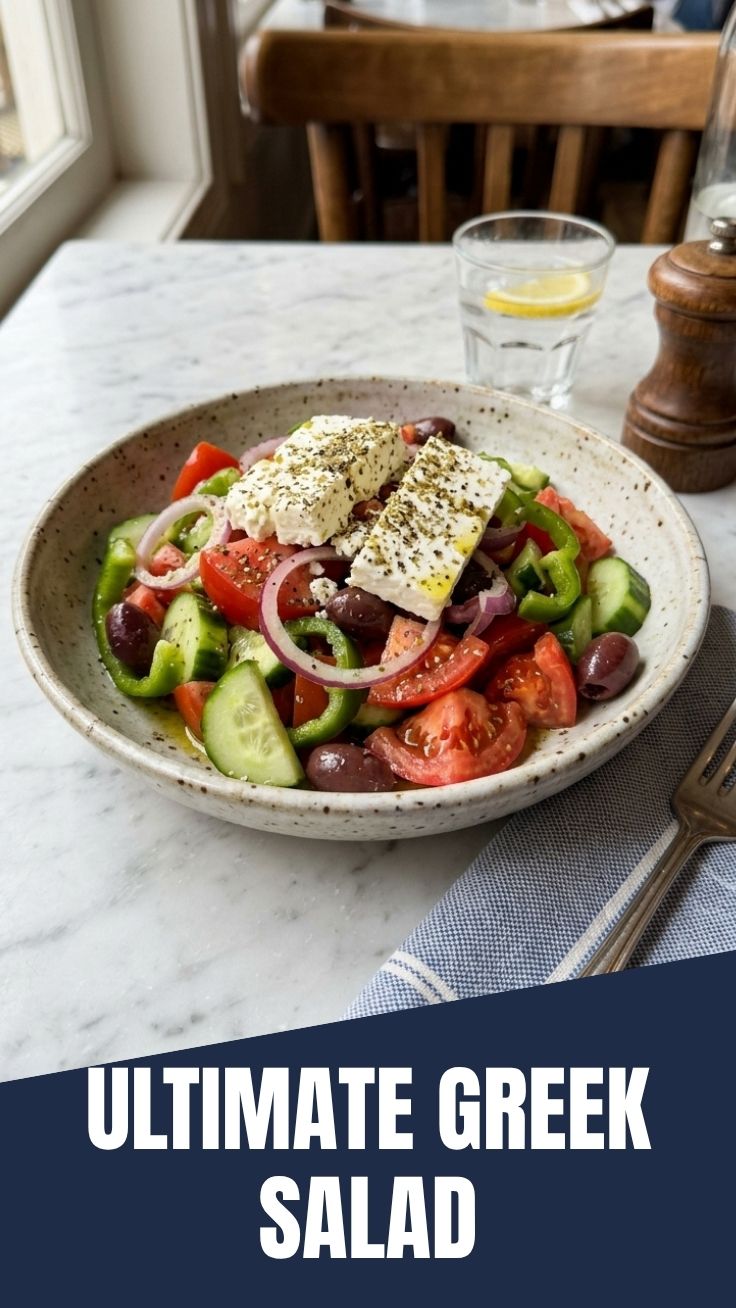
– Prep Time: 15 minutes
– Resting Time: 10 minutes minimum (allows flavors to meld without wilting the vegetables)
– Total Time: 25 minutes
This salad requires zero heat, making it ideal for summer days or when you need a quick, no-fuss side dish. Plan your resting time strategically: prepare the dressing and chop the vegetables, then let the assembled salad rest while you grill meat or set the table. The rest step is non-negotiable—the olive oil softens the onion bite and the tomato juices mingle with the vinegar to create a light, natural dressing.
—
Step-by-Step Instructions
1. Prepare the vegetables
Cut the tomatoes into wedges (about 6 per medium tomato), removing the tough core. Slice the cucumber in half lengthwise, then cut into half-moons about ½ inch thick. Thinly slice the red onion into rings—soak them in ice water for 5 minutes if you want to reduce pungency, then drain thoroughly. Slice the green bell pepper into thin rings, discarding seeds and white pith.
2. Assemble the base
Place the tomato wedges, cucumber slices, onion rings, and bell pepper rings into your large bowl. Do not stir yet—layering matters more than tossing at this stage. Add the Kalamata olives evenly across the top.
3. Create the dressing
In a small bowl, whisk together the olive oil, red wine vinegar, and dried oregano. Let it sit for 2 minutes to allow the oregano to rehydrate and infuse the oil. The dressing should smell intensely herbal—if it doesn’t, add another pinch of oregano.
4. Dress and rest
Pour the dressing over the vegetables. Use your hands or two wooden spoons to gently fold everything together, ensuring each piece of tomato and cucumber is lightly coated. Sprinkle a generous pinch of sea salt and a few cracks of black pepper. Let the salad rest for 10 minutes at room temperature. During this rest, the salt draws moisture from the tomatoes, creating a light, almost brothy liquid that is the hallmark of a proper Greek Salad Recipe.
5. Add the feta
After resting, place the block of feta cheese directly on top of the salad—do not crumble it. Traditionally, the feta is served as a single slab so each diner can break off a piece with their fork. Drizzle a final teaspoon of olive oil over the cheese and sprinkle a tiny pinch of dried oregano on top. Serve immediately while the vegetables are still crisp and the feta is cool.
—
Nutritional Benefits & Advantages
A classic Greek Salad is a nutritional powerhouse disguised as a simple side. Tomatoes provide lycopene, a potent antioxidant that becomes more bioavailable when eaten with olive oil. The cucumber offers hydration and silica for skin health, while red onion delivers quercetin, a flavonoid with anti-inflammatory properties. Kalamata olives contribute heart-healthy monounsaturated fats and polyphenols. Feta cheese, despite its creamy reputation, is lower in fat and calories than many aged cheeses—a 100g serving contains roughly 260 calories and 21g of protein. The extra virgin olive oil in the Greek Salad Recipe provides oleocanthal, a compound with anti-inflammatory effects similar to ibuprofen. This dish is naturally gluten-free, low-carb, and suitable for Mediterranean diet protocols.
—
Tips, Variations & Cooking Advice
– Flavor boost: Add 2 tablespoons of capers, rinsed and drained, for an extra briny punch.
– Herb variation: Fresh mint or flat-leaf parsley (chopped) can replace oregano for a lighter, more summery profile.
– Protein addition: Top with grilled chicken, seared shrimp, or marinated chickpeas to turn this into a main course.
– Dairy-free adaptation: Substitute feta with a high-quality vegan feta made from almonds or cashews, or simply omit and double the olives.
– Temperature tip: Refrigerate the bowl and plate for 15 minutes before serving—chilled vegetables keep the feta from softening too quickly.
– Portion change: For a crowd, double the recipe and layer the vegetables on a large platter instead of a bowl; the visual presentation is stunning, and guests can serve themselves.
—
Common Mistakes to Avoid
– Using pre-crumbled feta: Crumbled feta is often coated in cellulose to prevent clumping, which stops it from melting properly into the salad. Always buy a block and cut it yourself.
– Overdressing: The vegetables release water, so a heavy hand with oil or vinegar turns the salad soggy. Start with the recommended amount and add more only after tasting.
– Chilling too long: While resting is essential, refrigeration beyond 30 minutes dulls the tomato flavor. Serve immediately after the 10-minute rest.
– Skipping the salt on tomatoes: Salt is not just seasoning—it’s a technique. Without it, you miss the natural tomato juice that becomes the salad’s secret sauce.
– Using dried herbs that are too old: Oregano loses potency after six months. If your jar is older, double the amount or substitute with fresh oregano.
—
Storage & Meal Prep Tips
Refrigeration: Store leftovers in an airtight container for up to 2 days. The vegetables will soften and release more liquid, so expect a more marinated, less crisp texture. The feta will absorb some of the dressing, which actually improves its flavor.
Freezing: Not recommended. The high water content in tomatoes and cucumbers creates an icy, mushy texture upon thawing.
Meal prep: Chop the vegetables (minus the onion) up to one day ahead and store them separately in resealable bags with a paper towel to absorb excess moisture. Slice the onion and prepare the dressing fresh the day of serving. Assemble and rest just before eating.
Reheating: This salad is served cold or at room temperature—never reheat. If the olive oil solidifies in the fridge, let it sit at room temperature for 15 minutes and stir gently before serving.
—
Conclusion
Making an authentic Greek Salad at home is about embracing simplicity and quality: ripe tomatoes, creamy block feta, briny olives, and a dressing that lets every ingredient shine. This Greek Salad Recipe proves that with a few careful steps—proper resting, layering, and the right feta—you can recreate that taverna experience in your own kitchen. Try it this week, adjust the ingredient ratios to your taste, and share your results with friends. For more Mediterranean-inspired dishes, explore our collection of fresh salads and vegetable-forward meals that celebrate clean, bold flavors.
—
FAQs
1. Can I use lemon juice instead of red wine vinegar?
Yes, fresh lemon juice works beautifully. Use 1½ tablespoons for a brighter, less sharp acid. The rest of the recipe remains the same.
2. How do I stop the onion from being too strong?
Slice the onion paper-thin and soak the rings in ice water for 5–10 minutes. Drain well and pat dry before adding. This removes the sulfurous compounds without sacrificing crunch.
3. Why is my salad watery?
You likely used overripe or large, watery tomatoes. Choose Roma or Campari tomatoes, and salt them lightly 5 minutes before assembling to draw out extra moisture, then drain that liquid before adding the dressing.
4. Can I add lettuce?
Traditional Greek salad (Horiatiki) does not contain lettuce, but you can add a handful of arugula or romaine if you want extra bulk. Note that the flavors become less pure.
5. How long can I leave the salad out at a party?
It’s safe at room temperature for up to 2 hours. Beyond that, the vegetables continue to release liquid and the feta softens. Keep the bowl in a larger bowl of ice for longer events.
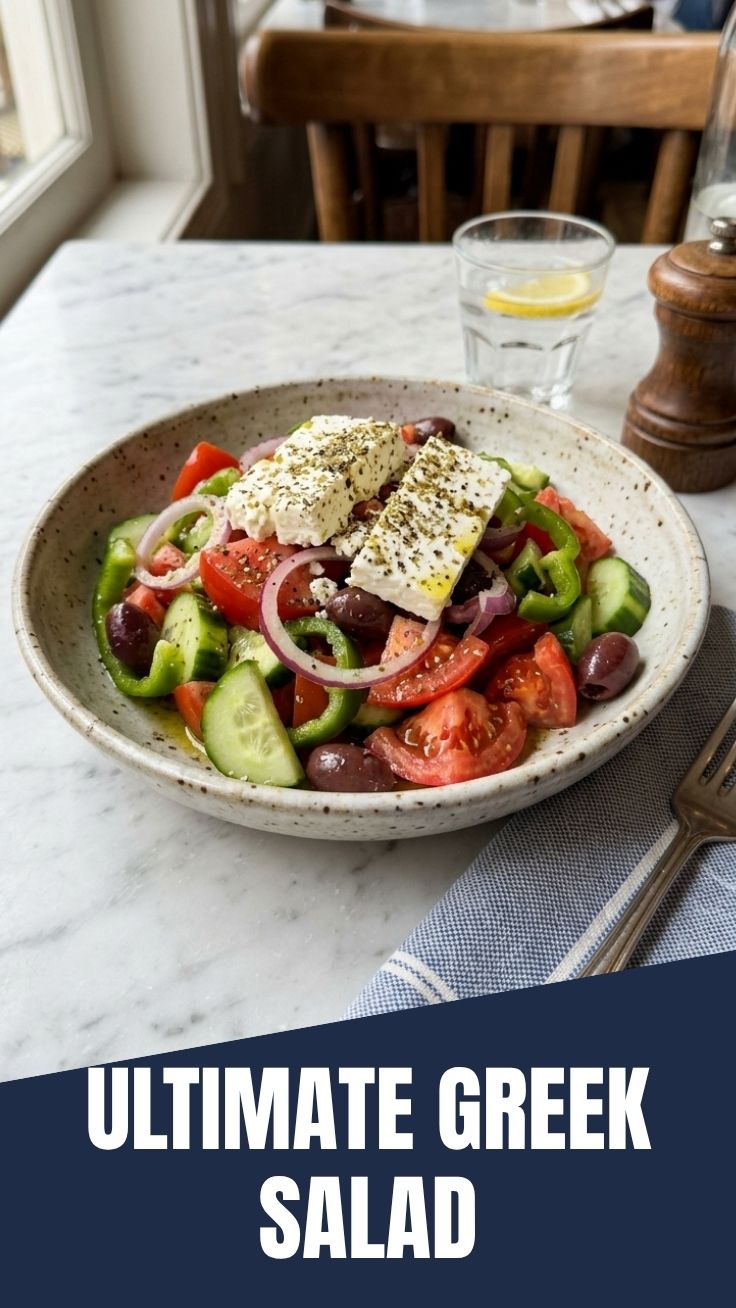
Best way to grow with a perfect Greek Salad: 5 fresh twists
Ingredients
Equipment
Method
- Chop the tomatoes, cucumber, and red onion; combine them in a large bowl with the olives and crumbled feta cheese.
- Whisk together olive oil, red wine vinegar, oregano, salt, and pepper to create the dressing.
- Pour the dressing over the vegetables and feta, then gently toss to combine and serve immediately.
- Add rinsed chickpeas, diced bell pepper, and fresh parsley to the classic Greek salad mixture.
- Stir in cooled cooked quinoa and chopped mint leaves into the classic Greek salad.
- Grill sliced halloumi until golden brown on both sides, then add it to the classic Greek salad.
- Whisk harissa paste and red pepper flakes into the classic Greek salad dressing for a spicy kick.
- Fold in diced avocado and a dollop of Greek yogurt into the classic Greek salad for a creamy texture.