The Ultimate Guide to Perfect Lemon Garlic Salmon: A Flavorful, Foolproof Dinner
Have you ever wondered why restaurant-quality salmon tastes so effortlessly bright and flaky, yet your attempts at home often end up dry or bland? The secret isn’t a fancy technique—it’s the perfect balance of acidity and aromatics. This Lemon Garlic Salmon recipe transforms simple ingredients into a restaurant-worthy meal in under 30 minutes. Preparing it at home saves you money, allows you to control the quality of ingredients, and ensures a fresh, satisfying meal every time. With this guide, you’ll master how to create a bright, buttery, and perfectly cooked dish that pairs beautifully with any side.
Ingredients & Kitchen Tools
For the Salmon:
– 4 salmon fillets (6 oz each) – Skin-on or skinless; skin helps keep the fish moist.
– 3 tbsp extra virgin olive oil – For searing and richness.
– 4 cloves garlic, minced – Fresh is best; jarred can be bitter.
– 1 lemon (zest + 2 tbsp juice) – Use a Meyer lemon for sweeter notes.
– Salt and black pepper – Kosher salt preferred for even seasoning.
– Fresh dill or parsley – For garnish and freshness.
Optional Substitutions:
– Replace olive oil with avocado oil for a higher smoke point.
– Use lime instead of lemon for a tangier twist.
Kitchen Tools:
– Large cast-iron or non-stick skillet
– Fish spatula (thin, slotted)
– Microplane (for zest)
– Instant-read thermometer (highly recommended)
– Paper towels (for patting fish dry)
Prep Time & Cooking Schedule
Total time: 20 minutes
– Prep time: 10 minutes (pat dry, season, zest lemon)
– Cook time: 8–10 minutes (depending on thickness)
– Resting time: 2 minutes (after cooking, under foil)
Pro Tip: Pat the salmon fillets dry thoroughly with paper towels before seasoning. This step ensures a golden, crispy crust. While the pan heats, you can prep your side dish.
Step-by-Step Instructions
1. Prepare the salmon: Pat fillets dry. Season both sides with salt, pepper, and half the lemon zest.
2. Heat the pan: Place a cast-iron skillet over medium-high heat for 2 minutes. Add olive oil and swirl to coat.
3. Sear the fish: Place fillets skin-side down (if using skin). Press gently with a spatula for 10 seconds to ensure even contact. Cook undisturbed for 4–5 minutes until the skin is golden and releases easily.
4. Flip and finish: Flip carefully. Add minced garlic, remaining lemon zest, and 1 tbsp of lemon juice to the pan. Cook for 2–3 minutes, basting the fish with pan juices. The internal temperature should reach 125°F–130°F for medium (or 145°F for well done).
5. Rest and serve: Transfer salmon to a plate, tent with foil, and rest for 2 minutes. Drizzle remaining lemon juice and garnish with fresh herbs.
Texture cue: The salmon should flake easily with a fork but remain moist in the center. If the garlic browns too fast, add a tablespoon of butter to prevent burning. This Salmon recipes approach ensures a deeply flavorful crust.
Nutritional Benefits & Advantages
Salmon is packed with omega-3 fatty acids (EPA and DHA), which support heart and brain health. A single 6-oz serving provides about 34g of protein, nearly half your daily vitamin D needs, and significant selenium (an antioxidant). Lemon adds vitamin C and enhances iron absorption from the fish. The garlic contributes allicin, a compound linked to immune support. This dish is naturally gluten-free, low-carb, and keto-friendly.
Tips, Variations & Cooking Advice
– Make it dairy-free: Use olive oil instead of butter; skip cream-based sauces.
– Spicy twist: Add ½ tsp red pepper flakes with the garlic.
– Oven method: Bake at 400°F for 12–15 minutes on a lined baking sheet. Brush with garlic-lemon butter halfway through.
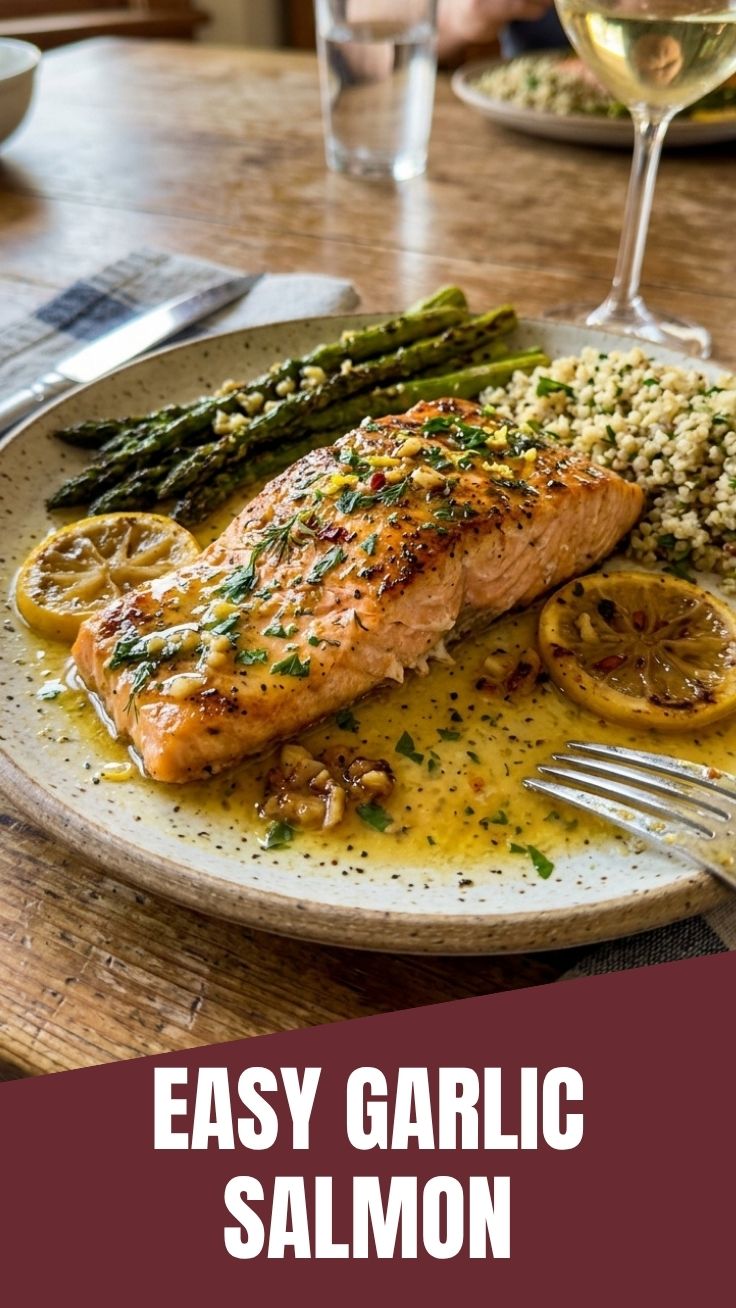
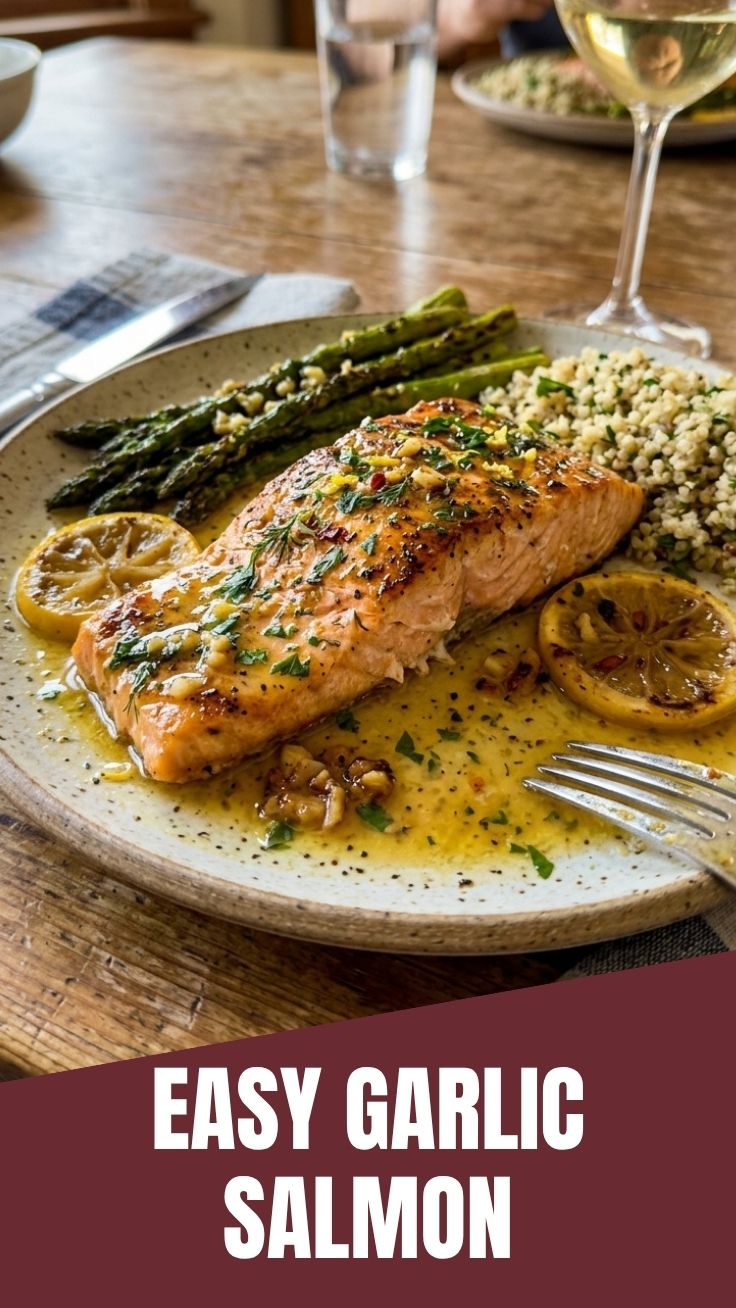
– Serving ideas: Pair with roasted asparagus, quinoa, or a simple arugula salad.
Adjust portions by slicing thicker fillets in half horizontally; reduce cooking time by 1–2 minutes.
Common Mistakes to Avoid
– Overcooking: Salmon continues cooking after removal. Pull it at 125°F (medium) to avoid dryness.
– Skipping the pat-dry step: Wet skin = steamed fish, not seared. Use paper towels.
– Crowding the pan: Leave 1 inch between fillets; overcrowding lowers pan temperature, leading to steaming.
– Using cold fish: Let fillets sit at room temperature for 10 minutes before cooking for even heat distribution.
Storage & Meal Prep Tips
– Refrigerate: Store in an airtight container for up to 3 days. Place a paper towel on top (changed daily) to prevent sogginess.
– Freeze: Wrap cooled salmon in plastic wrap, then foil. Freeze for up to 1 month. Thaw overnight in the fridge.
– Reheat: Best in a low oven (300°F) for 5–7 minutes, or gently in a skillet with a splash of water and cover with a lid. Avoid microwaving—it dries out the fish.
Conclusion
Mastering this Lemon Garlic Salmon recipe will elevate your weeknight cooking game. With its bright acidity, tender flake, and rich garlic notes, it’s a dish that feels indulgent yet simple. Remember to use an instant-read thermometer for perfect results every time, and feel free to explore other Salmon recipes for variation. The balance of simple ingredients and proper technique is the key to success. We’d love to hear how it turns out—share your photos or cooking questions in the comments below!
FAQs
Q: Can I use frozen salmon directly?
A: No. Thaw completely in the refrigerator overnight, then pat dry. Cooking from frozen leads to uneven doneness and excess moisture.
Q: How do I know when salmon is done without a thermometer?
A: Look for opaque flesh and easy flaking with a fork. For medium, the center should still be slightly translucent.
Q: Can I substitute dried herbs for fresh dill?
A: Yes, but reduce to 1 tsp dried herb. Add it during the last minute of cooking to avoid bitterness.
Q: What if my lemon garlic salmon tastes bitter?
A: Bitterness often comes from burnt garlic or over-charred lemon zest. Keep heat medium-high, not high, and add garlic later in the cooking process.
Q: How do I make this recipe dairy-free?
A: Use olive oil exclusively (no butter), and skip any cream-based sauces. The garlic-lemon pan sauce is naturally dairy-free when made with oil.
Best way to grow Lemon Garlic Salmon
Ingredients
Equipment
Method
- Preheat your oven to 400°F (200°C) and line a baking sheet with parchment paper.
- In a small bowl, whisk together lemon juice, olive oil, minced garlic, salt, and pepper to create the marinade.
- Place salmon fillets on the prepared baking sheet and pour the marinade evenly over each fillet.
- Top each salmon fillet with a few lemon slices, then bake for 12-15 minutes, or until the salmon is cooked through and flakes easily with a fork.
- Garnish with fresh parsley before serving.