The Ultimate Guide to Perfect Pasta Primavera: A Fresh Spring Classic
Have you ever wondered why restaurant-style Pasta Primavera tastes so vibrant and fresh, yet your homemade version often turns out soggy or bland? The secret lies in mastering the seasonal vegetables and timing. This comprehensive guide will walk you through everything you need to know about creating this colorful, nutritious dish at home—saving you money while delivering restaurant-quality results.
Ingredients & Kitchen Tools
Required Ingredients
| Ingredient | Clarification & Notes |
|————|———————-|
| 12 oz spaghetti or fettuccine | Use bronze-die pasta for better sauce adherence |
| 2 cups broccoli florets | Choose bright green, firm heads |
| 1 cup asparagus (trimmed) | Snap off woody ends naturally |
| 1 medium zucchini (diced) | Yellow squash can substitute |
| 1 red bell pepper (julienned) | Core and seed before slicing |
| 3 cloves garlic (minced) | Fresh is non-negotiable for flavor |
| ½ cup cherry tomatoes (halved) | Roma tomatoes work in a pinch |
| ¼ cup fresh basil (chopped) | Thai basil adds peppery notes |
| 3 tbsp extra-virgin olive oil | Don’t skimp—this carries flavor |
| ½ cup vegetable broth | Chicken broth adds savory depth |
| ½ cup Parmesan cheese (grated) | Vegan versions work too |
Essential Kitchen Tools
– Large pot (5-6 quarts) for pasta
– Colander for draining
– Large skillet or wok (12-inch)
– Chef’s knife and cutting board
– Microplane for garlic and cheese
– Tongs for tossing pasta
Optional Substitutions
– Gluten-free: Use chickpea or brown rice pasta
– Dairy-free: Nutritional yeast replaces Parmesan
– Extra protein: Add grilled chicken or shrimp
– Vegetables: Snap peas, carrots, or mushrooms
Prep Time & Cooking Schedule
| Stage | Time | Context |
|——-|——|———|
| Prep Time | 15 minutes | Wash, trim, and chop all vegetables |
| Cook Time | 12-15 minutes | Pasta + vegetable sauté |
| Total Time | 30 minutes | Perfect for weeknight dinners |
Planning Tip: Start a large pot of salted water boiling (1 tablespoon salt per 4 quarts water) while you prep vegetables. This overlaps prep and cooking efficiently.
Step-by-Step Instructions
1. Boil the pasta in salted water until al dente (1-2 minutes less than package directions). Reserve ½ cup pasta water before draining.
2. Blanch broccoli and asparagus in the pasta water for 60 seconds during the last 2 minutes of pasta cooking. Remove with a slotted spoon.
3. Heat olive oil in a large skillet over medium-high heat. Add garlic and sauté for 30 seconds until fragrant but not brown.
4. Sauté bell pepper and zucchini for 3-4 minutes until slightly tender but still vibrant.
5. Add cherry tomatoes and cook for 1 minute until skins soften.
6. Combine pasta with sautéed vegetables. Add vegetable broth and reserved pasta water. Toss vigorously for 1 minute to create a light sauce.
7. Fold in blanched broccoli, asparagus, and fresh basil. Season with salt and black pepper to taste.
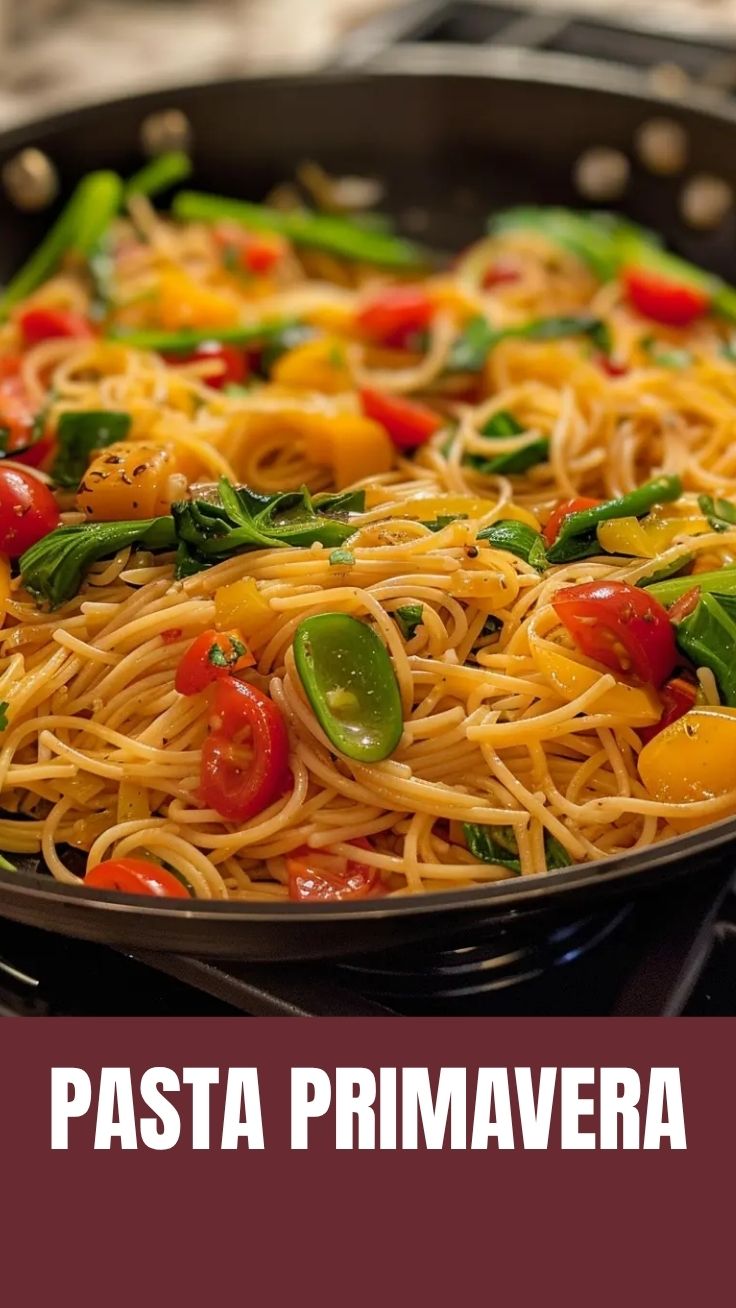
8. Finish with Parmesan off heat. This Primavera pasta recipe is best served immediately while the vegetables retain their crisp-tender texture. For perfect Pasta Primavera, ensure your vegetables remain al dente just like the pasta—overcooking leads to mush.
Nutritional Benefits & Advantages
This colorful dish delivers exceptional nutritional value per serving:
– Calories: 380-420 per serving
– Protein: 14-18g (with Parmesan)
– Fiber: 8-10g from mixed vegetables
– Vitamin A: 120% DV from bell peppers
– Vitamin C: 90% DV from broccoli
– Iron: 15% DV from vegetables
The Primavera pasta recipe offers Mediterranean diet benefits—low saturated fat, high antioxidants from lycopene (tomatoes) and sulforaphane (broccoli). The olive oil provides heart-healthy monounsaturated fats.
Tips Variations & Cooking Advice
Flavor Variations
– Mediterranean twist: Add kalamata olives, artichoke hearts, and sun-dried tomatoes
– Asian fusion: Swap olive oil for sesame oil, add ginger and soy sauce
– Spicy version: Add red pepper flakes and Italian sausage
Cooking Method Alternatives
– One-pot method: Cook pasta with vegetables, adding water incrementally
– Sheet-pan version: Roast vegetables at 425°F for 20 minutes, toss with cooked pasta
– Cold pasta salad: Chill cooked components, add lemon vinaigrette
Dietary Adaptations
– Vegan: Omit Parmesan or use cashew cream
– Gluten-free: Use lentil pasta for extra protein
– Low-carb: Sub zucchini noodles (zoodles)
Common Mistakes to Avoid
| Mistake | Solution |
|———|———-|
| Overcooking vegetables | Blanch for exactly 60 seconds—they continue cooking with residual heat |
| Olive oil burning | Never heat olive oil above medium-high—use avocado oil for high heat |
| Sticky pasta | Reserve pasta water (starch thickens sauce) and toss immediately |
| Watery sauce | Don’t rinse pasta—surface starch helps sauce cling |
| Flat flavor | Season pasta water aggressively—it should taste like the sea |
Storage & Meal Prep Tips
Refrigeration
– Store in airtight container up to 4 days
– Separate vegetables from pasta if possible
– Add fresh basil only when serving
Freezing
– Freeze up to 2 months (texture degrades beyond)
– Portion into single-serve containers
– Defrost overnight in refrigerator
Reheating Instructions
| Method | Time | Technique |
|——–|——|———–|
| Stovetop | 3-5 min | Add 1 tbsp water, toss over medium heat |
| Microwave | 60-90 sec | Cover with damp paper towel |
| Oven | 10 min at 350°F | Sprinkle with water, cover with foil |
Conclusion
Mastering this vibrant Pasta Primavera transforms simple vegetables and pasta into a weeknight triumph. The key takeaway is balance—treating each vegetable with respect by cooking it just until tender-crisp while building a silky, starchy sauce from reserved pasta water. Whether you follow the Primavera pasta recipe exactly or customize with seasonal produce, you’ll create a dish that celebrates spring’s bounty. Share your creation on social media with #PrimaveraPasta and tag us—we’d love to see your colorful results! Try this recipe tonight and taste the difference fresh technique makes.
FAQs
Q: Can I use frozen vegetables for this recipe?
A: Yes, but blanch them 30 seconds longer and pat dry to remove excess moisture. Fresh vegetables yield superior texture and flavor.
Q: How do I thicken the sauce without cream?
A: The reserved pasta water naturally thickens as it reduces. For more body, mash a few cherry tomatoes or add 1 teaspoon cornstarch slurry.
Q: Why did my vegetables turn brown?
A: Overcooking causes chlorophyll degradation. Blanch briefly and shock in ice water. Also, avoid covering the pan—steam traps heat.
Q: Can I make this dish dairy-free?
A: Absolutely! Use nutritional yeast (2 tablespoons) mixed with 1 teaspoon white miso for a cheese-like flavor profile.
Q: What’s the best pasta shape for primavera?
A: Long shapes like fettuccine, linguine, or bucatini work best—their surface area holds the light sauce. Avoid chunky shapes like penne that fight with vegetables.
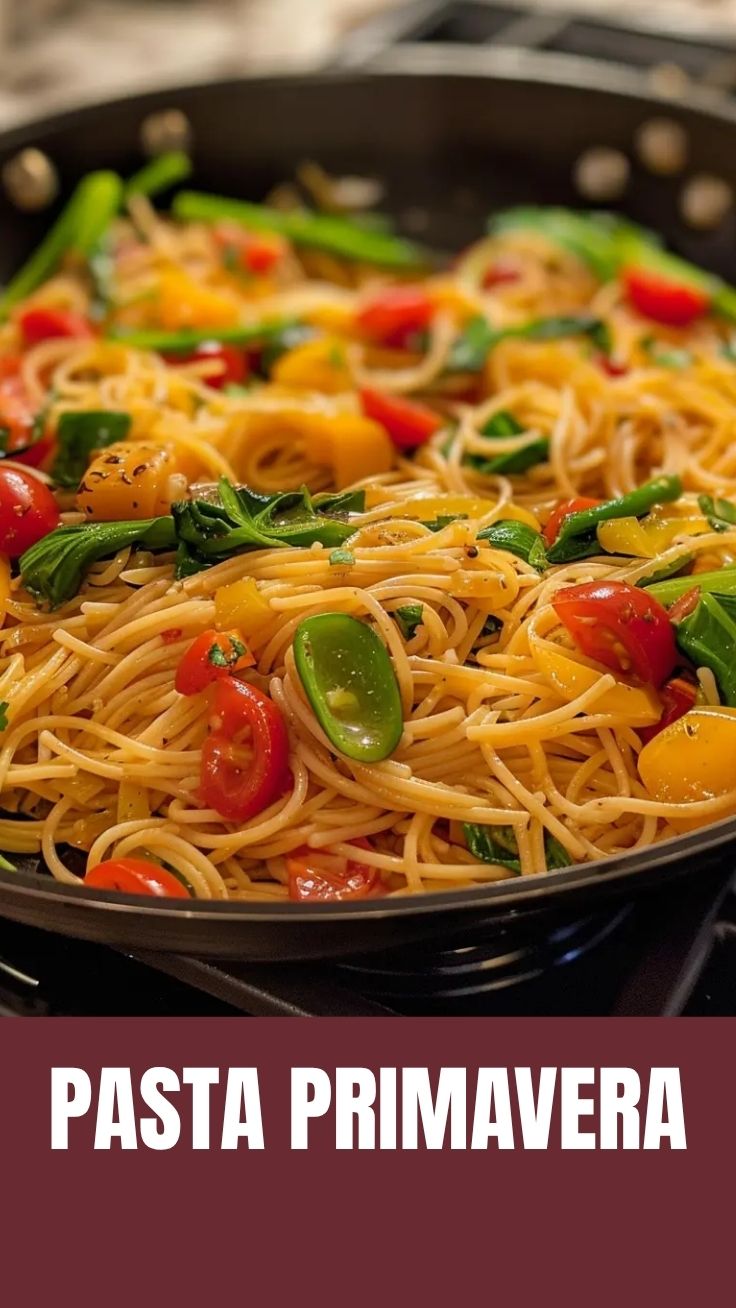
Best way to grow a perfect Pasta Primavera in 30 minutes
Ingredients
Equipment
Method
- Bring a large pot of salted water to a boil, then cook the fettuccine according to package directions; drain and set aside.
- While pasta cooks, heat olive oil in a large skillet over medium heat, then add minced garlic and sauté for 1 minute until fragrant.
- Add broccoli, asparagus, cherry tomatoes, bell pepper, and zucchini to the skillet.
- Sauté the vegetables for 5-7 minutes, until tender-crisp.
- Stir in spinach and cook until wilted, about 2-3 minutes.
- Pour in vegetable broth and lemon juice, bringing the mixture to a simmer.
- Add the cooked fettuccine to the skillet, tossing to combine.
- Season with salt and pepper to taste.
- Garnish with grated Parmesan cheese and fresh basil before serving immediately.