The Ultimate Guide to Creamy, Golden Roasted Vegetable Soup
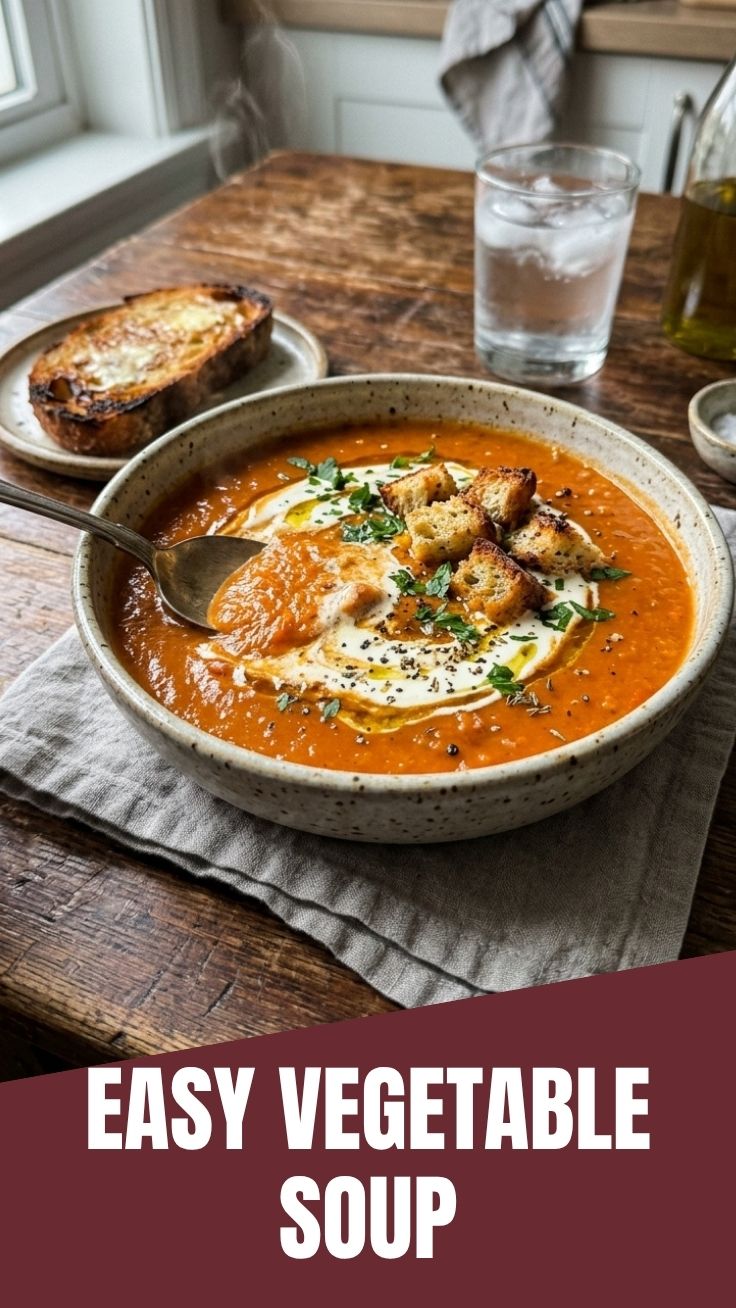
Have you ever wondered why a bowl of Roasted Vegetable Soup tastes like pure comfort on a chilly day? The magic lies in caramelization—a simple chemical reaction that transforms humble root vegetables into liquid gold. Preparing this soup at home isn’t just about controlling ingredients; it’s about unlocking deep, sweet flavors you simply cannot find in a can. By roasting vegetables before blending, you intensify their natural sugars, creating a silky, nutrient-dense meal that costs a fraction of what you’d pay at a cafe. This recipe proves that mastering Homemade Soup Recipes doesn’t require culinary school—just a sheet pan and a little patience. The result? A bowl so satisfying, you’ll never reach for canned soup again.
Ingredients & Kitchen Tools
Produce:
– 3 medium sweet potatoes (peeled and cubed – adds creaminess)
– 2 large carrots (peeled and chopped – natural sweetness)
– 1 red bell pepper (seeded and quartered – subtle smokiness)
– 1 medium yellow onion (quartered – savory base)
– 4 garlic cloves (unpeeled – roast whole for milder flavor)
Pantry & Liquids:
– 4 cups vegetable broth (low-sodium preferred)
– 2 tablespoons olive oil
– 1 teaspoon smoked paprika
– ½ teaspoon dried thyme
– Salt and black pepper to taste
Optional Boosters:
– ½ cup coconut milk (for dairy-free richness)
– 1 tablespoon apple cider vinegar (brightness)
– Red pepper flakes (for heat)
Kitchen Tools:
– Large rimmed baking sheet
– High-speed blender or immersion blender
– Heavy-bottomed soup pot
– Chef’s knife and cutting board
Prep Time & Cooking Schedule
– Prep Time: 15 minutes (wash, peel, cube vegetables)
– Roast Time: 30-35 minutes at 400°F
– Simmer Time: 10 minutes on stovetop
– Resting Time: 5 minutes before blending (to reduce steam and prevent blender explosion)
Pro Tip: Roasting can be done up to 2 days ahead. Store roasted veggies covered in the fridge, then simply simmer with broth when ready to eat.
Step-by-Step Instructions
1. Preheat and prepare your baking sheet. Set oven to 400°F. Line a large baking sheet with parchment paper for easy cleanup.
2. Toss and spread. In a large bowl, combine cubed sweet potatoes, carrots, red pepper, onion, and unpeeled garlic cloves. Drizzle with 2 tablespoons olive oil, then sprinkle with smoked paprika, thyme, and a generous pinch of salt and pepper. Toss well until everything is glistening. Spread in a single layer—crowding leads to steaming, not roasting.
3. Roast until golden. Place in the oven and roast for 30-35 minutes, flipping halfway through. The vegetables should be tender when pierced with a fork and have deep caramelized brown edges. This browning is critical—it builds the foundation for a concentrated Roasted Vegetable Soup flavor that can’t be imitated by boiling.
4. Squeeze and blend. Remove from oven and allow to cool for 5 minutes. Peel the roasted garlic cloves—they’ll slip right out of their skins. Transfer all roasted vegetables to a blender. Add 2 cups of vegetable broth and blend on high until completely smooth. (For safety, remove the blender’s center cap and cover with a towel to let steam escape.)
5. Simmer to meld flavors. Pour the puree into a large soup pot. Add the remaining 2 cups of broth and stir. Bring to a gentle simmer over medium heat for 5-7 minutes. Taste and adjust seasoning—a pinch of salt can dramatically lift the sweetness. If the soup is too thick, add water or extra broth one-quarter cup at a time. This is the stage where you can enhance your Homemade Soup Recipes with an optional splash of coconut milk for extra silkiness.
6. Serve with flair. Ladle into bowls and garnish with a swirl of coconut milk, a sprinkle of red pepper flakes, or toasted pumpkin seeds for crunch.
Nutritional Benefits & Advantages
This vibrant soup is a powerhouse of essential nutrients. Sweet potatoes are rich in beta-carotene, which your body converts to vitamin A—critical for immune function and eye health. The roasting process actually increases the bioavailability of carotenoids, meaning your body absorbs more of these nutrients than from raw vegetables. Bell peppers deliver a massive dose of vitamin C (one cup provides nearly 200% of your daily needs), while garlic offers allicin, a compound known for its anti-inflammatory and antimicrobial properties. A single serving of this Roasted Vegetable Soup provides approximately 8 grams of fiber, supporting healthy digestion and stable blood sugar levels. The absence of heavy cream makes this an ideal choice for those managing cholesterol or dairy sensitivities.
Tips Variations & Cooking Advice
Flavor Twists:
– Smoky Southwest: Add 1 teaspoon of chipotle powder and a handful of fire-roasted corn kernels before pureeing.
– Herb Garden: Swap thyme for 2 teaspoons of fresh rosemary and add a handful of fresh basil leaves during blending.
– Curried Comfort: Replace paprika with 1 tablespoon of curry powder and finish with a teaspoon of fresh ginger.
Dietary Adaptations:
– Dairy-Free: Already dairy-free as written—skip the optional coconut milk or use unsweetened oat milk.
– Low Sodium: Use no-salt-added vegetable broth and rely on herbs and roasted garlic for flavor.
– Nut-Free: This recipe is naturally nut-free; garnish with seeds instead of nuts.
Method Alternatives:
– Slow Cooker: Roast vegetables separately, then transfer to a slow cooker with broth and cook on low for 2 hours before blending.
– Instant Pot: Use sauté mode to soften onions, then pressure cook raw cubed vegetables with broth for 10 minutes, and blend.
Common Mistakes to Avoid
Mistake #1: Skipping the Roast
Boiling vegetables directly produces a flat, watery soup. Roasting at high heat (400°F) is non-negotiable for deep, sweet flavor.
Mistake #2: Overcrowding the Pan
Vegetables release steam as they cook. If crowded, they steam instead of caramelizing. Use two pans if necessary.
Mistake #3: Blending Hot Liquid Incorrectly
Hot liquid expands in a sealed blender, causing the lid to pop off. Always remove the center cap and cover with a clean kitchen towel.
Mistake #4: Under-seasoning
Salt is essential—it doesn’t just add saltiness; it amplifies sweetness. Taste your finished soup and add salt in small increments until the flavors pop. A splash of acid (vinegar or lemon juice) at the end can also transform a flat-tasting soup into a bright, balanced meal.
Storage & Meal Prep Tips
Refrigeration: Store in an airtight container for up to 5 days. The flavors actually improve after a day as they meld together.
Freezing: This soup freezes beautifully. Cool completely, then pour into freezer-safe containers or silicone bags. Leave ½ inch of headroom for expansion. Properly stored, it maintains peak quality for 3 months.
Reheating: Thaw overnight in the refrigerator. Reheat on the stovetop over medium-low heat, stirring occasionally. If the soup has thickened during storage, whisk in a splash of broth or water until it reaches your desired consistency. Avoid boiling, which can break down the silky texture.
Meal Prep Strategy: Double the recipe on Sunday. Portion into individual microwave-safe containers for grab-and-go lunches. Pair with a grilled cheese sandwich or a simple green salad for a complete meal that comes together in minutes.
Conclusion
This simple yet sophisticated dish proves that cooking from scratch doesn’t need to be complicated. By roasting vegetables to unlock their natural sweetness and blending them into a velvety puree, you create a Roasted Vegetable Soup that is equal parts nourishing and indulgent. The beauty of Homemade Soup Recipes like this one is their adaptability—swap in whatever vegetables are in your crisper drawer, adjust the spices to suit your mood, and take pride in knowing exactly what goes into your bowl. Give this recipe a try this week, and don’t forget to share your creation on social media. Your winter dinners are about to get a whole lot warmer.
FAQs
Can I use frozen vegetables for roasting?
Yes, but don’t thaw them first. Toss frozen vegetables directly in oil and spices, then roast for 40-45 minutes. Expect slightly less caramelization due to higher moisture content.
Why is my soup grainy instead of silky?
The most common culprit is an underpowered blender. For the smoothest results, blend on high speed for at least 60 seconds. If using an immersion blender, puree until no visible chunks remain. Straining through a fine-mesh sieve is a backup fix.
Can I make this soup spicier?
Absolutely. Add a seeded jalapeño to the roasting pan, stir in ½ teaspoon of cayenne pepper before blending, or finish each bowl with a drizzle of chili oil.
What’s the best way to reheat without losing texture?
Stovetop is ideal. Warm gently over medium-low heat, adding a splash of broth or water to restore the original consistency. Microwave in 30-second bursts, stirring between each, to avoid hot spots.
Is this soup keto-friendly?
Sweet potatoes are relatively high in carbohydrates. For a lower-carb version, replace sweet potatoes with cauliflower and add an extra carrot for color. The result will be lighter but still flavorful.
Quick way to grow your Perfect Roasted Vegetable Soup
Ingredients
Equipment
Method
- Preheat your oven to 400°F (200°C) and chop all your chosen vegetables into uniform, bite-sized pieces.
- Toss the chopped vegetables with olive oil, garlic powder, dried thyme, salt, and black pepper on a large baking sheet and roast for 25-30 minutes until tender and slightly caramelized.
- Transfer the roasted vegetables to a large pot, add the vegetable broth, and bring the mixture to a simmer for 10-15 minutes to allow the flavors to meld.
- Carefully blend a portion of the soup with an immersion blender or in batches in a regular blender to your desired consistency, leaving some chunks for texture.
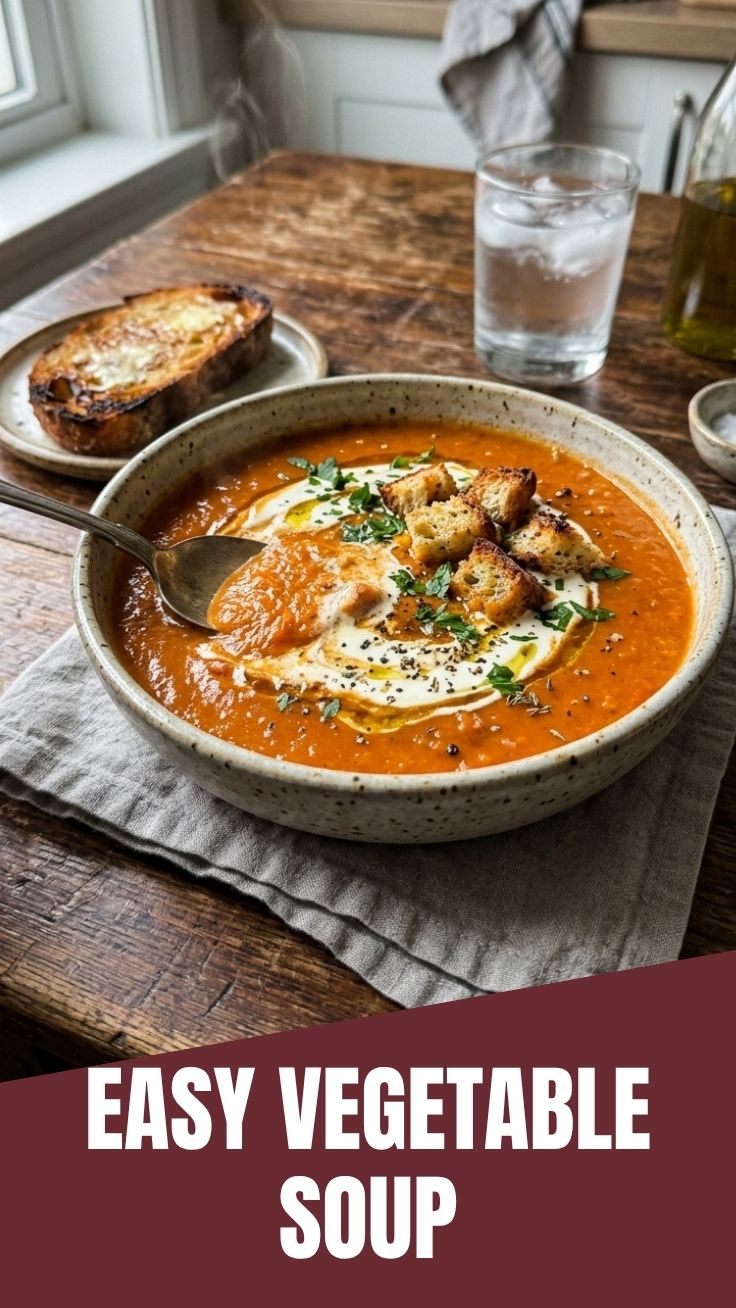
- Serve the hot soup garnished with fresh chopped parsley and a crusty bread or croutons on the side.