The Ultimate Guide to Perfect Chicken Cacciatore: A Rustic Italian Classic
Have you ever craved a meal that transports you straight to a sun-drenched Tuscan kitchen with just one bite? That’s the magic of Chicken Cacciatore—a slow-simmered, deeply flavorful hunter’s stew that has been cherished for generations. While ordering takeout might seem convenient, preparing this dish at home allows you to control every ingredient, customize the flavor, and experience the therapeutic joy of building layers of taste from scratch. Whether you’re a seasoned cook or a curious beginner, mastering this recipe will add a versatile, nutritious, and crowd-pleasing staple to your repertoire. Today, we’ll explore not just the classic method, but also dive into creative variations and pro tips to ensure your Chicken Cacciatore turns out perfectly every time. Let’s fire up the stove and embrace the rich tradition of Italian chicken recipes.
Ingredients & Kitchen Tools
Ingredients (Serves 4–6)
– 4–6 bone-in, skin-on chicken thighs – The bones add richness; skin renders fat and crisps beautifully. Substitute: boneless thighs if you prefer faster cooking.
– 1 large onion, diced – Sweetens the base.
– 2 carrots, diced – Natural sweetness and color.
– 2 celery stalks, diced – Classic mirepoix foundation.
– 4 garlic cloves, minced – Pungent backbone.
– 1 red bell pepper, sliced – Adds sweetness and texture.
– 1 yellow bell pepper, sliced – Color contrast.
– 8 oz cremini mushrooms, quartered – Earthy umami.
– 1 can (28 oz) crushed tomatoes – Rich, not watery.
– 1/2 cup dry red wine – Depth and acidity. Substitute: chicken broth if avoiding alcohol.
– 1 tsp dried oregano – Essential herb.
– 1 tsp dried thyme – Subtle woodsy note.
– 2 bay leaves – Aromatic lift.
– 1/2 tsp red pepper flakes (optional) – Gentle heat.
– Salt and black pepper – To taste.
– 2 tbsp olive oil – For browning.
Kitchen Tools
– Large heavy-bottomed pot or Dutch oven (5–6 qt) – For even heat distribution.
– Chef’s knife and cutting board.
– Wooden spoon or spatula.
– Tongs – For flipping chicken.
– Measuring spoons and cups.
– Instant-read thermometer (optional but handy).
Optional Substitutions
– Wine → Use extra broth + 1 tbsp balsamic vinegar.
– Mushrooms → Omit or swap with zucchini.
– Herbs → Fresh basil or rosemary (add at end).
Prep Time & Cooking Schedule
– Prep time: 20 minutes (dicing veggies, trimming chicken).
– Active cook time: 30 minutes (browning + simmer).
– Total time: 1 hour 15 minutes (includes 30–45 minutes simmer).
– Resting time: 10 minutes off heat before serving.
Plan ahead: this dish tastes even better the next day, so consider making it a day in advance for deeper flavor integration.
Step-by-Step Instructions
1. Pat the chicken dry with paper towels – moisture is the enemy of browning. Season generously with salt and pepper.
2. Heat olive oil in your Dutch oven over medium-high heat until shimmering. Add chicken skin-side down (do not crowd – work in batches if needed). Cook 5–6 minutes until deep golden. Flip and brown other side (3–4 minutes). Transfer chicken to a plate.
3. Lower heat to medium. Add onion, carrot, celery, and a pinch of salt. Sauté 5 minutes until softened, scraping browned bits from bottom.
4. Stir in garlic, peppers, and mushrooms – cook 3 more minutes.
5. Pour in red wine and let it bubble for 2 minutes, reducing slightly.
6. Add crushed tomatoes, oregano, thyme, bay leaves, and red pepper flakes. Stir well.
7. Return chicken to pot, nestling it into the sauce, skin-side up. Bring to a gentle simmer, then cover and reduce heat to low.
8. Simmer for 35–45 minutes, until chicken is tender and cooked through (internal temp 165°F). The sauce will thicken – stir occasionally.
9. Taste and adjust seasoning – you may want more salt or a pinch of sugar to balance acidity.
10. Remove bay leaves. Let rest 10 minutes before serving.
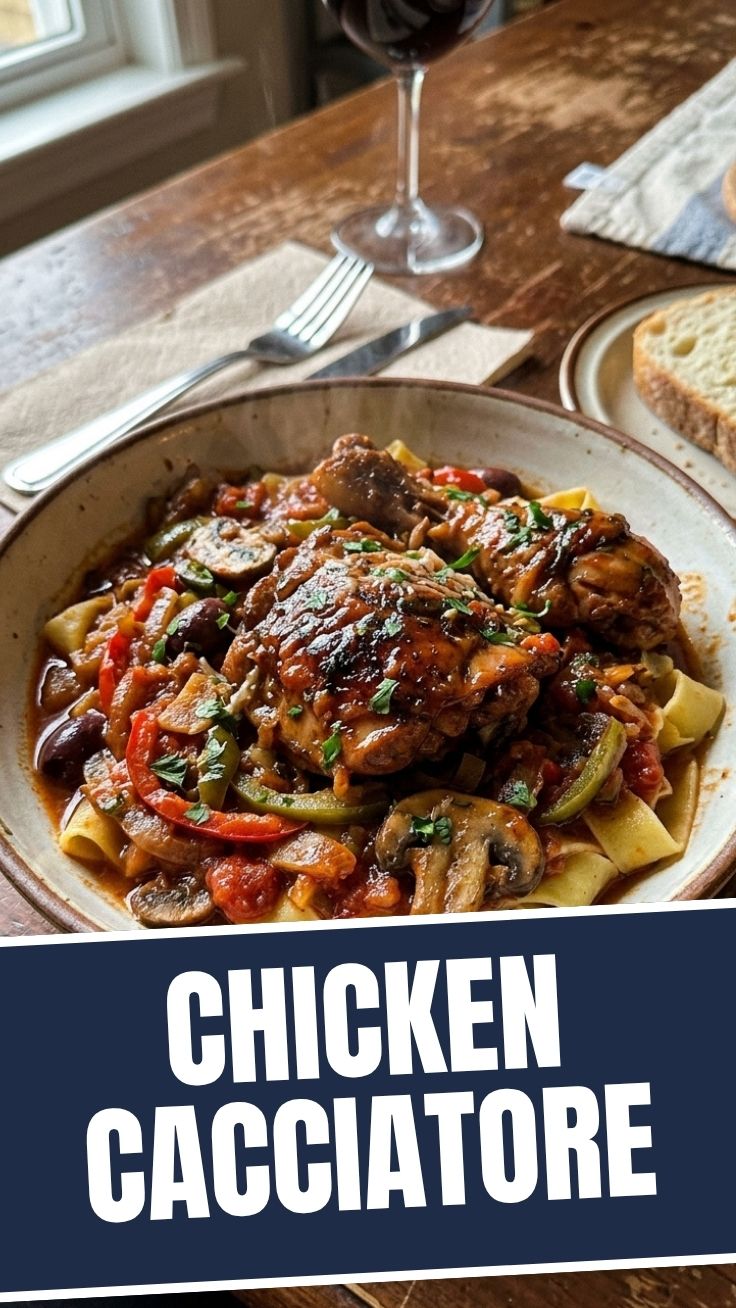
During simmering, the Chicken Cacciatore develops its signature depth. This classic method is one of the most beloved Italian chicken recipes because it builds flavor gradually without complicated techniques.
Nutritional Benefits & Advantages
This dish is not only comforting but also packed with nutrition:
– Chicken thighs provide high-quality protein, iron, and B vitamins.
– Tomatoes are rich in lycopene (antioxidant) and vitamin C.
– Colorful bell peppers and carrots deliver vitamin A and fiber.
– Mushrooms offer selenium and immune-supporting beta-glucans.
– Olive oil contributes heart-healthy monounsaturated fats.
– Low added sugar – sauce relies on natural sweetness from vegetables.
One serving (with skin removed for leaner option) contains roughly 350–400 calories, making it a satisfying yet balanced meal, especially when paired with whole grains or crusty bread.
Tips, Variations & Cooking Advice
Flavor Twists
– Spicy Calabrian: Add 2 tbsp chopped sun-dried tomatoes and 1 tsp Calabrian chili paste.
– Herb-forward: Toss in a handful of fresh basil and parsley 5 minutes before serving.
– Creamier version: Stir in 1/4 cup heavy cream at the end for a Cacciatore alla Panna.
Cooking Methods
– Slow cooker: Brown chicken and sauté veggies first, then transfer to slow cooker. Cook on low 6–8 hours.
– Instant Pot: Use sauté function for browning, then pressure cook on high 10 minutes, natural release.
– Oven: After stovetop browning, transfer covered pot to a 350°F oven for 45 minutes.
Dietary Adjustments
– Gluten-free: This recipe is naturally gluten-free – just double-check crushed tomatoes and wine.
– Dairy-free: No dairy involved; perfect as is.
– Keto: Skip carrots and wine (or use dry red wine sparingly). Serve with cauliflower rice.
Portion Ideas
– Leaner: Remove skin before serving or use boneless skinless thighs (reduce simmer time to 25 minutes).
– Sauce boost: Add a splash of fish sauce or anchovy paste for deeper umami (not fishy).
Common Mistakes to Avoid
– Skipping the browning step – Leaves flavor behind. Don’t rush; golden crust is essential.
– Overcrowding the pot – Causes steaming instead of browning. Brown in two batches.
– Using low-quality canned tomatoes – Bland sauce. Opt for San Marzano DOP if possible.
– Simmering too vigorously – Sauce reduces too much and chicken dries out. Keep at gentle bubble.
– Adding herbs too early if fresh – Dried herbs can simmer; fresh ones should go at the end.
– Forgetting to deglaze – After browning, wine/scraping bits is critical for flavor depth.
Storage & Meal Prep Tips
Refrigeration: Cool completely, then transfer to an airtight container. Keeps 4–5 days. The flavor actually improves on day two.
Freezing: Portion into freezer-safe bags or containers (remove bones for space saving). Freeze up to 3 months. Thaw overnight in refrigerator.
Reheating: Gently reheat on stovetop over medium-low heat, adding a splash of broth or water to loosen sauce. Or microwave in 30-second bursts, stirring. Avoid high heat or chicken may dry.
Meal prep: Make a double batch on Sunday; serve with pasta one night, over polenta another, or stuffed into a crusty roll for lunches.
Conclusion
There you have it—a foolproof guide to crafting restaurant-quality Chicken Cacciatore right in your own kitchen. This humble yet elegant dish exemplifies why Italian chicken recipes are celebrated worldwide: simple ingredients, patient cooking, and robust flavors that bring people together. Whether you serve it over tagliatelle, creamy polenta, or with a hunk of sourdough, this stew is guaranteed to become a family favorite. Don’t be afraid to experiment with variations—try the spicy Calabrian twist or use the slow cooker on a busy day. We’d love to hear how yours turns out. Drop a comment below with your personal touches or questions, and happy cooking!
FAQs
1. Can I use chicken breasts instead of thighs?
Yes, but they can dry out. Use bone-in, skin-on breasts and reduce simmer time to 20–25 minutes. Check internal temp to 160°F (carry-over cooking takes it to 165°F).
2. What is the best wine for Chicken Cacciatore?
A dry red like Chianti, Sangiovese, or Merlot works well. If you prefer no alcohol, use chicken broth plus 1 tablespoon red wine vinegar.
3. Why is my sauce too watery?
Possible causes: too much liquid from veggies (mushrooms release water) or not simmering long enough. Uncover the pot for the last 10 minutes to let steam escape, or add a tablespoon of tomato paste to thicken.
4. Can I make this dairy-free or gluten-free?
Yes, naturally! The recipe contains no dairy and no gluten. Just ensure your crushed tomatoes are plain (no added wheat-based thickeners) and wine has no added gluten.
5. How do I prevent the chicken skin from becoming soggy?
Brown it well, keep it above the sauce during simmering (skin-side up), and if reheating leftovers, crisp the skin in a hot oven or air fryer for 5 minutes.
—
Want more rustic Italian comfort? Check out our related guides on slow-cooked ragu and lemon-herb roasted chicken.
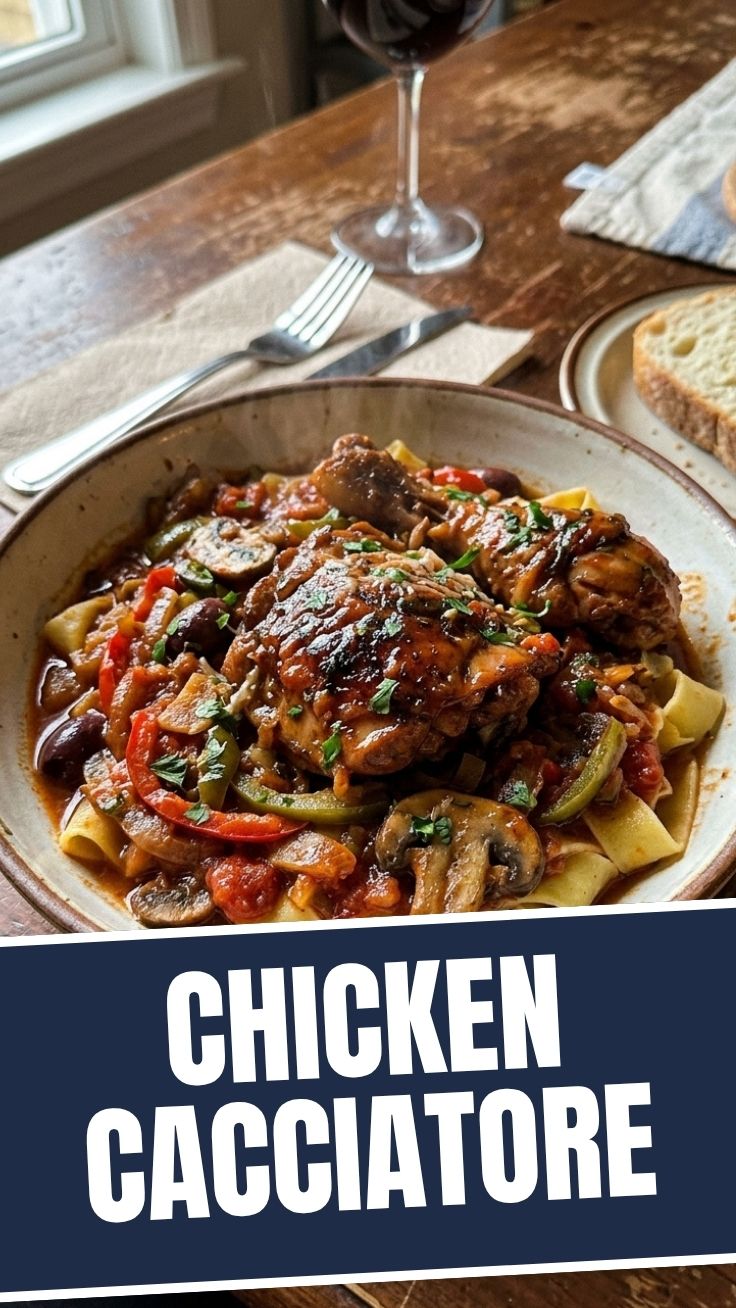
Quick way to grow: 6 Chicken Cacciatore SecretsChicken Cacciatore
Ingredients
Equipment
Method
- Season the chicken pieces with salt and pepper.
- Heat olive oil in a large pot or Dutch oven over medium-high heat. Brown the chicken pieces on all sides; then remove them from the pot and set aside.
- Add chopped onion and sliced bell peppers to the pot, cooking until softened, about 5-7 minutes. Stir in minced garlic and cook for another minute until fragrant.
- Pour in crushed tomatoes, chicken broth, dried oregano, and dried basil. Bring the mixture to a simmer.
- Return the browned chicken to the pot. Reduce heat, cover, and simmer for 30-45 minutes, or until the chicken is cooked through and tender.
- Serve the Chicken Cacciatore hot, garnished with fresh basil or parsley if desired.