The Ultimate Guide to Making Beef Bulgogi at Home: A Savory Korean BBQ Classic
Have you ever wondered why Beef Bulgogi tastes so impossibly good at restaurants but seems daunting to replicate in your own kitchen? The truth is, this iconic Korean BBQ dish is not only achievable at home but also far more rewarding when you control the quality of ingredients and the depth of flavor. By preparing this beloved Korean staple yourself, you save money, avoid unnecessary additives, and experience the authentic, caramelized magic of perfectly marinated beef.
Ingredients & Kitchen Tools
For the Marinade & Beef:
– 1 lb ribeye or sirloin steak – Thinly sliced (partially freeze for easier slicing). Sirloin is leaner; ribeye offers more marbling.
– 1/2 cup soy sauce – Use low-sodium to control saltiness.
– 1/4 cup brown sugar – Provides signature caramelization. Substitute with honey or maple syrup.
– 3 tablespoons Asian pear (grated) – Natural tenderizer; substitute with kiwi or apple.
– 2 tablespoons sesame oil – Toasted for authentic aroma.
– 4 cloves garlic (minced) – Adjust to taste.
– 1 tablespoon ginger (grated) – Fresh is non-negotiable.
– 2 green onions (chopped) – For garnish and flavor.
– 1 tablespoon sesame seeds – Toasted for garnish.
– 1/2 teaspoon black pepper – Freshly ground.
Kitchen Tools:
– Sharp knife or mandoline slicer
– Large mixing bowl
– Ziploc bag or glass container for marinating
– Cast iron skillet, wok, or non-stick pan
– Tongs or spatula
– Cutting board
Optional Substitutions: Swap beef for chicken, pork, or mushrooms for a vegetarian version. Use tamari or coconut aminos for gluten-free.
Prep Time & Cooking Schedule
Total time: 2 hours 20 minutes (including marinating)
– Prep time: 15 minutes
– Marinating time: 2 hours minimum (4–8 hours for best results)
– Cook time: 8–10 minutes
– Resting time: 3 minutes
Planning tip: Marinate the beef overnight for deeper flavor infusion. This dish comes together quickly once the prep is done, making it perfect for a weeknight dinner if you plan ahead.
Step-by-Step Instructions
1. Prepare the beef: Partially freeze the steak (about 30 minutes) for paper-thin slicing. Cut against the grain into 1/8-inch strips. This ensures tenderness and quick cooking.
2. Make the marinade: In a bowl, whisk together soy sauce, brown sugar, grated Asian pear, sesame oil, minced garlic, grated ginger, and black pepper. The pear is the secret ingredient that tenderizes the meat naturally.
3. Marinate: Place beef strips in a ziploc bag, pour marinade over, seal, and massage gently. Refrigerate for at least 2 hours (4–8 hours is ideal). The longer it sits, the more the flavors penetrate—this is what gives authentic Beef Bulgogi its signature depth.
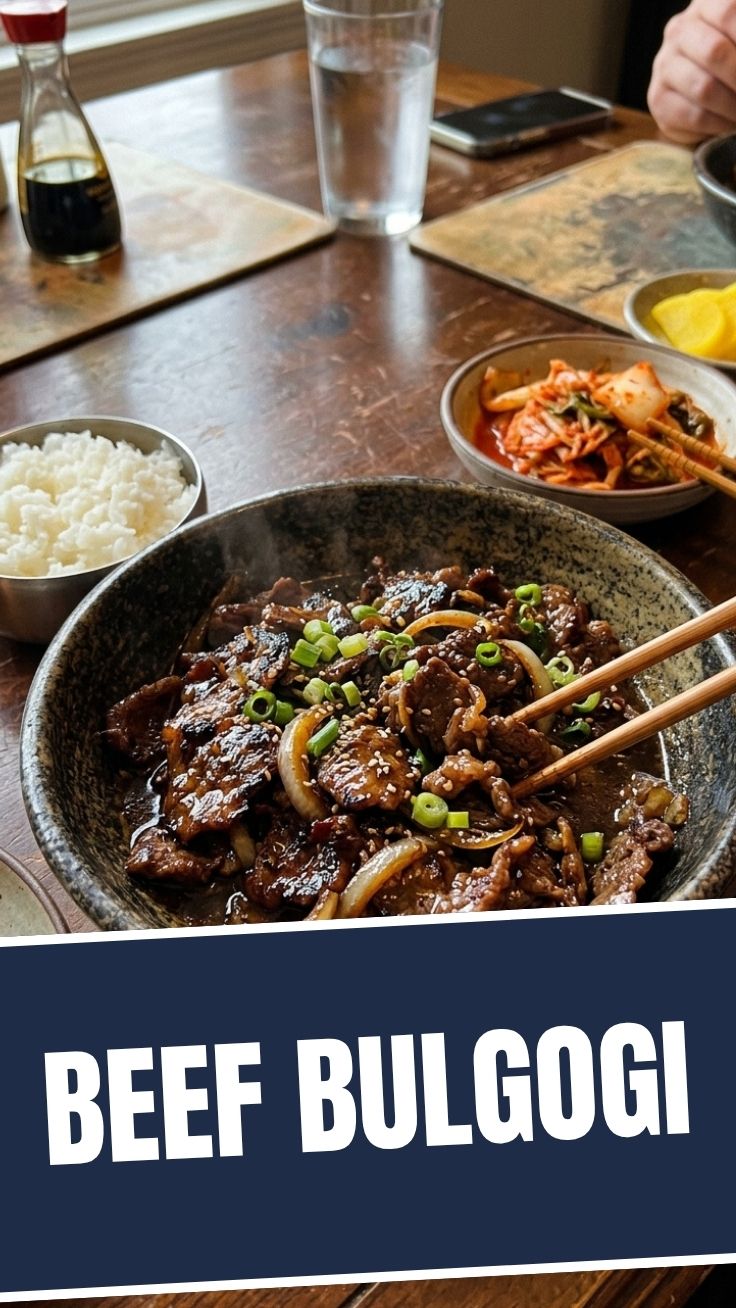
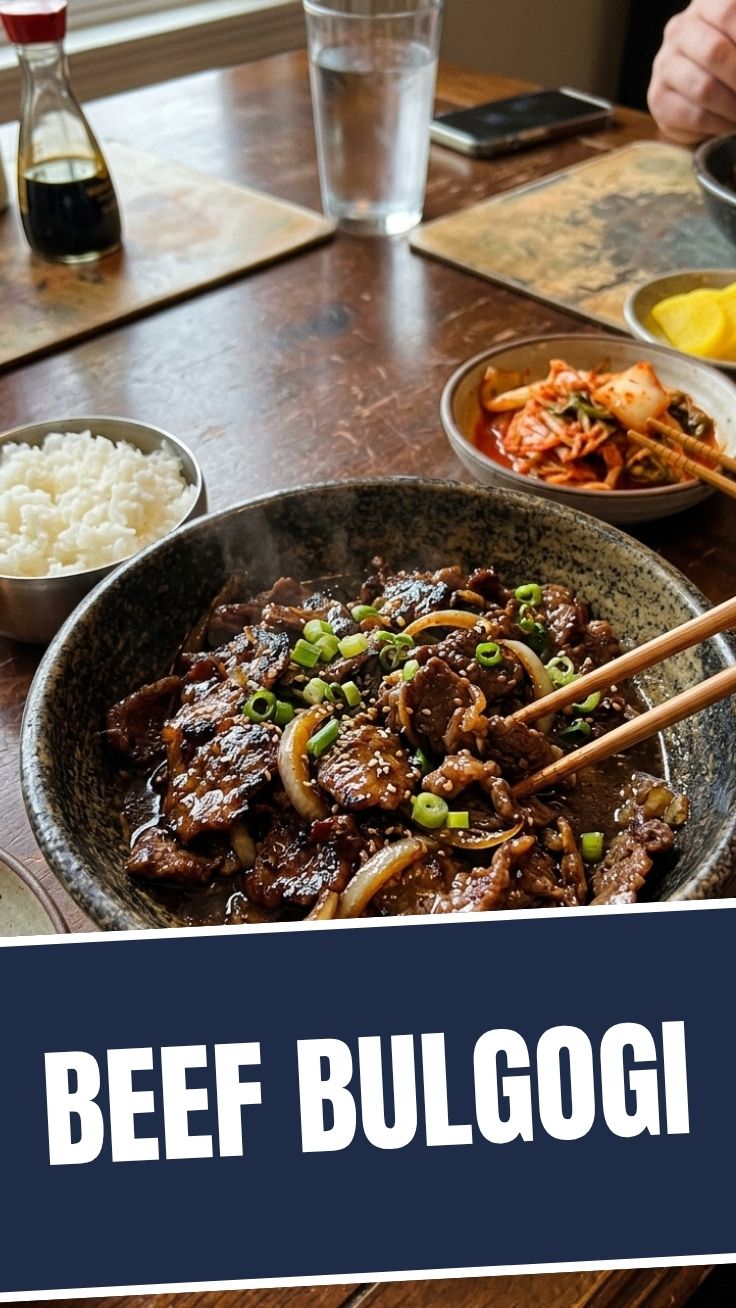
4. Cook: Heat a cast iron skillet or wok over high heat until smoking. Add the beef in a single layer (work in batches if needed). Sear for 90 seconds per side without moving it—this creates the caramelized crust that defines great Korean BBQ. The sugars in the marinade will create a glossy, charred finish.
5. Finish and serve: Remove beef, let rest 3 minutes, then garnish with sesame seeds and green onions. Serve over steamed rice with kimchi and pickled radish.
Texture cues: Look for a deep brown sear with slightly charred edges. The meat should be tender but not mushy—if it’s tough, you may have cooked too long or cut with the grain.
Nutritional Benefits & Advantages
This dish is surprisingly balanced for comfort food. A 4-ounce serving of beef bulgogi provides approximately:
– 28g protein – Supports muscle repair and satiety
– Iron and B12 – Essential for energy metabolism (especially from red meat)
– Healthy fats – Sesame oil offers anti-inflammatory properties
– Antioxidants – Garlic and ginger support immune function
The Asian pear in the marinade adds fiber and vitamin C while acting as a natural tenderizer, reducing the need for chemical additives. When paired with rice and vegetables, this meal offers a complete macronutrient profile.
Tips Variations & Cooking Advice
Flavor Variations:
– Spicy bulgogi: Add 1 tablespoon gochujang (Korean chili paste) to the marinade
– Sweet version: Increase brown sugar to 1/3 cup and add 1 tablespoon honey
– Garlic lover’s: Double the garlic and add roasted garlic paste
Ingredient Swaps:
– Use flank steak or skirt steak for more chew
– Substitute beef with firm tofu (press first) or portobello mushrooms for vegan
– Replace soy sauce with coconut aminos for gluten-free
Cooking Methods:
– Grill: Cook over high heat on a charcoal grill for authentic smokiness
– Air fryer: Cook at 400°F for 6–8 minutes, shaking halfway
– Oven broiler: Broil on high for 3–4 minutes, watching carefully
Portion Changes: This recipe serves 3–4. Double for meal prep; cook in batches to avoid overcrowding.
Common Mistakes to Avoid
1. Overcrowding the pan: This steams the beef instead of searing it. Cook in batches to achieve that coveted caramelized crust.
2. Skipping the pear tenderizer: Without it, even ribeye can be chewy. The enzymes in Asian pear break down proteins without making the meat mushy.
3. Using cold beef from the fridge: Let marinated beef sit at room temperature for 15 minutes before cooking. Cold meat seizes up and cooks unevenly.
4. Over-marinating beyond 12 hours: The acid in soy sauce and pear can break down the meat too much, resulting in a mushy texture. Stick to 4–8 hours.
5. Sauce too salty: If your marinade tastes overly salty before adding the beef, add 1 tablespoon water and 1 teaspoon sugar to balance.
Storage & Meal Prep Tips
Refrigeration: Store cooked bulgogi in an airtight container for up to 4 days. Keep marinade separate if not yet cooked.
Freezing: Raw marinated beef freezes beautifully for up to 3 months. Thaw overnight in the refrigerator, then cook as directed. Cooked bulgogi also freezes well but may lose some texture—use within 2 months.
Reheating: For best results, reheat in a hot skillet with a splash of water or beef broth to restore moisture. Avoid microwaving, which can toughen the meat. If microwaving, use 50% power and cover with a damp paper towel.
Meal Prep: Double the recipe and portion into containers with rice and vegetables for 4 work lunches. The flavors actually deepen overnight.
Conclusion
Making authentic Beef Bulgogi at home transforms a restaurant indulgence into an accessible, rewarding culinary experience. This recipe bridges the gap between convenience and tradition, proving that exceptional Korean BBQ flavor is just a marinade away. The key takeaways? Always use Asian pear for tenderizing, sear over high heat for that caramelized crust, and don’t rush the marinating process. Try this recipe tonight, snap a photo of your perfectly caramelized beef, and share your results—or tag a friend who needs to taste this. Your taste buds (and wallet) will thank you.
FAQs
Can I use ground beef instead of sliced steak for bulgogi?
Yes! Ground beef bulgogi (often called “Korean beef bowls”) works wonderfully. Simply brown the ground beef, then simmer in the same marinade mixture for 5–7 minutes until the sauce thickens.
My beef turned out tough. What went wrong?
Most likely you cut with the grain (long fibers) or overcooked it. For tender results, always slice against the grain into thin strips (no thicker than 1/8 inch) and cook only 90 seconds per side over high heat.
Can I make bulgogi without Asian pear?
Absolutely. Substitute with 1 tablespoon of grated apple, kiwi, or even a splash of pineapple juice. These fruits contain similar tenderizing enzymes. Or skip the tenderizer entirely and use a cut of beef that’s already tender, like tenderloin.
How do I reduce the sodium?
Use low-sodium soy sauce, decrease the amount by 25%, and supplement with a splash of water or beef broth. You can also replace half the soy sauce with coconut aminos, which has 60% less sodium.
Can I prepare bulgogi in advance for a party?
Perfectly. Marinate the beef up to 24 hours in advance, then cook just before serving. You can also cook it completely, store it in a warm oven (200°F) covered with foil for up to 20 minutes, then serve—it actually holds up well.
Proven way to grow 5 Star Beef Bulgogi
Ingredients
Equipment
Method
- Combine soy sauce, brown sugar, sesame oil, minced garlic, grated ginger, and black pepper in a bowl to create the marinade.
- Add the thinly sliced beef to the marinade, ensuring it is fully coated; cover and refrigerate for at least 30 minutes, or preferably several hours for optimal flavor.
- If using, add pear juice to the marinade for enhanced tenderness and flavor.
- Heat a large skillet or grill pan over medium-high heat with a little oil.
- Add the marinated beef in a single layer, ensuring not to overcrowd the pan.
- Cook for 2-3 minutes per side until properly browned and cooked through.
- Add sliced onions and julienned carrots to the pan during the last few minutes of cooking, stirring until slightly softened.
- Garnish the cooked bulgogi with chopped scallions and sesame seeds.
- Serve immediately with kimchi, rice, and leafy greens for a complete meal.