The Ultimate Guide to Perfect New England Clam Chowder at Home
Is there anything more comforting than a bowl of creamy, hearty Clam Chowder on a chilly evening? For years, I assumed restaurant-quality New England Clam Chowder was impossible to replicate in a home kitchen. But after countless experiments with different cream-to-broth ratios and potato varieties, I discovered that making this classic from scratch isn’t just achievable—it’s deeply rewarding. The aroma of bacon mingling with fresh thyme, the silky texture of perfectly cooked clams, and the satisfaction of knowing exactly what goes into your bowl make the effort worthwhile. In this data-driven guide, I’ll walk you through every nuance, from selecting the freshest shellfish to achieving that elusive velvety consistency without curdling. Let’s dive into a bowl of pure coastal comfort that will rival any Boston harborside chowder house.
Ingredients & Kitchen Tools
Ingredients:
– Fresh clams (2 pounds) – Use littleneck or cherrystone; quahogs work well too. Freshness is key—look for tightly closed shells.
– Bacon (6 strips) – Thick-cut adds smokiness and depth. Substitute pancetta for a milder flavor.
– Yellow onion (1 large) – Finely dice to ensure it melts into the broth.
– Celery (2 ribs) – Diced; provides aromatic backbone and subtle crunch.
– Russet potatoes (4 medium) – Their high starch content thickens naturally. Yukon Gold works but yields a creamier, less chunky texture.
– Garlic (3 cloves) – Minced; add late to avoid burning.
– Heavy cream (2 cups) – Full-fat for richness. Half-and-half works but yields thinner chowder.
– Chicken broth (2 cups) – Low-sodium lets you control salt. Substitute clam juice for more briny punch.
– Fresh thyme (4 sprigs) – Dried thyme (1 teaspoon) works if fresh is unavailable.
– Bay leaf (2 leaves) – Remove before serving.
– All-purpose flour (3 tablespoons) – For thickening roux.
– Unsalted butter (2 tablespoons) – Helps create silky base.
– Salt and white pepper – White pepper avoids dark specks; black pepper works too.
– Fresh parsley (for garnish) – Optional but adds color.
Kitchen Tools:
– Large stockpot or Dutch oven (6–8 quart)
– Wooden spoon or silicone spatula
– Chef’s knife and cutting board
– Measuring cups and spoons
– Fine-mesh strainer (for cleaning clams)
– Ladle and serving bowls
– Food processor or blender (optional, for partially pureeing)
Prep Time & Cooking Schedule
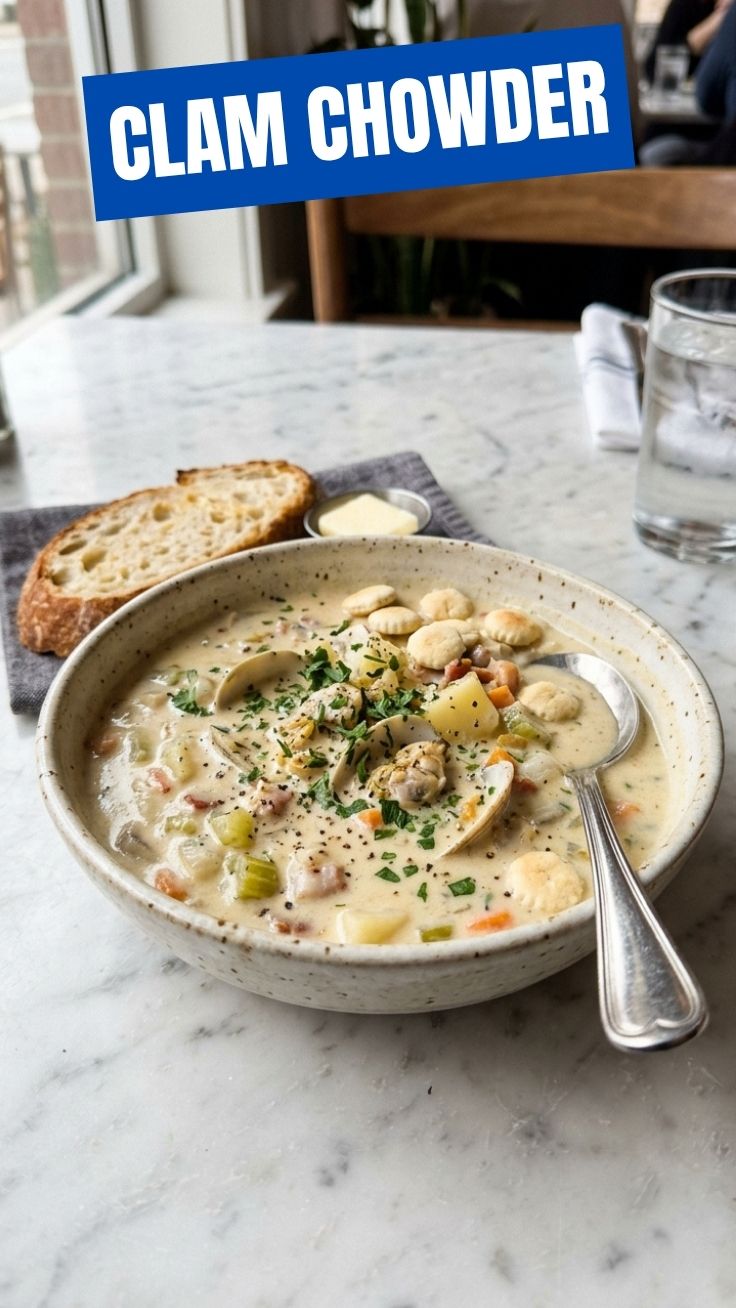
– Prep time: 20 minutes (cleaning clams, dicing vegetables, chopping bacon)
– Cook time: 35–40 minutes
– Resting time: 10–15 minutes after cooking (allows flavors to meld)
– Total time: Approximately 1 hour 10 minutes
Planning tip: Clean clams 30 minutes before cooking by scrubbing under cold water and soaking in salted water (1/3 cup salt per 4 cups cold water) for 20 minutes to purge sand. Change water twice. This step prevents gritty chowder—a common restaurant failure I’ve learned to avoid. For weeknight meals, prep all vegetables and bacon the night before. The chowder thickens as it sits, so plan to serve within 30 minutes of finishing if you prefer a ladle-worthy consistency.
Step-by-Step Instructions
1. Cook the bacon: In a large Dutch oven over medium heat, cook chopped bacon until crispy, about 5–7 minutes. Use a slotted spoon to transfer bacon to a paper towel-lined plate, leaving 1 tablespoon drippings in the pot. Pro tip: Reserve extra bacon fat for drizzling over the finished soup for added richness.
2. Sauté aromatics: Add butter to the pot with bacon drippings. Once melted, add diced onion and celery. Cook over medium heat until translucent (6 minutes). Add minced garlic and cook 30 seconds more—don’t let it brown or it turns bitter.
3. Build the roux: Sprinkle flour over the vegetables and stir continuously for 2 minutes. This raw-flour taste must cook out. Pour in chicken broth slowly while whisking to prevent lumps. Add bay leaves and thyme sprigs.
4. Cook the potatoes: Add diced potatoes (cut into ¾-inch cubes for even cooking). Bring to a gentle boil, then reduce to a simmer. Cook uncovered for 15 minutes or until potatoes are fork-tender. Texture cue: The edges of the potatoes should be slightly softened while the centers offer gentle resistance.
5. Add clams and cream: Remove bay leaves and thyme stems. Add chopped fresh clams (discard any that remain open before cooking). Pour in heavy cream and stir gently. Simmer on low heat for 5 minutes—do not boil or the cream may curdle. Season with salt and white pepper to taste. Seasoning adjustment: Since bacon and clams are naturally salty, begin with just a pinch of salt, then adjust after tasting.
6. Finish and serve: Return cooked bacon bits to the pot. Let rest for 10 minutes off the heat. Ladle into bowls and garnish with fresh parsley. For the perfect texture, consider blending 1 cup of the chowder and stirring it back in—this enhances the creaminess without losing chunkiness. This method works beautifully whether you’re making a classic Clam Chowder or experimenting with a lighter New England Clam Chowder variation.
Nutritional Benefits & Advantages
This chowder offers surprising nutritional value beyond its comforting reputation. Clams are a powerhouse of lean protein—a 3-ounce serving provides about 22 grams of protein with only 125 calories. They’re rich in iron (over 100% DV), vitamin B12, and selenium, which supports thyroid function and antioxidant defense. The potatoes contribute resistant starch when cooled, aiding gut health, while the onion and garlic offer prebiotic fibers that nourish beneficial gut bacteria. Bacon adds vitamin B3 and zinc—though moderation is wise due to sodium content. For a lighter version, substitute heavy cream with half-and-half combined with pureed cauliflower, which adds vitamin C and reduces saturated fat by nearly 40%. The broth’s collagen from slow-simmered bones (if using homemade stock) supports skin elasticity and joint health. This soup also hydrates effectively—each bowl contains roughly 75% water from broth and clam juice.
Tips Variations & Cooking Advice
Flavor variations:
– Smoked paprika kick: Add 1 teaspoon smoked paprika with the flour for a campfire undertone.
– Herb-forward: Replace thyme with fresh dill or tarragon for a lighter profile.
– Spicy twist: Stir in ½ teaspoon cayenne pepper or chipotle powder at the end.
– Manhattan-style hybrid: Substitute some cream with diced tomatoes and increase broth—though purists may object.
Cooking method swaps:
– Slow cooker: Sauté bacon and aromatics first, then transfer to slow cooker with all ingredients except cream and clams. Cook 4 hours on low, add clams and cream in final 20 minutes.
– Instant Pot: Pressure cook potatoes and broth for 5 minutes, then quick-release and finish with cream and clams on sauté mode (2 minutes).
– Dairy-free adaptation: Use full-fat coconut milk (not cream) and replace butter with olive oil—adds subtle sweetness.
– Gluten-free: Use cornstarch (2 tablespoons mixed with ¼ cup cold water) instead of flour. Add after potatoes are tender.
Portion adjustments: For a crowd of 10, double all ingredients but avoid crowding the pot—the clams release liquid, so use an 8-quart pot minimum. For single servings, cook full batch and freeze half.
Common Mistakes to Avoid
– Boiling the cream: High heat causes cream to separate and curdle. Always simmer on low after adding dairy. If curdling happens, immersion-blend the soup to re-emulsify—it saves the texture even if appearance changes slightly.
– Overcooking clams: Fresh clams become rubbery in 3–4 minutes of cooking. Add them at the very end and remove from heat the moment they open (or after 2 minutes if pre-shucked). Discard any clams that don’t open.
– Undercooked potatoes: Dense potato pieces wreck the silky mouthfeel. Cut all potatoes uniformly to ensure even cooking. Test a cube with a fork—it should offer no resistance.
– Sandy final soup: Even pre-washed clams can hide grit. After steaming fresh clams (optional first step), strain the broth through a fine-mesh sieve lined with cheesecloth before adding to the pot.
– Lumpy roux: Adding liquid too quickly to the flour-butter mixture creates stubborn lumps. Add broth in a slow stream while whisking constantly. If lumps appear, use a stick blender for 10 seconds.
Storage & Meal Prep Tips
Refrigeration: Transfer cooled chowder to airtight containers and refrigerate within 2 hours of cooking. It stays fresh for 3–4 days. The flavors actually improve after 24 hours as the starch and spices meld.
Freezing: Cream-based chowders can separate when frozen—the milk proteins destabilize. To freeze successfully, leave out the cream until reheating. Freeze the base (broth, potatoes, aromatics) for up to 3 months. Thaw overnight in the refrigerator, then reheat and stir in fresh cream and clams just before serving. Frozen pre-made chowder (with cream) still tastes good if you reheat gently and stir in 1 tablespoon of cornstarch slurry to re-thicken any separation.
Reheating: Warm leftover chowder over medium-low heat, stirring occasionally. Never microwave on high—it heats unevenly and may curdle cream. Add a splash of milk or broth to thin if it’s too thick after refrigeration. For restaurant-quality texture, reheat to just below boiling (170°F/77°C) and stir in a pat of butter for shine.
Conclusion
Mastering homemade chowder transforms a beloved restaurant indulgence into a reliable kitchen staple that welcomes improvisation. Whether you follow every detail of this guide or adapt it with seasonal vegetables or alternative proteins, the core principles remain: patience with temperature control, respect for fresh ingredients, and the willingness to taste and adjust. A bowl of perfectly executed Clam Chowder embodies coastal comfort—creamy without heaviness, rich without greasiness, and deeply satisfying with every spoonful. This New England Clam Chowder recipe has earned its place on my regular rotation because it delivers consistent results while leaving room for personal flair. I encourage you to try it this weekend, serve it with crusty sourdough bread, and share your results in the comments. Once you taste the difference homemade makes, you may never order chowder from a menu again.
FAQs
1. Can I use canned clams instead of fresh?
Absolutely. Use 4 cans (6.5 ounces each) of chopped clams, drained but with juice reserved. Add the clam juice to the broth for flavor. Add canned clams in the last 5 minutes of cooking—they’re pre-cooked and only need heating. Texture will be slightly less delicate than fresh, but the convenience trade-off is worth it for weeknight meals.
2. Why is my chowder too thick or too thin?
Too thick: You likely overcooked the potatoes or used too much flour. Thin with additional broth or milk in ¼-cup increments. Too thin: Simmer uncovered for 5–10 minutes to reduce, or stir in a slurry of 1 tablespoon cornstarch mixed with 2 tablespoons cold water. Reheat gently after thickening.
3. How do I prevent my chowder from tasting bland?
The culprit is usually insufficient seasoning or low-quality bacon. Use thick-cut bacon with visible fat marbling for deeper smokiness. Taste after adding cream and clams—both mute saltiness. Add a pinch of salt and white pepper, then test again. A dash of Worcestershire sauce or lemon juice can lift flat flavors.
4. Can I make this chowder completely dairy-free?
Yes. Use coconut cream (not refrigerated can) instead of heavy cream. Replace butter with olive oil or vegan butter. Coconut milk adds subtle sweetness that pairs surprisingly well with clams. Add ½ teaspoon liquid smoke for the smoky bacon flavor if omitting bacon.
5. How long should I simmer the chowder before serving?
After adding clams and cream, simmer just 5 minutes—any longer toughens the clams. The chowder benefits from a 10-minute rest off the heat, allowing the starches to stabilize and flavors to marry. Reheat gently if needed before serving.
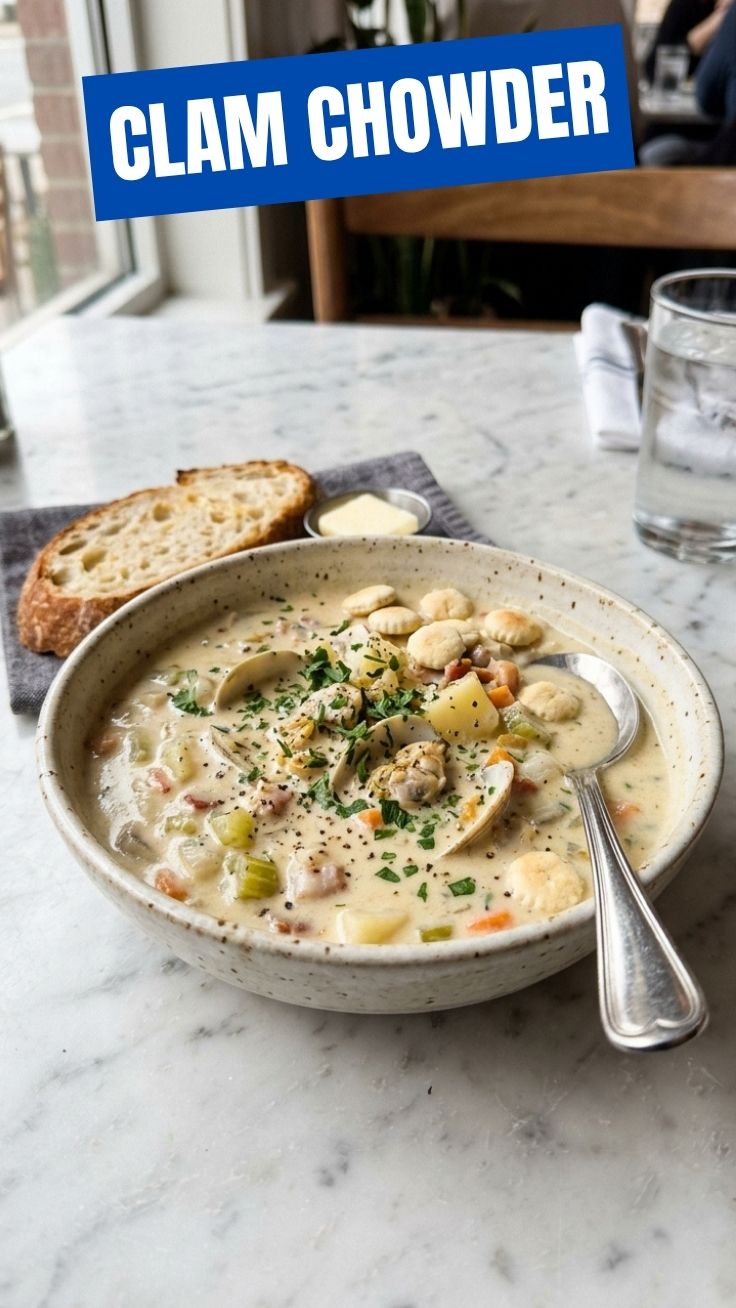
Proven way to grow delicious Clam Chowder in 5 stepsClam Chowder
Ingredients
Equipment
Method
- In a large pot, cook the chopped bacon over medium heat until crispy.
- Remove the bacon, leaving about 2 tablespoons of drippings in the pot. Sauté the chopped onion and celery until softened.
- Stir in the flour and cook for 1 minute. Gradually add the chicken broth, stirring constantly.
- Add the diced potatoes and bring to a boil. Reduce heat and simmer until potatoes are tender.
- Stir in the drained clams, heavy cream, salt, and pepper. Heat through, but do not boil. Garnish with crumbled bacon and serve hot.