The Ultimate French Onion Soup: A Home Cook’s Guide to Rich, Cheesy Perfection
Have you ever pulled a spoon through a bubbling blanket of melted Gruyère, watching the cheese stretch as you lift it toward a deep, savory broth, and wondered why restaurant versions taste so much better than your own attempts? The secret isn’t a fancy kitchen—it’s patience with onions and knowing the right technique. Making French Onion Soup at home is not only deeply rewarding but also surprisingly affordable. You control the quality of the beef broth, the caramelization level, and the cheese crust. Plus, the same slow-cooked onion base you develop for this soup can transform into an incredible French onion dip for chips or crudités. Let’s unlock the method that guarantees rich, complex flavor every single time.
—
Ingredients & Kitchen Tools
Ingredients
– 5 large yellow onions (about 2.5 lbs) – Sweet onions like Vidalia work too, but yellow onions offer the best balance of sharpness and sweetness after slow cooking.
– 4 tablespoons unsalted butter – For richness; you can substitute olive oil for a dairy-free version.
– 2 tablespoons olive oil – Prevents butter from burning and adds fruitiness.
– 6 cups beef broth – Homemade or high-quality low-sodium store-bought; avoid watery broths.
– 1 cup dry white wine (or sherry) – Adds acidity to cut through the richness; non-alcoholic option: use ½ cup apple cider vinegar diluted with ½ cup water.
– 2 sprigs fresh thyme – Or ½ teaspoon dried thyme.
– 1 bay leaf
– 1 teaspoon salt (adjust to taste)
– ½ teaspoon black pepper
– 1 tablespoon Worcestershire sauce – For umami depth; omit for strict vegetarian version.
– 8 slices French baguette (1-inch thick) – Day-old bread works best; gluten-free baguette is fine.
– 2 cups grated Gruyère cheese – Swiss or Provolone are acceptable substitutes.
Kitchen Tools
– Large heavy-bottomed pot or Dutch oven (5–6 quart) – Even heat distribution prevents scorching.
– Sharp chef’s knife – Slicing onions thinly and uniformly is crucial for even caramelization.
– Wooden spoon or heat-resistant spatula
– 4–6 oven-safe soup bowls or ramekins – Ceramic or enameled cast iron works best.
– Baking sheet – For catching cheese drips under bowls.
– Microplane or box grater – Freshly grated cheese melts smoother than pre-shredded.
—
Prep Time & Cooking Schedule
– Prep time: 15 minutes (peeling and slicing onions).
– Cook time: 1 hour 15 minutes to 1 hour 30 minutes (caramelizing onions takes 40–50 minutes alone).
– Broil time: 3–4 minutes (for cheese topping).
– Resting time: 5 minutes before serving (to let the cheese set slightly and avoid burning your mouth).
Planning tip: Caramelizing onions is the most time-consuming step, but it’s almost entirely hands-off once you get them started. I recommend starting this soup on a weekend afternoon when you can enjoy the slow, aromatic process. The entire dish is ready in under two hours, and it reheats beautifully for leftovers.
—
Step-by-Step Instructions
1. Slice the onions uniformly.
Peel and halve the onions, then slice them into thin half-moons (about ⅛-inch thick). Consistent thickness ensures even caramelization—some thin slices burn while thick ones remain crunchy.
2. Start the caramelization.
In your Dutch oven over medium heat, melt the butter with the olive oil. Add the onions, salt, and pepper. Stir to coat. Cook, stirring every 5 minutes, for 40–50 minutes. The onions will shrink dramatically and turn a deep golden brown. If they start sticking, deglaze with 2 tablespoons of water or wine.
Pro tip: Don’t rush this stage. Low-and-slow caramelization (not burning) is what gives authentic French Onion Soup its signature sweetness and depth.
3. Deglaze and build the broth.
Add the white wine and scrape up any browned bits from the bottom of the pot. Let the wine reduce by half (about 2 minutes). Then pour in the beef broth, add the thyme sprigs, bay leaf, and Worcestershire sauce. Bring to a gentle simmer, cover partially, and cook for 15–20 minutes. Taste and adjust salt and pepper.
4. Toast the bread.
While the soup simmers, preheat your oven broiler. Arrange baguette slices on a baking sheet and toast for 2 minutes per side until lightly golden.
5. Assemble and broil.
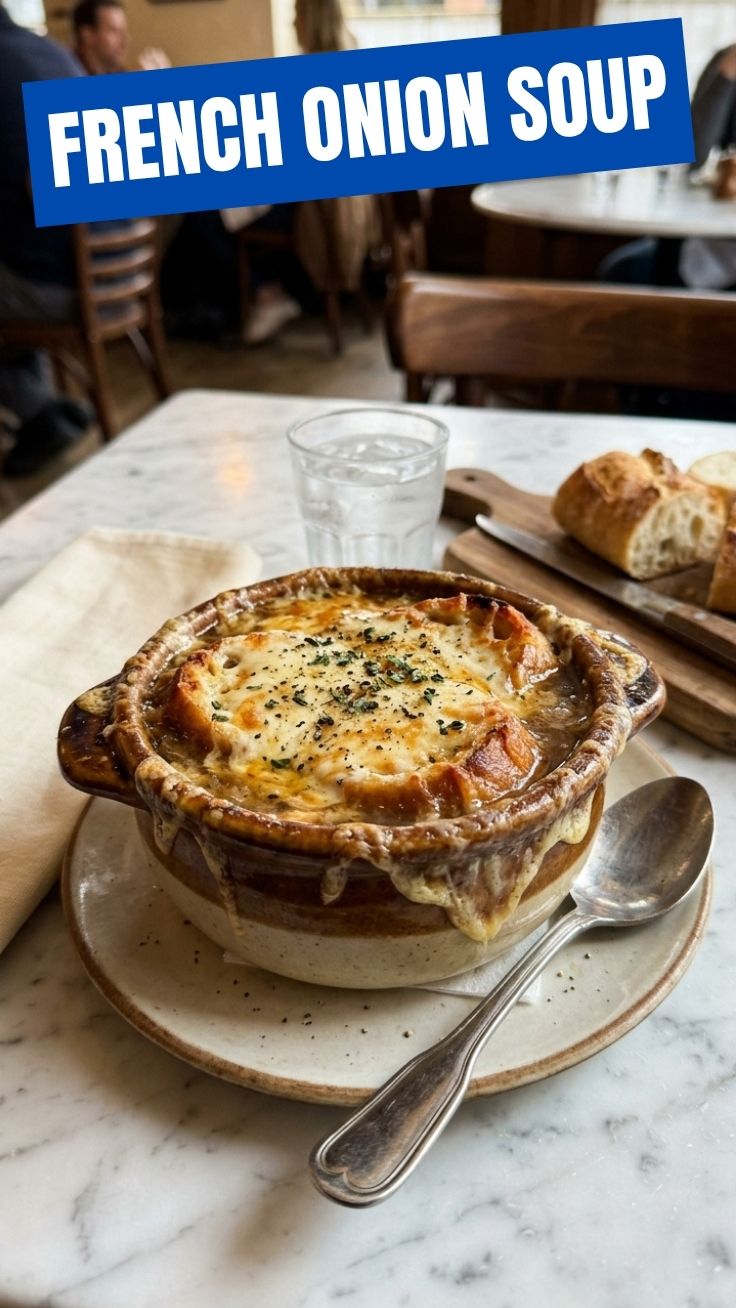
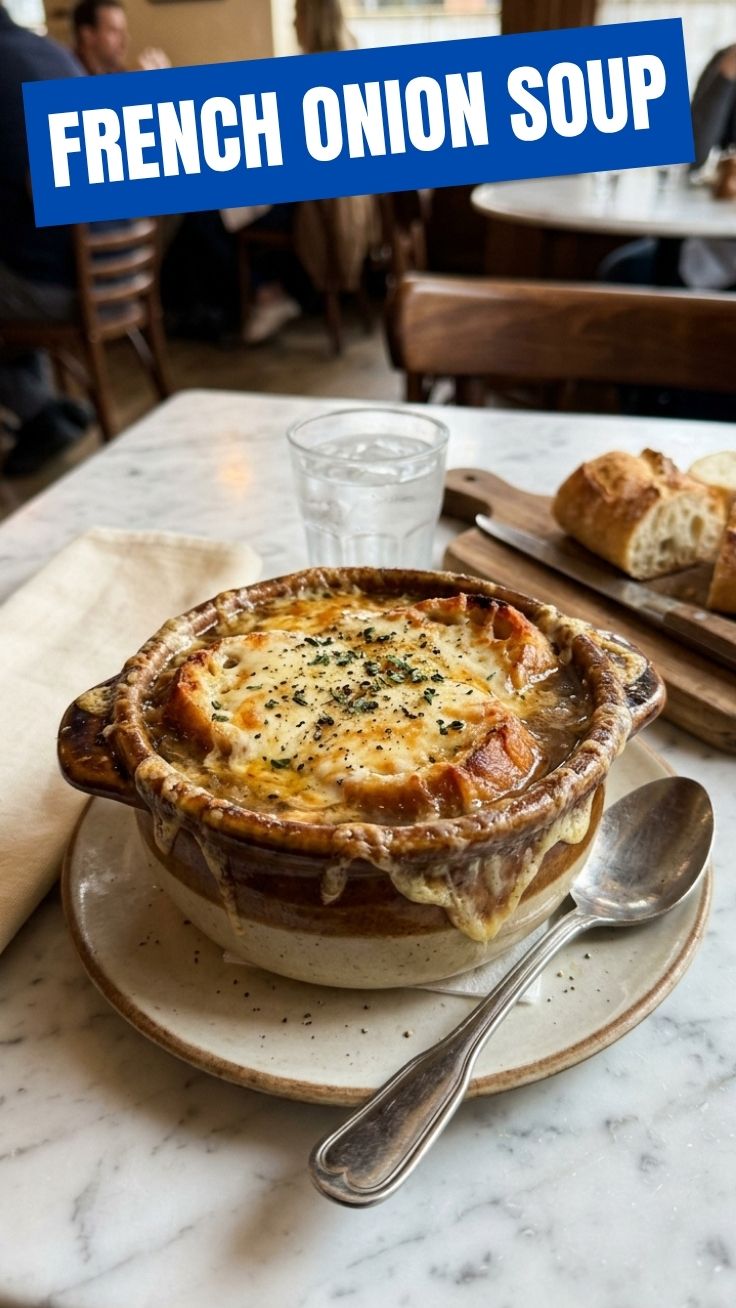
Ladle soup into oven-safe bowls, filling them about ¾ full. Place a toasted baguette slice on top, generously pile on grated Gruyère, and set bowls on the baking sheet. Broil 3–4 inches from the heat for 3–4 minutes until the cheese is bubbly and golden brown. Watch carefully—broilers vary wildly in intensity.
Chef’s note: The same caramelized onion foundation you just mastered can also become a creamy French onion dip—simply fold the cooked onions into sour cream, cream cheese, and a pinch of garlic powder. Serve chilled with potato chips.
6. Rest and serve.
Let the bowls sit for 5 minutes before serving. The cheese will set slightly, making for a glorious stretch when you lift your spoon.
—
Nutritional Benefits & Advantages
– Onions are nutrient-dense: One serving provides 20% of your daily vitamin C needs and prebiotic fibers that support gut health. Caramelizing onions increases their antioxidant availability, specifically quercetin, which has anti-inflammatory properties.
– Bone broth benefits: Beef broth is rich in collagen, gelatin, and minerals like calcium and magnesium, which support joint and skin health.
– Moderate protein from cheese: A serving offers about 15–18 grams of protein from the Gruyère, helping with satiety.
– Low-carb option: If you skip the bread, the soup itself contains only about 12 grams of net carbs per serving, making it suitable for moderate low-carb diets.
—
Tips, Variations & Cooking Advice
Flavor variations:
– Add a splash of cognac, brandy, or sherry at the deglazing stage for deeper complexity.
– Stir in 1 teaspoon balsamic vinegar with the broth to mimic slow-cooked sweetness without extra sugar.
– Use chicken broth instead of beef for a lighter, milder soup.
Dietary adaptations:
– Gluten-free: Use gluten-free baguette and double-check Worcestershire sauce label.
– Dairy-free: Substitute the butter with olive oil and use a high-quality dairy-free cheese (or skip the cheese topping and stir in ½ cup full-fat coconut milk before serving).
– Vegetarian: Use vegetable broth and omit Worcestershire sauce (or use a vegan version). The caramelized onions still provide plenty of savory depth.
Alternative cooking methods:
– Slow cooker version: Caramelize onions on the stove first (30 minutes), then transfer to a slow cooker with broth and herbs. Cook on low for 4–6 hours. Proceed with assembly and broil as directed.
– Instant Pot shortcut: Use the Sauté function to caramelize onions (still needs 30–40 minutes), then pressure cook on high for 10 minutes with broth. The broth won’t have the same depth as simmering, but it’s a time-saver.
Portion changes:
– This recipe serves 4 generous bowls. For a crowd, easily double all ingredients—just ensure your pot is large enough (8-quart or larger) to avoid overcrowding the onions during caramelization.
—
Common Mistakes to Avoid
1. Rushing the onions.
Mistake: Cooking them on high heat to speed up the process leads to burnt, bitter flavors.
Solution: Keep heat at medium or medium-low. If you hear loud sizzling, dial it back. The onions should hiss gently, not aggressively.
2. Using pre-shredded cheese.
Mistake: Pre-shredded cheese contains anti-caking agents (like cellulose) that prevent smooth melting.
Solution: Buy a block of Gruyère and grate it yourself just before use. The texture will be silkier.
3. Overcrowding the pot.
Mistake: Adding too many onions at once causes them to steam instead of caramelize.
Solution: If necessary, cook onions in two batches, then combine them before adding wine and broth.
4. Skipping the deglazing step.
Mistake: Not scraping the browned bits (fond) from the pot bottom loses a huge layer of flavor.
Solution: Always deglaze with wine or broth immediately after onions reach your desired golden color.
5. Over-toasting the bread.
Mistake: Using fresh bread without toasting leads to soggy soup; over-toasting makes it rock-hard.
Solution: Toast until just crisp but still slightly soft in the center. It will absorb broth beautifully without disintegrating.
—
Storage & Meal Prep Tips
Refrigeration:
– Store the soup without bread and cheese in an airtight container for up to 4 days.
– The broth and onions actually deepen in flavor overnight, making leftovers even better.
Freezing:
– Freeze the base (soup without bread/cheese) in sealed containers or freezer bags for up to 3 months.
– Thaw overnight in the refrigerator, then reheat gently on the stove.
– Do not freeze assembled soup—the bread and cheese become mushy and lose texture upon thawing.
Reheating:
– Stovetop: Reheat the soup base in a pot over medium-low heat until bubbling (about 5 minutes).
– Microwave: Heat in a microwave-safe bowl for 2–3 minutes, stirring once.
– For the cheese crust: After reheating the soup, place toasted bread and cheese on top, then broil until bubbly (3 minutes). This keeps the bread crisp.
Meal prep strategy:
Caramelize a large batch of onions on Sunday and store them in the fridge. Then, when you want soup, simply sauté the pre-cooked onions for 2 minutes to re-warm, add broth and wine, simmer for 15 minutes, and proceed with assembly. This cuts active cooking time to under 25 minutes.
—
Conclusion
Mastering classic French Onion Soup is about honoring a few simple principles: patient caramelization, quality broth, and a perfect cheese crust. Once you experience the deeply savory, sweet, and umami-rich flavor you can create at home, you’ll never settle for a mediocre restaurant version again. The same techniques transfer beautifully to making a stellar French onion dip or even onion jam. I encourage you to try this recipe, share a photo of your bubbling cheese crust on social media, and experiment with the variations. Have you ever made your own French onion soup? Drop your experience or questions in the comments below.
—
FAQs
1. Can I use pre-sliced onions from the store?
Yes, but they tend to be cut thicker than ideal, which means longer caramelization time (up to 60 minutes). If you’re short on time, you can use them, but expect a slightly less sweet result. For best results, slice your own uniformly thin.
2. Why is my soup too salty?
Store-bought beef broth is often high in sodium. Use low-sodium broth and add salt gradually at the end. If you oversalt, add a peeled raw potato to the simmering soup—it absorbs excess salt—then remove before serving.
3. Can I make this soup without wine?
Absolutely. Substitute the wine with an equal amount of additional beef broth plus 1 tablespoon of apple cider vinegar or lemon juice. The acidity is crucial for balancing sweetness, but any mild vinegar works.
4. How do I get a perfectly browned cheese crust without burning?
Use the oven’s broiler on high and watch continuously. Every oven is different, so check at 2 minutes and rotate the pan if necessary. Placing the bowls closer to the broiler element speeds up browning—just don’t walk away.
5. Can I freeze the assembled soup?
Not recommended. The bread absorbs broth and becomes mushy after thawing. Always freeze the soup base separately. For quick meals, freeze individual portions of soup, then just toast bread and add cheese when reheating.
How to grow the best French Onion Soup recipe
Ingredients
Equipment
Method
- Slice the onions thinly, about 1/8-inch thick; set aside.
- Melt butter in a large pot or Dutch oven over medium heat. Add the sliced onions and cook, stirring occasionally, until deeply caramelized and golden brown, about 30-40 minutes.
- Pour in the beef broth and sherry, then add bay leaves and thyme sprigs. Bring to a simmer, then reduce heat and gently simmer for 20 minutes.
- Remove the bay leaves and thyme sprigs. Taste and season with salt and pepper as needed.
- Preheat oven broiler. Ladle soup into oven-safe bowls. Top each with baguette slices and a generous amount of Gruyere cheese.
- Place bowls under the broiler and cook until cheese is bubbly and golden brown. Serve immediately.