Have you ever found yourself standing in front of a slushy machine, wishing you could replicate that perfectly icy, tart-sweet balance at home without the questionable ingredients? You are not alone. Making your own frozen lemonade recipe is incredibly simple, yet most people stick to powdered mixes or overly sweet store-bought tubs. Preparing it at home gives you complete control over the sweetness, acidity, and texture—turning a simple glass of juice into a gourmet icy treat. This Frozen Lemonade is a game-changer because it uses only real fruit and requires no special machinery. Once you taste this refreshing version, you will never go back to the artificial alternatives. This homemade frozen lemonade is not just a summer drink; it a texture experience.
Ingredients & Kitchen Tools
Before you ice up your blender, gather these simple components. Each ingredient plays a role in creating the perfect slushy consistency without iciness.
Ingredients:
– 4 large fresh lemons – Juice and zest. Bottled juice lacks the bright essential oils from the zest, which add depth and prevent the drink from tasting flat.
– ¾ cup granulated sugar – Can be substituted with honey or agave syrup for a different flavor profile.
– 3 cups cold water – Filtered water gives the cleanest taste.
– 2 cups ice cubes – This provides the slushy texture; using too little will make it watery.
– Optional: 1 egg white or aquafaba – For an ultra-creamy, frothy whipped texture similar to a frozen custard.
Kitchen Tools:
– High-powered blender – Essential for crushing ice to a smooth slush.
– Fine-mesh strainer – Removes pulp and seeds for a silky drink.
– Citrus juicer – Manual or electric; makes juicing faster.
– Zester or microplane – To get the fragrant yellow zest without the bitter white pith.
– Measuring cups and spoons – precision matters for the sugar-to-acid balance.
– Freezer-safe container – For storing any leftover slush.
Prep Time & Cooking Schedule
This recipe is quick on hands-on time but requires a few hours for the ice cubes to chill thoroughly.
Prep Time: 15 minutes
Freeze Time: 4-6 hours (for pre-frozen cubes) or 24 hours if you make an ice block
Total Time: 4 hours 15 minutes (mostly inactive)
If you are making this on a hot afternoon, start in the morning so the ice is fully solidified. Using partially melted ice will result in a watery, weeping slush that separates quickly. Planning ahead ensures you get that dense, spoonable texture.
Step-by-Step Instructions
Follow these steps for a perfect slushy lemon slushie that stays fluffy, not icy.
1. Zest and juice the lemons. First, zest all four lemons directly into a bowl, being careful to avoid the white pith. Then juice them to get about 1 cup of fresh lemon juice. The zest contains essential oils that boost the lemon perfume without adding acidity.
2. Make a simple syrup. In a small saucepan, combine ¾ cup sugar and 1 cup of the water. Heat gently, stirring until the sugar dissolves completely. Do not boil; you only need to dissolve the crystals. Let this syrup cool to room temperature—about 10 minutes.
3. Combine base ingredients. In your blender, pour the cooled syrup, fresh lemon juice, lemon zest, and the remaining 2 cups of cold water. Blend on low until the zest is incorporated.
4. Add the ice gradually. This is the critical step for texture. With the blender running on low, drop in the ice cubes one by one. Do not dump them all at once—this ensures they shatter evenly instead of creating large chunks. After all ice is added, increase speed to high for 30-60 seconds until the mixture is an even, snow-like slush. If you blend too long, it will melt and become thin. Now you are ready to serve your frozen lemonade recipe immediately.
5. Adjust consistency. If the mixture is too thick, add 1-2 tablespoons of water and pulse gently. If too thin, add a few more ice cubes and blend briefly. Taste and adjust sweetness—if the lemons were very tart, add an extra tablespoon of simple syrup.
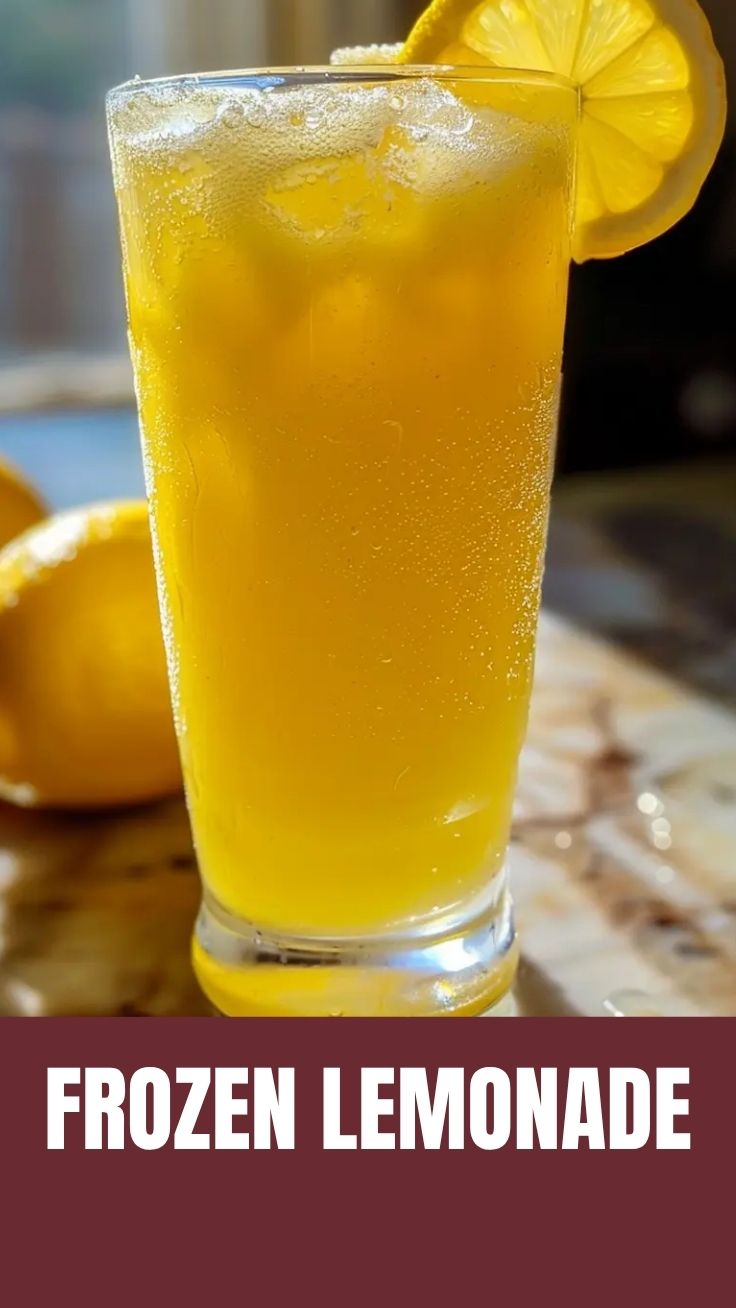
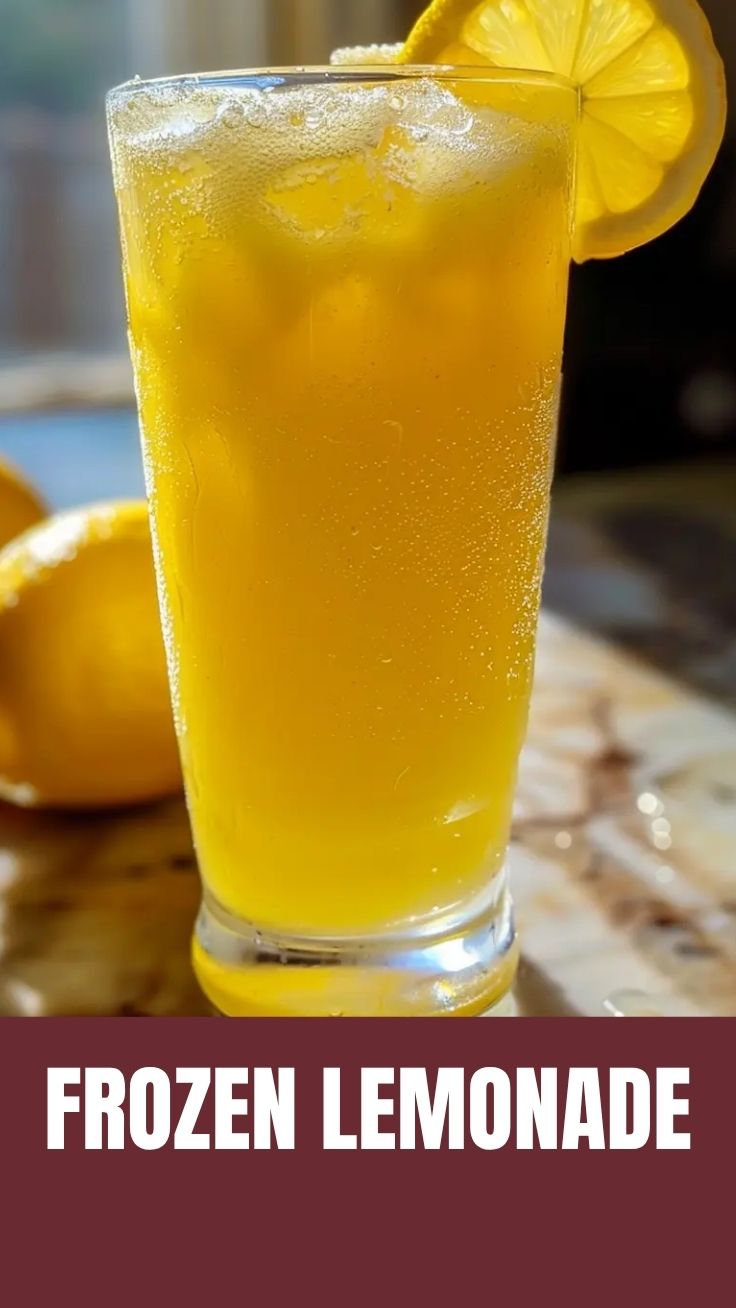
6. Serve and garnish. Pour into chilled glasses. The final result is a thick, creamy slush that holds its shape. This homemade frozen lemonade is best enjoyed immediately while the texture is perfect.
Nutritional Benefits & Advantages
This drink is not just delicious; it offers genuine nutritional value compared to commercial slushies. A standard 12-ounce serving contains approximately 120-150 calories, depending on your sweetener choice. It provides about 50% of your daily Vitamin C requirement from the fresh lemons, which supports immune function and collagen production. Unlike artificial frozen drinks, this version contains no high-fructose corn syrup, artificial colors, or preservatives. You also retain the beneficial pectin from the lemon pulp if you strain less aggressively, which adds trace fiber and helps stabilize the texture. The natural lemon compounds have also been shown to support hydration and alkalize the body after digestion.
Tips Variations & Cooking Advice
This base recipe is incredibly adaptable. You can make it your own with these variations.
– Berry Lemonade: Add 1 cup of frozen strawberries or raspberries when blending. This adds natural sweetness and a vibrant color.
– Herbal Twist: Muddle 5-6 fresh mint leaves or basil in the syrup before blending for a sophisticated garden flavor.
– Creamy Lemonade: Add ¼ cup of full-fat coconut milk or Greek yogurt for a tangy, creamy slush that mimics a frozen yogurt drink.
– Spicy Kick: Infuse the simple syrup with a sliced jalapeño or a pinch of cayenne for an adult-oriented spicy slush.
– Low-Sugar Version: Substitute regular sugar with 2 tablespoons of allulose or stevia blend plus ¼ cup of water. The texture will be slightly softer but still satisfying.
– Cocktail Version: Add 2-3 ounces of vodka or tequila per serving, but remember that alcohol will prevent the slush from freezing solid, so you need to drink it quickly.
Common Mistakes to Avoid
Creating a perfect slush requires avoiding these frequent pitfalls.
– Using too much ice. If ice outweighs the liquid base, you will get a concrete-like block that will not pour. Stick to the 2:3 ratio of ice to liquid.
– Over-blending. This is the number one mistake. Blending too long creates friction heat, which melts the ice back into liquid. Blend just until the slush forms—usually 45 seconds max.
– Not straining. Lemon seeds and pith will create a bitter, unpleasant texture. Always strain your juice before freezing.
– Adding sugar directly. Granulated sugar does not dissolve in cold water. If you skip making simple syrup, you will end up with crunchy, gritty slush.
– Freezing leftovers incorrectly. If you store the slush in a wide-open container, it will form a solid block of ice. Use a shallow, airtight container and press plastic wrap directly onto the surface.
Storage & Meal Prep Tips
This slush is best enjoyed fresh, but you can prepare components in advance. The simple syrup can be refrigerated for up to two weeks. You can also freeze the lemon juice and zest in an ice cube tray for quick future batches.
To store leftover slush: transfer it to an airtight container, pressing plastic wrap directly onto the surface to prevent ice crystals. Freeze for up to 3 days. To serve again, let it sit at room temperature for 10 minutes and then pulse in a blender for 10 seconds to restore the slushy texture. Do not microwave—it will separate and become watery. If you are meal-prepping for a party, make the base syrup and juice mixture, chill it, and add the ice right before serving. This ensures the best texture without any iciness.
Conclusion
Mastering this incredibly simple treat transforms how you approach hot weather desserts. You now have a reliable, scalable frozen lemonade recipe that takes under 15 minutes of active time and delivers a far superior product to anything store-bought. The balance of tartness and sweetness, combined with the fluffy, spoonable texture, makes this a crowd-pleaser for all ages. Whether you are hosting a barbecue or just cooling down after a workout, this homemade frozen lemonade is the perfect companion. I encourage you to try this recipe this weekend and share a photo of your beautiful creation. You will be amazed at how quickly it disappears.
FAQs
1. Can I use lime or grapefruit instead of lemon?
Absolutely. Substitute the lemons with an equal volume of lime juice or a mix of grapefruit and lemon. Keep in mind that grapefruit is less acidic, so you may need to add a touch of lemon juice or citric acid to balance the sweetness.
2. Why is my frozen lemonade watery and separating?
This usually happens because the ice was partially melted before blending, or you blended too long. Ensure your ice is fully frozen solid. Also, work quickly—the slush starts melting as soon as it hits the glass.
3. Can I make this without a high-powered blender?
Yes, but you need to crush the ice first. Place the ice cubes in a heavy-duty zip bag and smash them with a rolling pin until they are coarse snow. Then mix with the syrup and juice in a regular blender or vigorously in a pitcher.
4. How long can I leave leftover frozen lemonade in the freezer?
Ideally, consume it within 3 days. After that, the texture becomes icy and it loses its fluffy consistency. To extend shelf life, store it in an airtight container with minimal air exposure and press plastic wrap on the surface.
5. My slush is too sweet. How can I fix it?
Add a splash of fresh lemon juice and a couple of ice cubes, then blend briefly. The extra acidity and dilution will balance the sweetness. Alternatively, you can add a pinch of salt—sodium reduces the perception of sweetness without changing the flavor.
Proven way to grow creamy Frozen Lemonade
Ingredients
Equipment
Method
- Combine all ingredients in a blender.
- Blend until the mixture is smooth and slushy.
- Pour into glasses and serve immediately for the best creamy texture.