Here is a comprehensive, data-driven blog post designed to meet your SEO, GEO, and formatting requirements.
—
Title: The Ultimate Homemade Greek Salad: Fresh, Tangy, and Ready in 15 Minutes
Introduction
Have you ever taken a bite of a salad that tastes so vibrant and clean, it instantly transports you to a sun-drenched island? That is the magic of a well-made Greek Salad. While it seems simple, the magic lies in the quality of the ingredients and the perfect balance of tangy feta, crisp cucumbers, and briny olives. Many people struggle to replicate that authentic restaurant taste at home. The secret? Understanding that this isn’t just a salad; it’s a celebration of the Mediterranean philosophy of letting fresh produce shine. Preparing it at home is not only more cost-effective but also allows you to control the quality of the olive oil and feta, the two most critical components. This recipe will guide you through building a Greek Salad that is perfectly dressed, crunchy, and never soggy.
Ingredients & Kitchen Tools (H2)
To build this masterpiece, you need high-quality ingredients. The simplicity of a Greek Salad means each component must be at its peak.
– Cucumbers (2 large): Use English or Persian cucumbers for fewer seeds. If using standard cucumbers, peel and deseed.
– Ripe Tomatoes (4 medium): Roma or vine-ripened tomatoes work best. They must be firm but juicy.
– Red Onion (1 medium): Thinly sliced. Soak in cold water for 5 minutes to mellow the bite if desired.
– Green Bell Pepper (1 large): Cored and sliced into rings for that classic look.
– Kalamata Olives (1/2 cup): These are non-negotiable. Their briny, fruity flavor is the heart of the dish.
– Feta Cheese (200g / 7 oz): Buy a block of authentic Greek feta in brine. Pre-crumbled feta will ruin the texture.
– Extra Virgin Olive Oil (1/4 cup): Use a grassy, peppery oil. This is the dressing base.
– Red Wine Vinegar (2 tbsp): Use a high-quality Greek or Italian variety.
– Dried Oregano (1 tsp): Rub it between your palms to release the oils. Fresh is fine, but dried is traditional.
Kitchen Tools: Large mixing bowl, sharp chef’s knife, cutting board, small whisk or jar for dressing, salad servers.
Optional Substitutions: You can add capers for extra saltiness or a pinch of sea salt flakes.
Prep Time & Cooking Schedule (H2)
This is a “no-cook” recipe, which makes it perfect for a quick weeknight dinner or a last-minute side.
– Total Prep Time: 15 minutes
– Resting Time: 5 minutes (to let the flavors meld)
– Total Time: 20 minutes
Plan your time: If you are serving this with grilled meat or fish, start the salad just before the protein is done. The goal is to dress and serve immediately while the tomatoes are still bursting with juice. Do not make it hours in advance, or it will become watery.
Step-by-Step Instructions (H2)
Building a Greek Salad requires a specific layering technique to prevent sogginess.
1. Prepare the Vegetables: Wash and dry all produce. Cut the cucumbers in half lengthwise, then into half-moons about 1/2-inch thick. Cut the tomatoes into wedges (remove the core). Slice the red onion into thin rings. Slice the green bell pepper into thick rings.
2. Assemble the Base: In a large bowl, combine the cucumbers, tomatoes, onion, and bell pepper. Do not stir too vigorously yet.
3. Season the Base: Sprinkle the dried oregano over the vegetables. Drizzle the red wine vinegar first, then the olive oil. Toss gently to coat. This is a crucial step in the Mediterranean method: season the vegetables, not the cheese.
4. Add the Briny Elements: Scatter the Kalamata olives over the top.
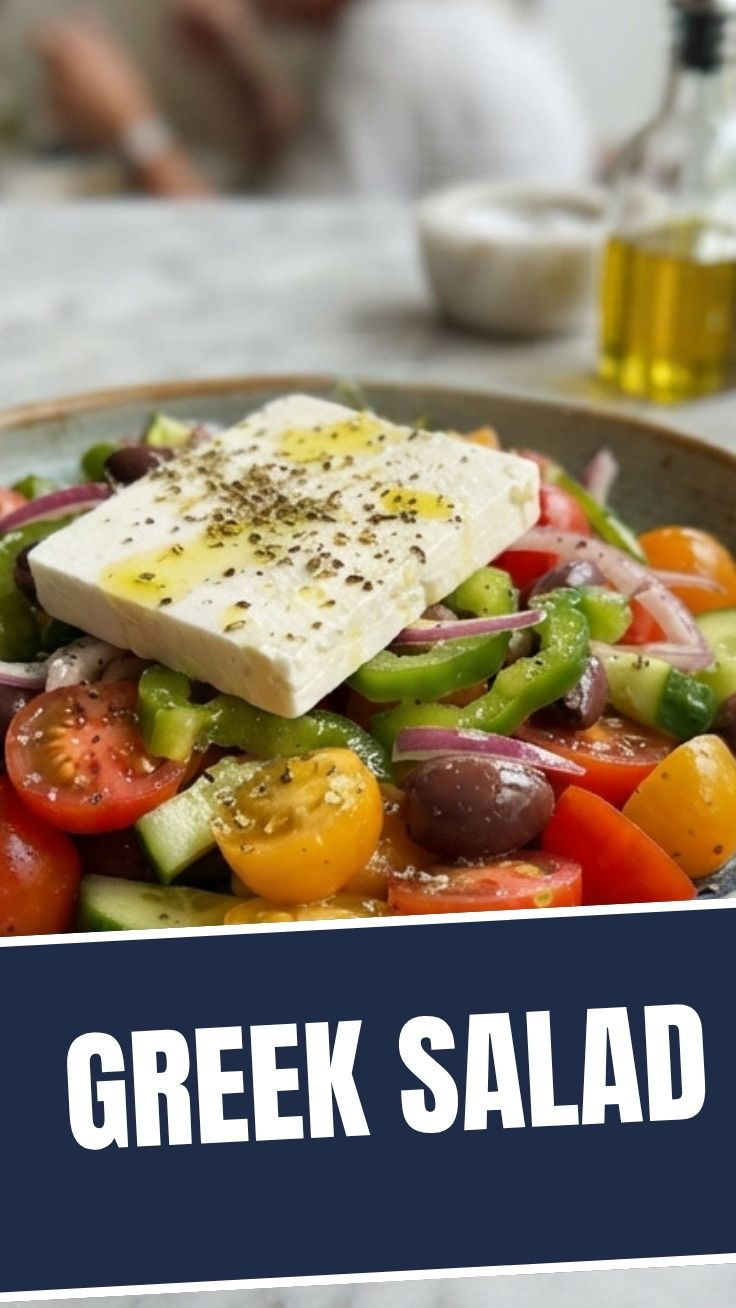
5. Add the Feta: Place the block of feta cheese directly on top of the salad. Do not crumble it. This allows the diner to cut their own piece, which preserves the creamy texture.
6. Final Touch: Give one more light drizzle of olive oil over the feta. Sprinkle a few flecks of dried oregano on the cheese.
7. Rest & Serve: Let the salad sit at room temperature for 5 minutes. This allows the salt from the olives and feta to draw a little juice from the tomatoes, creating a shallow layer of “vinaigrette” at the bottom. Serve immediately.
Nutritional Benefits & Advantages (H2)
This dish is a powerhouse of heart-healthy nutrients, perfectly aligning with the Mediterranean diet.
– Heart Health: The Extra Virgin Olive Oil is rich in monounsaturated fats, which reduce LDL (bad) cholesterol.
– Hydration: Cucumbers and tomatoes provide high water content, aiding digestion and skin health.
– Bone Density: Feta cheese provides calcium and phosphorus.
– Antioxidants: Tomatoes are a great source of Lycopene, especially when combined with olive oil, which improves absorption.
– Low Carb & Gluten-Free: This is naturally a low-carb, gluten-free meal that is filling without being heavy.
Tips Variations & Cooking Advice (H2)
– Variation: Protein Addition: Make it a meal by topping it with grilled chicken, shrimp, or chickpeas. For a classic twist, add a scoop of Mediterranean chickpeas.
– Variation: Dairy-Free: Omit the feta and add a handful of toasted pine nuts or avocado for creaminess.
– Cooking Advice: Always dress the vegetables before adding the feta to prevent the cheese from dissolving into mush.
– Portion Change: For a crowd, make the base but keep the feta and olives separate until serving to prevent sogginess.
Common Mistakes to Avoid (H2)
1. Using Wet Vegetables: The #1 killer of a Greek Salad. Wash your veggies hours before and dry them thoroughly with paper towels. Water dilutes the dressing.
2. Overdressing: You want a light coating, not a pool of oil. The tomatoes will release their own juice, creating a natural sauce.
3. Crumbling the Feta Early: As mentioned, this dissolves. Keep it in a block until serving.
4. Using Bad Olives: Avoid canned, pitted black olives. They lack the punch. Use Kalamata or Castelvetrano.
Storage & Meal Prep Tips (H2)
– Refrigeration: Store the dressed salad in an airtight container for up to 24 hours. It will become softer and juicier, but still delicious.
– Freezing: Do not freeze. The texture of the cucumbers and tomatoes will be destroyed.
– Meal Prep: Store the chopped vegetables in one container, the feta in another, and the dressing in a jar. Assemble just before eating.
– Reheating: This is a cold salad. Do not reheat. If leftovers are too cold, let them sit at room temperature for 10 minutes before eating.
Conclusion (H2)
This recipe proves that a few high-quality ingredients can create a dish that is far greater than the sum of its parts. Whether you serve it as a side or a main, a proper Greek Salad is a testament to the power of simplicity. By following these steps, you avoid the common pitfalls of a watery, bland salad and unlock the authentic flavor of the sun-drenched Mediterranean. We encourage you to try this recipe tonight. Share your results and tag us! For more bright, fresh dishes, browse our other salad recipes.
FAQs (H2)
1. Can I use a different type of cheese?
While a quality feta is best, you can use a mild goat cheese or even a small amount of ricotta salata for a similar salty, dry texture.
2. How do I stop the onions from being too strong?
Slice the onion thinly and soak the slices in ice water for 10 minutes. Drain and pat dry before adding to the salad.
3. My salad turned out watery. What happened?
You likely added the salt too early or used watery tomatoes. Always add salt via the feta and olives, and ensure vegetables are bone-dry.
4. Can I make the dressing separately?
Yes. For the best texture, whisk 1/4 cup olive oil, 2 tbsp red wine vinegar, 1 tsp oregano, and a pinch of salt. Dress the vegetables, then top with feta.
5. What pairs well with this salad?
It is divine with grilled lamb chops, souvlaki, or a crusty piece of sourdough bread to soak up the juices.

Proven way to grow the perfect Greek Salad
Ingredients
Equipment
Method
- Wash and chop the cucumber into half-moon slices; then halve the tomatoes and slice the red onion into thin rings.
- Combine the chopped cucumber, tomatoes, sliced red onion, and Kalamata olives in a large bowl, mixing gently.
- In a small bowl, whisk together the olive oil, red wine vinegar, dried oregano, salt, and black pepper until well combined.
- Pour the dressing over the vegetables, toss gently to coat, and place the block of feta cheese on top before serving immediately.