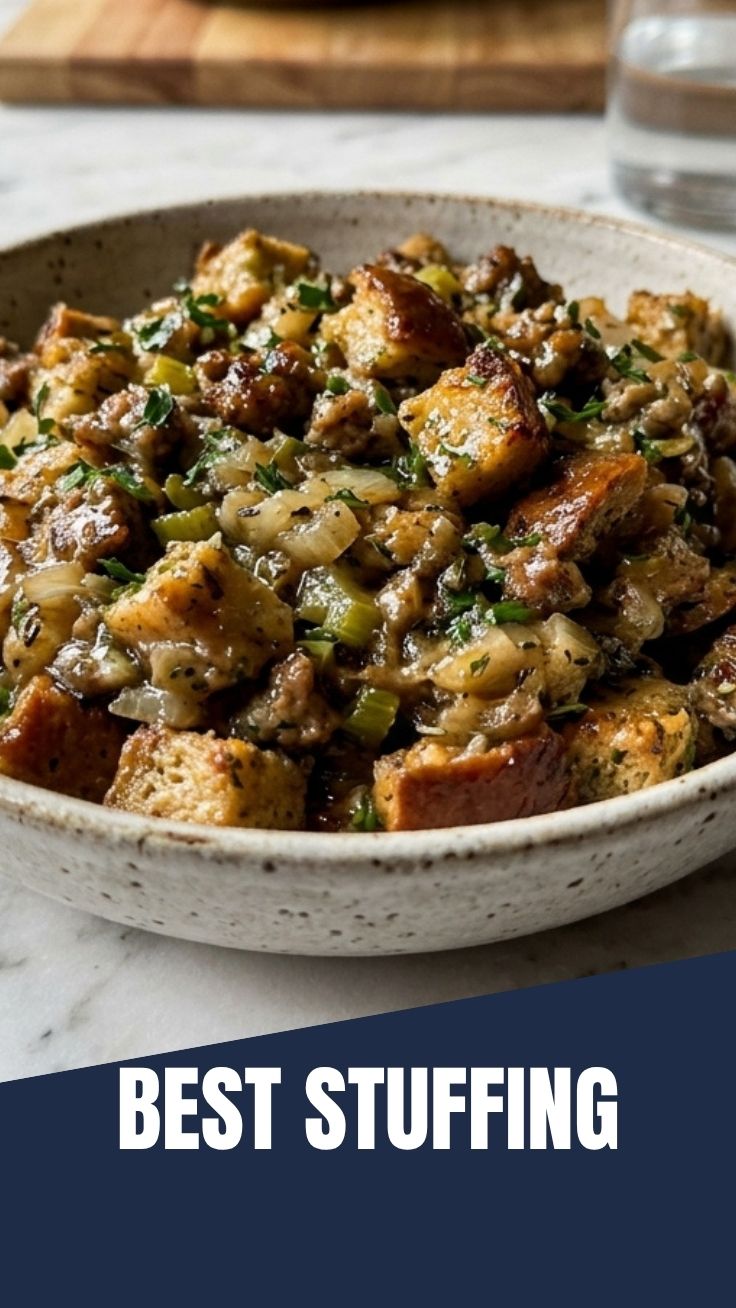
Why This Savory Bread Bake Deserves a Spot on Your Holiday Table
Have you ever pulled a golden, herb-fragrant casserole from the oven and watched it disappear in minutes, only to realize you’re left with empty serving dishes and no leftovers? The secret to that magic lies in mastering the perfect balance of crispy edges, tender center, and aromatic seasoning. Preparing your own Stuffing from scratch transforms a simple side dish into the heart of the meal. For those avoiding gluten, discovering a reliable gluten-free Thanksgiving stuffing opens up the holiday table to everyone. You control the sodium, the freshness of herbs, and the quality of broth, ensuring every bite is packed with flavor and free from preservatives. Making this dish at home also fills your kitchen with an irresistible aroma that signals warmth and comfort.
Ingredients & Kitchen Tools
For the Base:
– Stale bread cubes (6 cups): Use day-old French bread or sourdough for classic texture. Gluten-free bread works beautifully for the related dish.
– Unsalted butter (½ cup): Adds richness. Substitute with olive oil for a dairy-free option.
– Yellow onion (1 large, diced): Provides sweetness and depth.
– Celery ribs (3, diced): Adds crunch and earthy flavor.
– Fresh herbs (2 tbsp sage, 1 tbsp thyme, 1 tbsp rosemary): Dried herbs work, but fresh brings brighter notes.
– Low-sodium chicken or vegetable broth (1½ cups): Homemade broth elevates the taste.
– Eggs (2 large, beaten): Helps bind the mixture.
– Salt and black pepper (to taste): Season generously.
Kitchen Tools:
– Large skillet or sauté pan
– 9×13-inch baking dish
– Mixing bowl
– Wooden spoon or spatula
– Sharp knife and cutting board
– Measuring cups and spoons
Optional Substitutions:
– Add cooked sausage, mushrooms, or dried cranberries for variety.
– Use gluten-free bread cubes for the relevant variation.
– Replace butter with vegan margarine for a dairy-free version.
Prep Time & Cooking Schedule
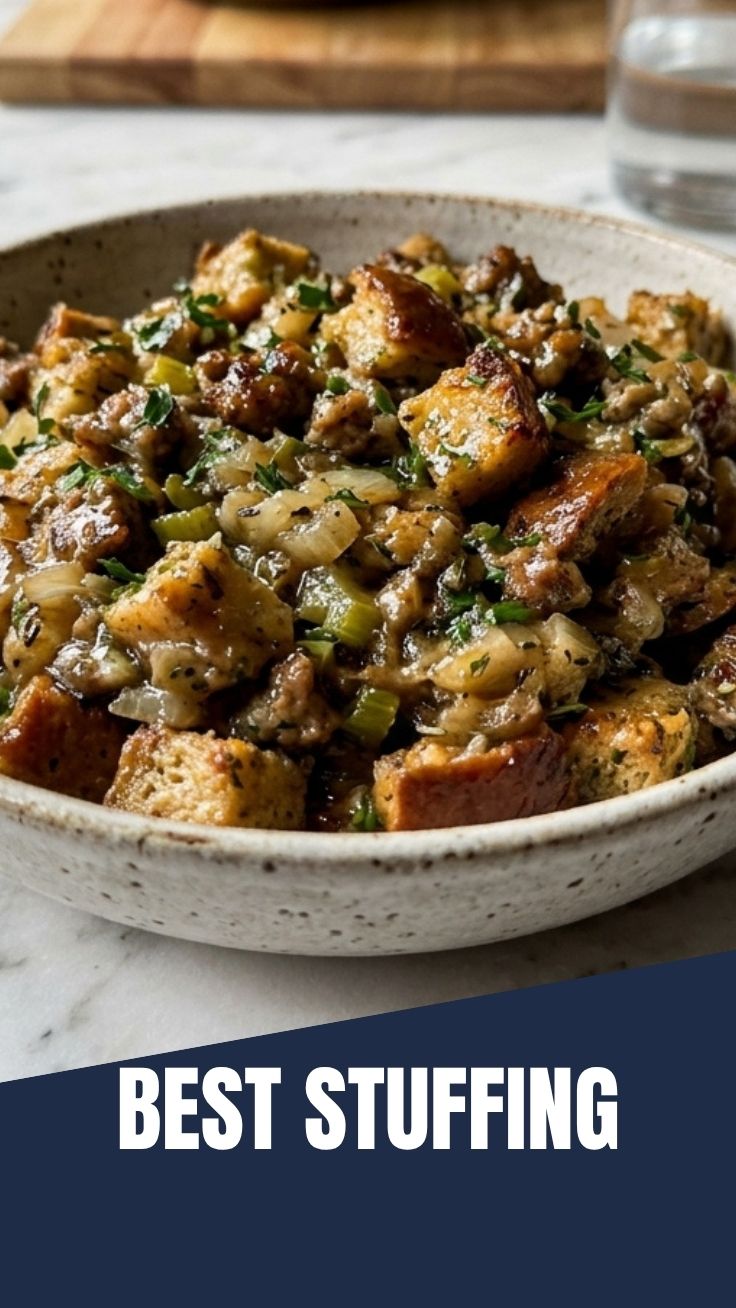
– Prep time: 20 minutes – chopping vegetables, cubing bread, and measuring ingredients.
– Cook time: 45–55 minutes at 375°F (190°C) – the dish bakes until golden brown and crisp on top.
– Resting time: 10 minutes before serving – allows the custard to set for cleaner slices.
– Total time: Approximately 1 hour 15 minutes.
Plan to assemble the casserole up to 24 hours ahead and refrigerate, then bake just before serving. This makes holiday hosting much smoother.
Step-by-Step Instructions
1. Preheat the oven to 375°F (190°C). Grease your baking dish with butter or nonstick spray.
2. Sauté the aromatics – In a large skillet over medium heat, melt ½ cup butter. Add diced onion and celery, cooking until softened (about 5–7 minutes). Stir in fresh herbs, salt, and pepper, and cook 1 more minute until fragrant.
3. Combine dry and wet ingredients – In a large bowl, place the stale bread cubes. Pour the sautéed vegetable mixture over the bread. In a separate bowl, whisk together the broth and beaten eggs, then pour over the bread mixture. Toss gently until evenly moistened. This is the moment to ensure your Stuffing has the right moisture – it should be damp but not soupy.
4. Transfer to dish – Spoon the mixture into the prepared baking dish. Spread evenly, pressing down lightly with your spatula. For a crispier top, leave the surface slightly uneven.
5. Bake uncovered for 45–55 minutes, until the top is golden and the edges are crispy. For a softer interior, cover with foil for the first 30 minutes, then uncover for the last 15–20 minutes.
6. Rest and serve – Remove from oven and let stand for 10 minutes. Garnish with extra fresh parsley.
Pro tip on temperature control: If your bread cubes are very dry, reduce broth by ¼ cup to avoid sogginess. For a moist but not wet texture, test by pressing a spoonful – it should hold together without excess liquid pooling.
Nutritional Benefits & Advantages
This dish provides a surprising nutritional boost. Celery contributes vitamin K and antioxidants, while onions offer quercetin, a powerful anti-inflammatory compound. Herbs like sage and thyme are rich in essential oils that support digestion. Using low-sodium broth cuts sodium by up to 40% compared to store-bought mixes. When you choose whole-grain or gluten-free bread, you increase fiber content, aiding fullness and blood sugar stability. The eggs provide high-quality protein, making this side more satiating than plain starches. Preparing it at home also eliminates artificial additives and preservatives common in boxed versions.
Tips Variations & Cooking Advice
– Flavor variations: Add ½ cup toasted pecans for crunch, or 1 cup diced apples for sweetness. Try crumbled Italian sausage for a heartier version.
– Ingredient swaps: Replace chicken broth with mushroom broth for a vegetarian twist. Use olive oil instead of butter for a dairy-free option.
– Alternative cooking methods: Bake in individual ramekins for portion control, or cook in a slow cooker on low for 3–4 hours for a hands-off approach.
– Dietary adaptations: For a gluten-free Thanksgiving stuffing, simply substitute gluten-free bread cubes and ensure all other ingredients are certified gluten-free. The texture remains satisfyingly tender and crisp.
– Portion changes: Halve the recipe for a smaller gathering, or double it for a crowd – bake in two dishes to ensure even cooking.
Common Mistakes to Avoid
– Soggy results: This happens when bread cubes are too fresh or you add too much broth. Use stale or lightly toasted bread, and add broth gradually until just moistened.
– Dry, crumbly texture: Not enough liquid or overbaking. Increase broth by ¼ cup and cover with foil if the top browns too quickly.
– Underseasoning: Stuffing needs generous salt and pepper because bread absorbs flavor. Taste the mixture before baking – it should be slightly saltier than you think, as the bread will mellow it.
– Burnt edges: If your oven runs hot, bake at 350°F and check for doneness at 40 minutes. Rotate the dish halfway through.
– Egg curdling: If eggs are added directly to hot broth, they can scramble. Always temper the eggs by whisking a small amount of warm broth into them first.
Storage & Meal Prep Tips
– Refrigeration: Store leftovers in an airtight container for up to 4 days. The texture holds up well, though the top may soften slightly.
– Freezing: Freeze the baked casserole in a freezer-safe dish for up to 3 months. Thaw overnight in the refrigerator before reheating.
– Reheating: For best results, reheat in a 350°F oven for 15–20 minutes, covered with foil to retain moisture. Uncover for the last 5 minutes to restore crispness. Microwaving works in a pinch but will soften the top.
– Meal prep: Assemble the uncooked casserole up to 24 hours ahead, cover, and refrigerate. Add 10–15 minutes to the baking time if starting from cold.
Conclusion
Mastering this savory side dish transforms your holiday table into a memorable feast. The combination of aromatic herbs, tender vegetables, and perfectly baked bread creates a dish that pleases everyone. Whether you stick with the classic preparation or explore a Stuffing variation with different ingredients, the key is balancing moisture, seasoning, and bake time. For those with dietary needs, a gluten-free Thanksgiving stuffing ensures no one misses out on this comforting tradition. I encourage you to try this recipe, experiment with your favorite add-ins, and share your results in the comments. Your family will thank you – and so will your taste buds.
FAQs
1. Can I make this stuffing ahead of time?
Yes, assemble the dish up to 24 hours in advance, cover, and refrigerate. Add 10–15 minutes to the baking time when ready to cook.
2. How do I dry bread cubes quickly without stale bread?
Cut fresh bread into cubes and spread on a baking sheet. Bake at 300°F for 10–15 minutes, stirring once, until dry and lightly toasted. Cool completely before using.
3. What’s the best way to adjust seasoning if I’m using low-sodium broth?
Increase salt by ¼ teaspoon and add a pinch of dried herbs like thyme or rosemary. Taste the mixture before baking – it should be flavorful but not salty.
4. Can I substitute the eggs for a vegan version?
Yes, use a flax egg (1 tablespoon ground flaxseed mixed with 3 tablespoons water, left to thicken for 5 minutes) per egg. The texture will be slightly less firm but still delicious.
5. How do I prevent the stuffing from becoming too dry when reheating?
Sprinkle 1–2 tablespoons of broth or water over the leftovers before reheating, and cover with foil. This steams the dish, restoring moisture without making it soggy.